Living with a dog in a small apartment is a design puzzle — and one of the most satisfying ones. Every square foot has to earn its keep, every piece of furniture should do two jobs, and your dog deserves a home that feels like hers. Small spaces force the editing that makes homes beautiful: fewer things, chosen better, arranged with intention. These fifteen ideas are for renters and tiny-footprint dwellers who refuse to choose between a stylish home and a happy dog. From crates that moonlight as side tables to feeding drawers that vanish into the kitchen, each one reclaims space you thought you did not have.
1. A Wall-Mounted Entryway Station for Leashes and Gear
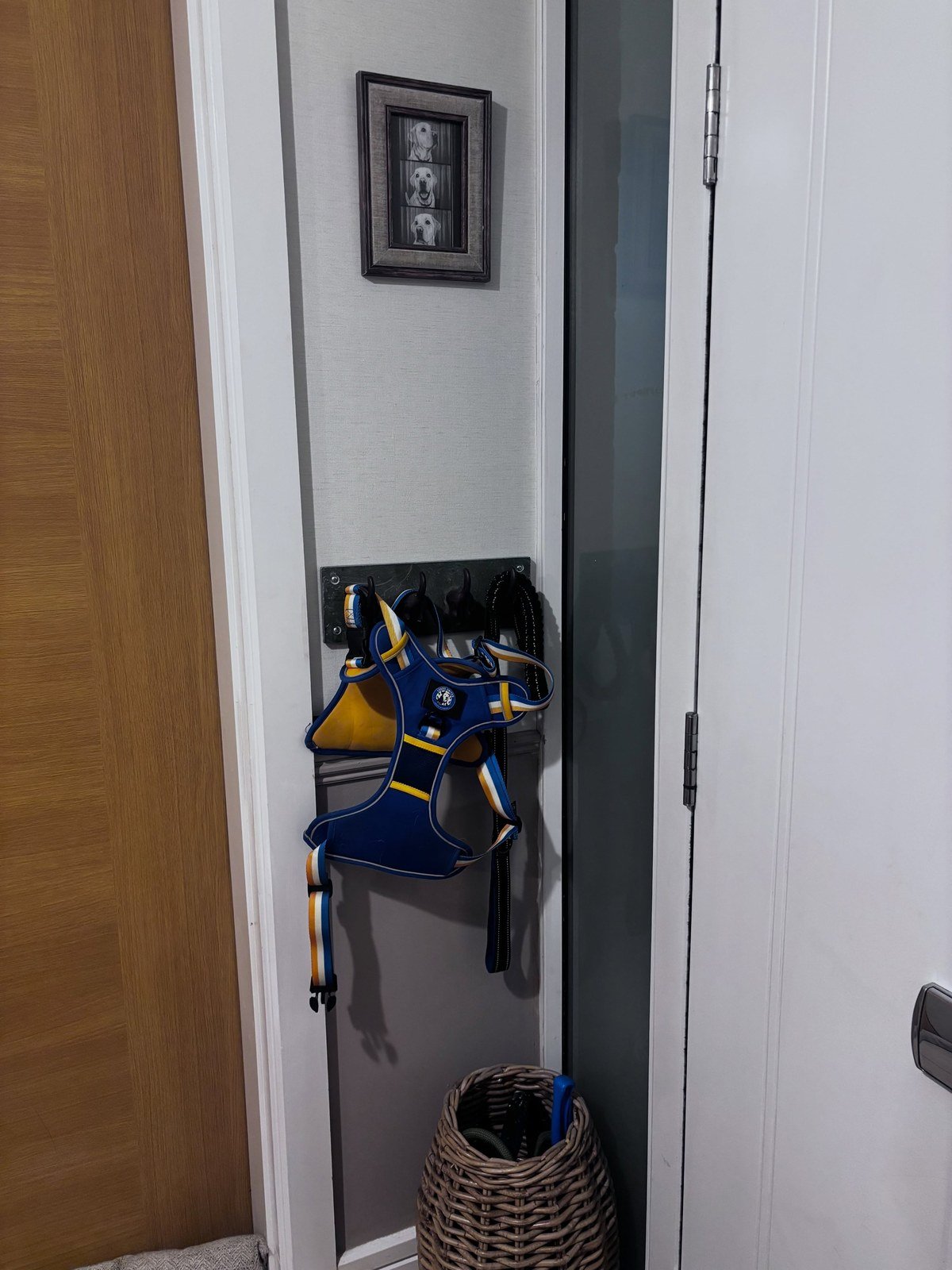
Your entryway is mission control for every walk, and in a small apartment it doubles as hallway, mudroom, and first impression. A wall-mounted station keeps it all off the floor: sturdy hooks for the leash, harness, and poop-bag holder, a slim floating shelf for treats and the rainy-day paw towel, and a small basket below for the spare collar and paw balm. Mount everything at your natural grab height right beside the door, so the whole routine happens in one smooth motion. Renters can fake the built-in look with damage-free adhesive hooks and a leaning pegboard — no drilling required. Finish the shelf with a tiny plant or a framed photo of your dog, and the hardest-working corner of your home becomes one of the cutest.
2. A Slim Washable Runner That Defines Her Lane
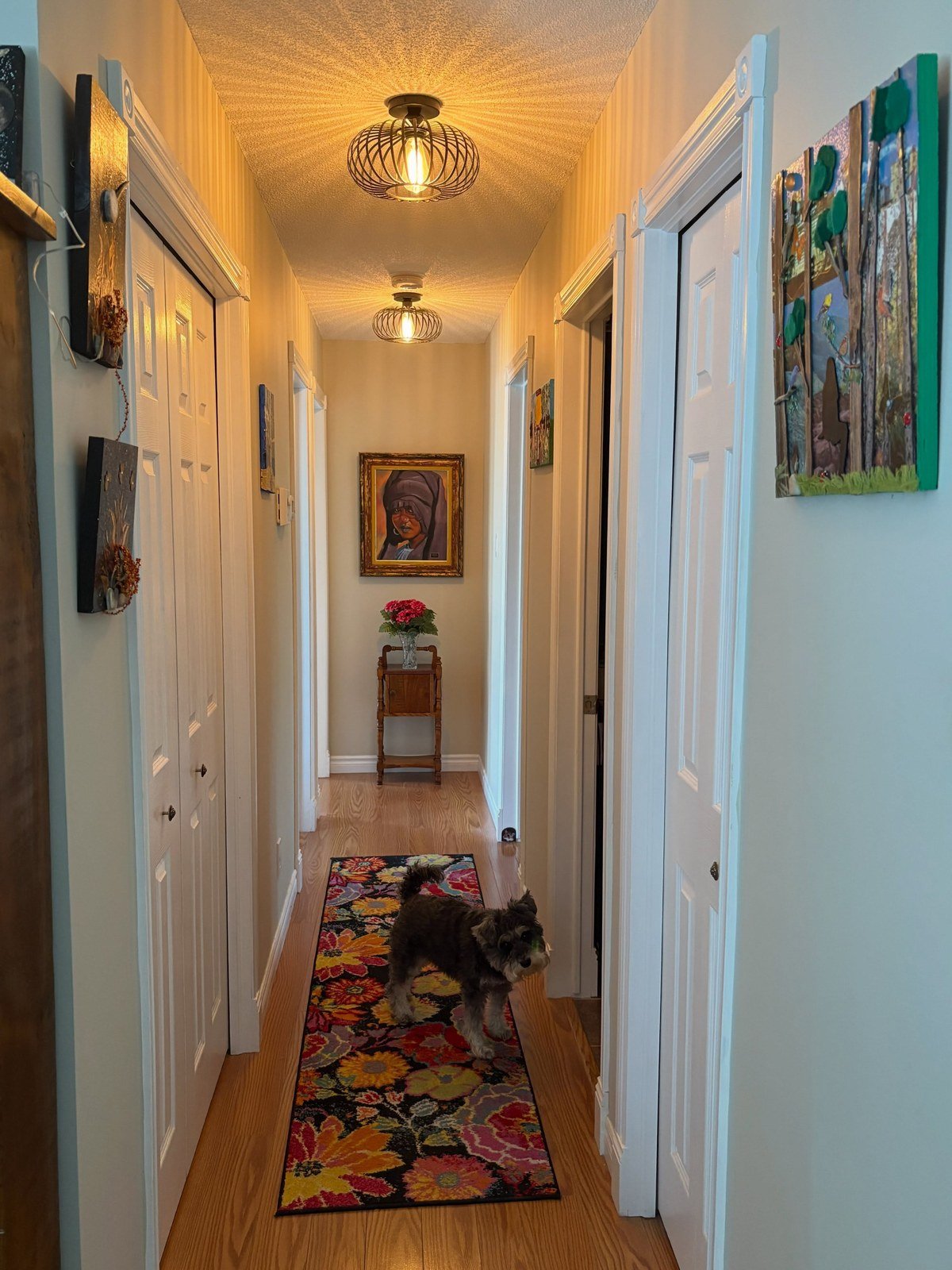
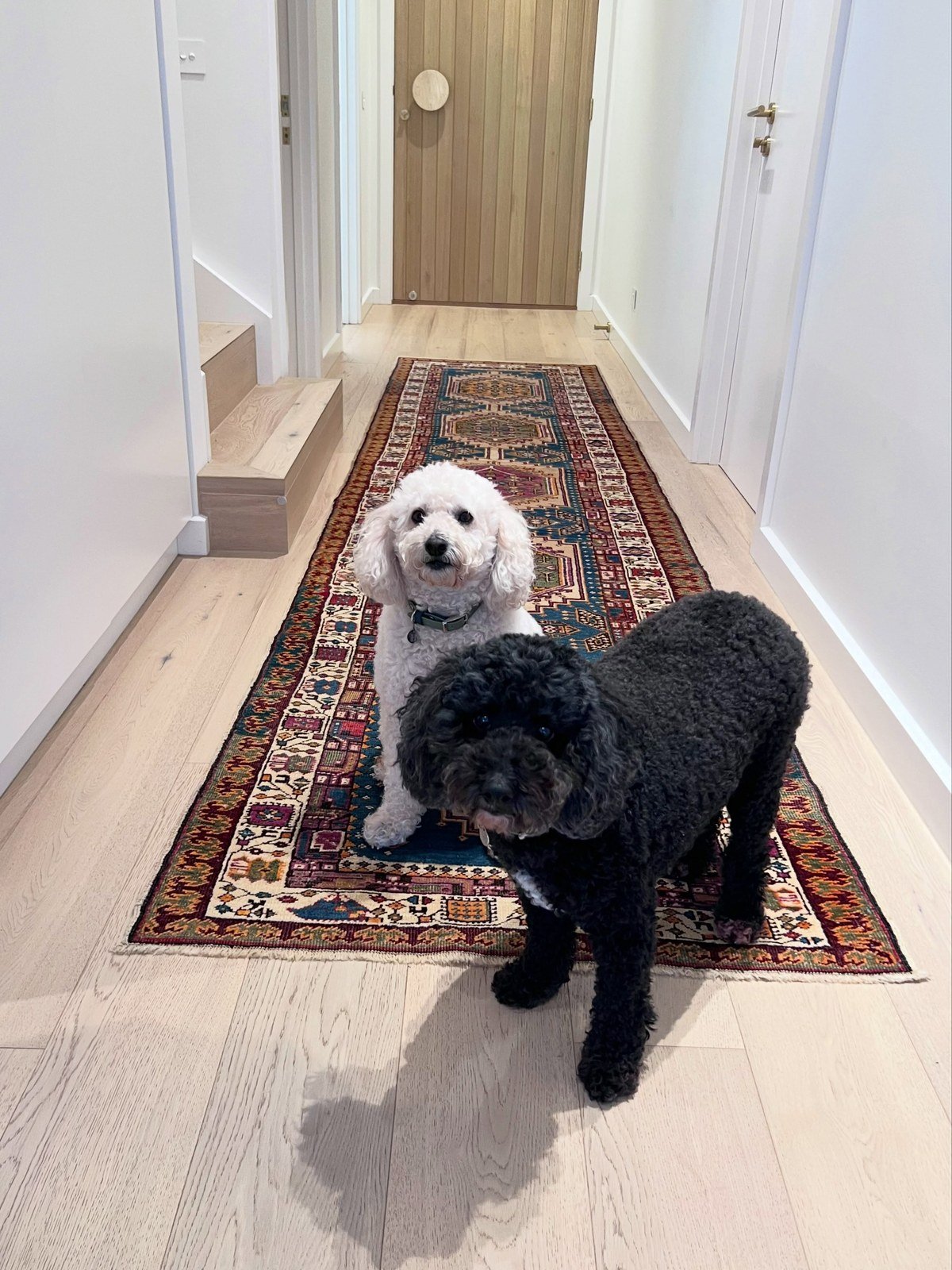
Narrow hallways take the worst beating in a dog household: sprinting paws, skidding turns, and muddy prints tracked straight from the door. A slim washable runner — about two feet wide — absorbs all of it while protecting the rental floors underneath. Choose low pile with a non-slip backing so it stays put when she launches down the hall, and pick a busy pattern that forgives fur between washes. For senior dogs, the texture is a genuine gift: traction on slippery floors means fewer scary slides and more confident cruising. When it gets grimy, the whole thing goes in the machine and comes back fresh. The runner also draws a clear "dog lane" through the apartment, so the hallway reads as intentional design rather than a worn traffic path.
3. A Crate That Pulls Double Duty as Your End Table
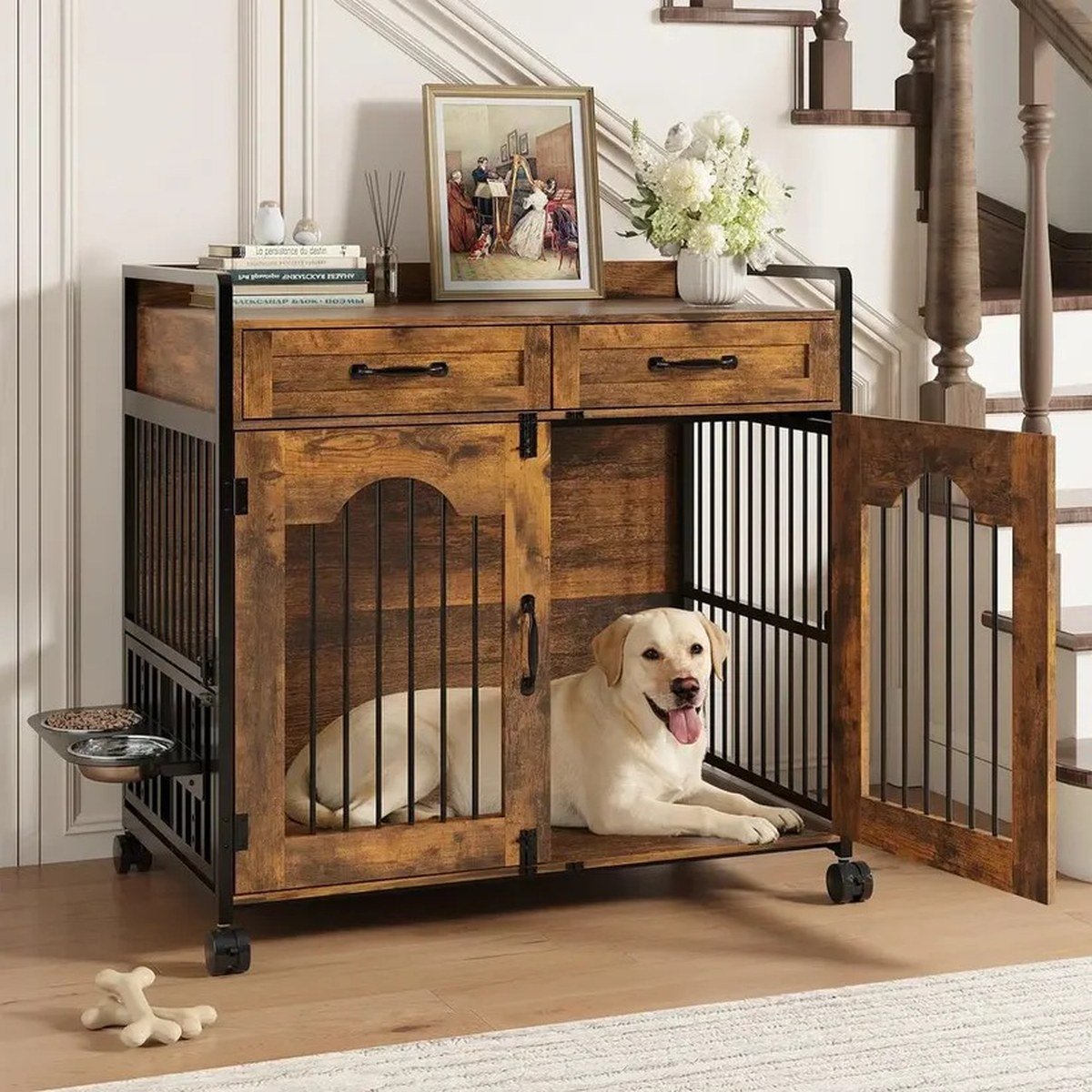
A wire crate parked in the middle of a small living room is the fastest way to make 400 square feet feel like 200. Furniture-style crates solve it: a sturdy wood top that holds your lamp, your book, and your coffee, with your dog's den tucked right underneath. She gets the enclosed, den-like space dogs naturally love, and you get back the floor footprint of an entire side table. Look for solid construction, good ventilation through slatted sides, and a secure latch. Size it to your dog — she should stand, turn, and stretch inside — not to your room, or you lose the space savings. Place it beside the sofa exactly where an end table would live, and guests will never guess it is a crate.
4. A Cozy Corner Nook That Claims Dead Space
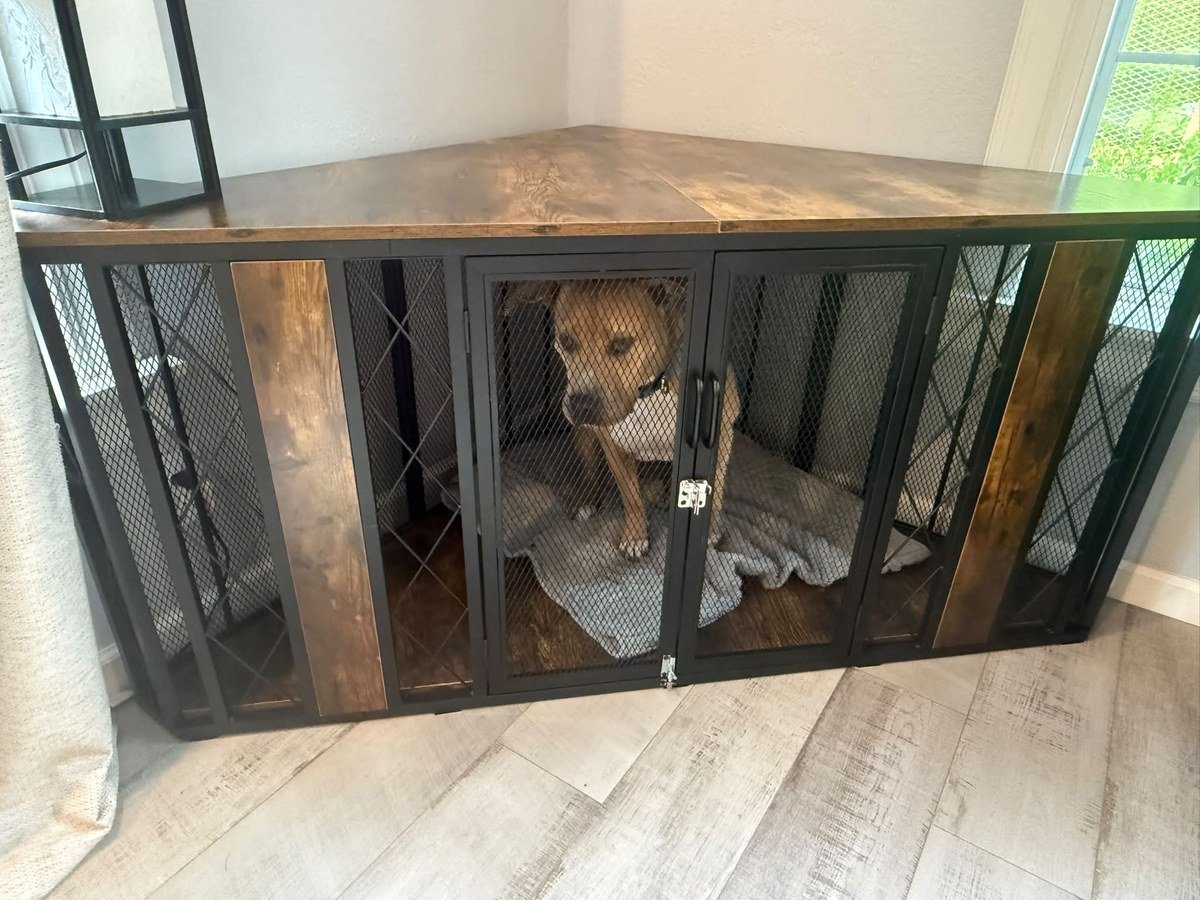
Every apartment has them: those awkward corners too small for furniture and too big to ignore. For your dog, a corner is prime real estate — two walls mean built-in security, exactly what den animals crave. Claim one with a round bolster bed that fits the angle perfectly, layered over a washable pad for easy cleaning. Add a small lidded basket beside it for her favorite toys and the corner transforms from dead space into her personal retreat. Keep it out of main walkways and away from drafty windows so she actually settles there. The beauty of the nook is psychological as much as spatial: when your dog has a defined "her spot," she stops claiming the middle of your rug, your laundry pile, and your favorite chair.
5. A Crate Tucked Under Your Console Table
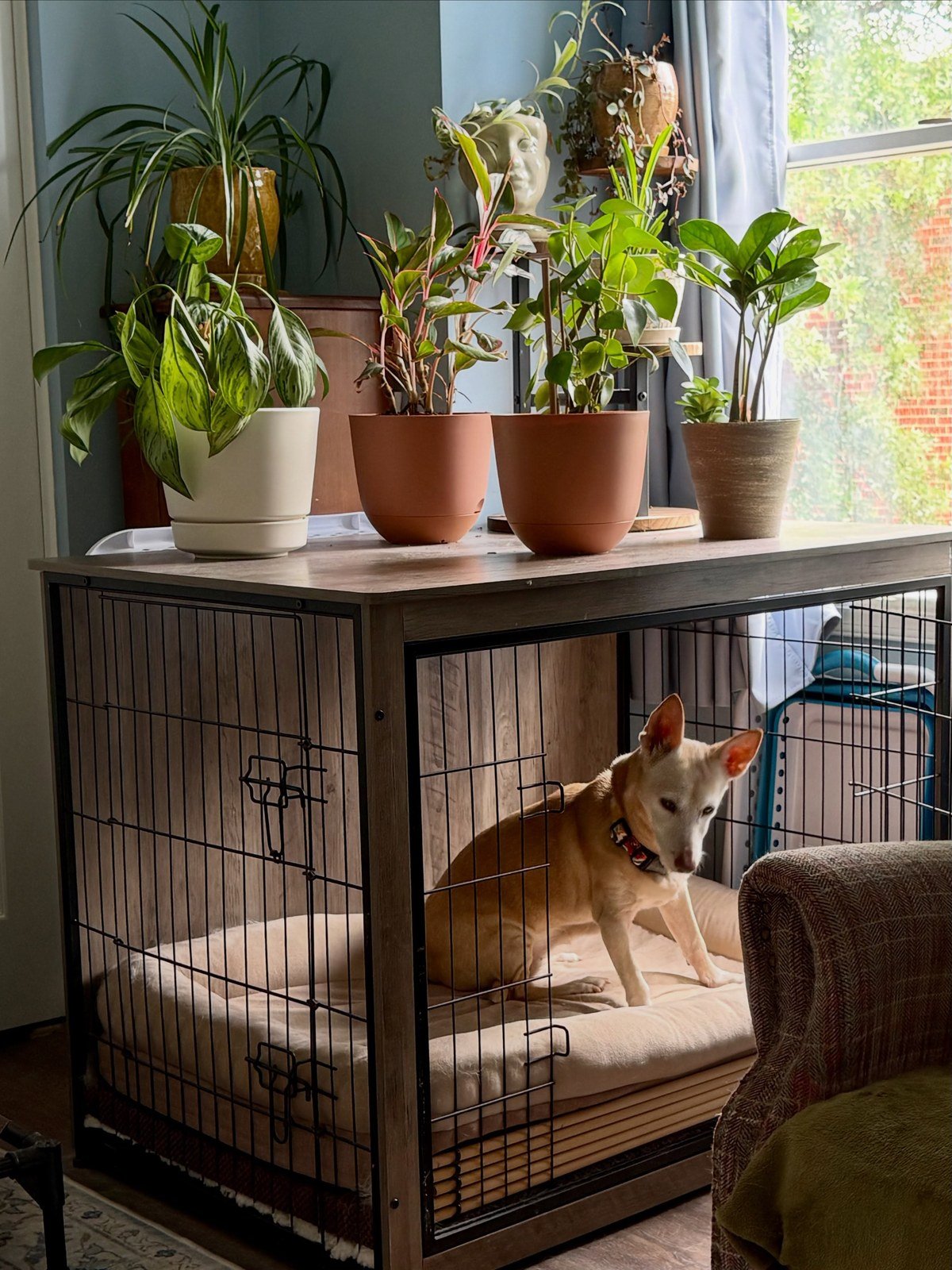
If a full furniture crate is not in the budget, the tuck-under trick gets you 90 percent of the look for free. Any open-base console, desk, or sofa table becomes a crate garage: slide her existing crate underneath and it reads as intentional built-in storage instead of equipment parked in your living room. Drape a tailored fabric cover over the crate and the illusion is complete — from the front it looks like a fabric-front cabinet. This works beautifully behind the sofa too, where a narrow sofa table already lives in dead space. Measure the table's interior height against the crate before committing, and keep at least a couple of inches of clearance for airflow. The crate disappears, the table keeps its job, and your floor plan breathes again.
6. A Feeding Drawer That Slides Out of the Kitchen Kickboard
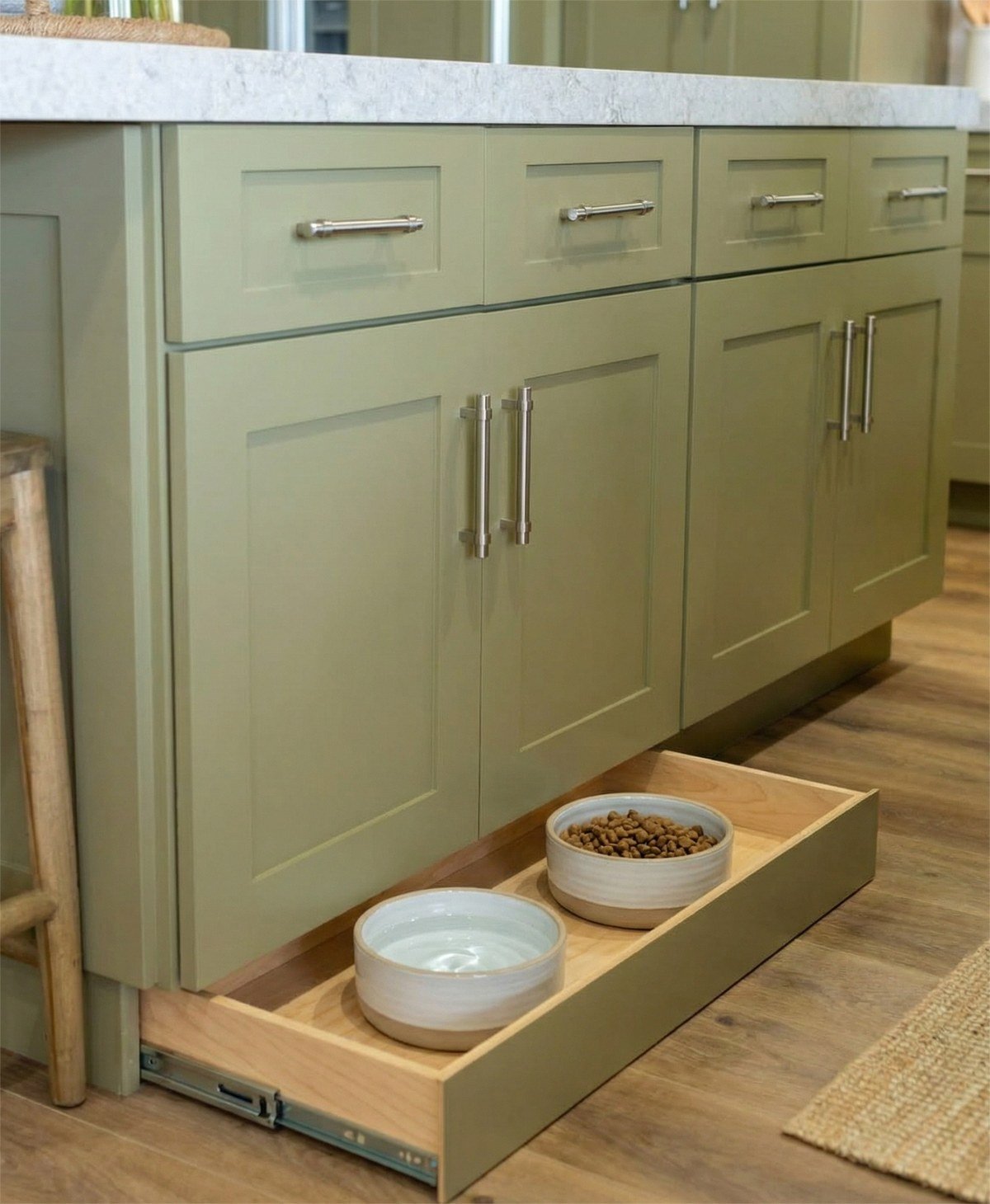
In a galley kitchen, two bowls on the floor are a tripping hazard with a side of spilled water. The slide-out feeding drawer fixes it: bowls inset into a shallow drawer built into the kitchen kickboard — the recessed strip under your cabinets — so meals appear at dinner time and vanish after. No bowls to kick across the tile, no water rings, no visual clutter between meals. Renters can steal the concept without carpentry: a low rolling cart or a slide-out under-sink caddy parked in a cabinet gap works the same way. Whatever version you build, add a washable mat underneath, and keep the drawer on a consistent schedule — dogs thrive on routine, and a drawer that only opens at mealtimes becomes part of the ritual.
7. Under-Bed Bins That Hide the Dog Supply Mountain
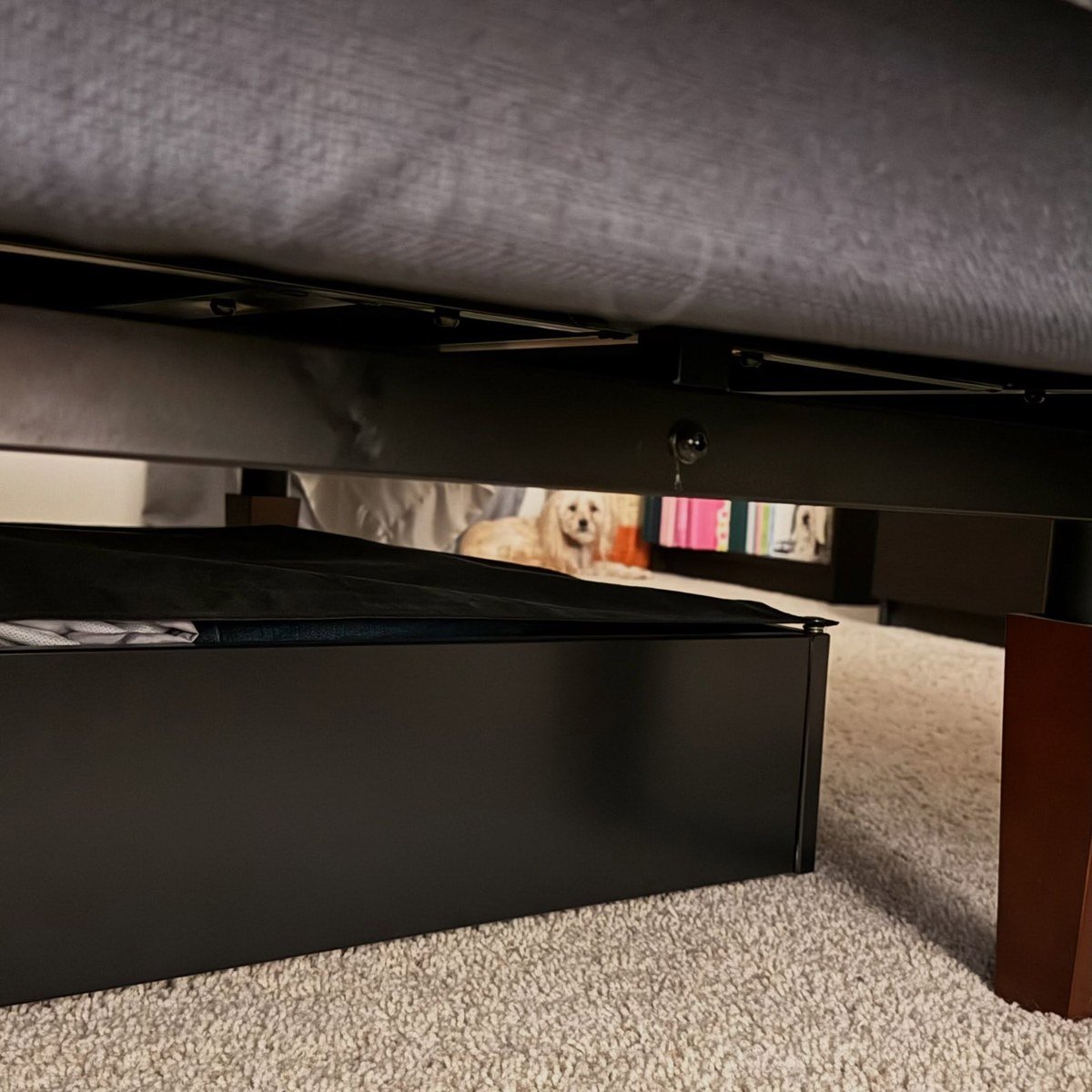
Kibble bags, backup toys, the cone of shame, seasonal coats, grooming tools — dog ownership comes with inventory, and small closets were not designed for it. The space under your bed is the biggest unused storage zone in the apartment, and shallow rolling bins turn it into a proper supply depot. Use one airtight bin for kibble (decanted from the bag), one for toys and chews, and one for grooming and health supplies. Low-profile bins with lids slide in and out on casters, stay dust-free, and keep everything sorted so you are not digging through a closet at bath time. Label the ends you can see from the bedside. Your closets go back to holding your clothes, and the dog's entire supply chain lives six inches off the floor.
8. A Storage Ottoman That Eats the Toy Explosion
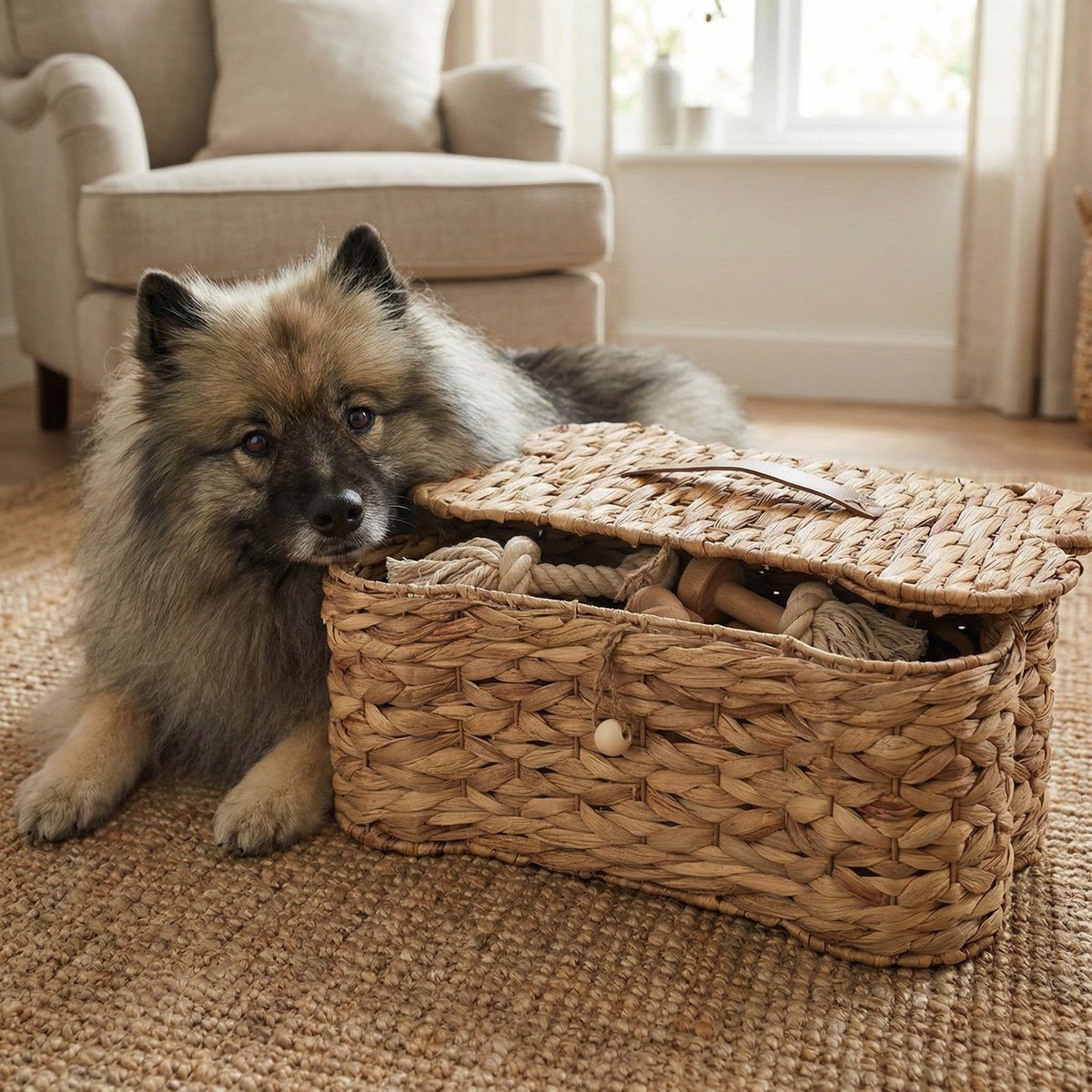
Dog toys multiply like rabbits, and in a small apartment a dozen squeakers scattered across the rug is the difference between cozy and chaotic. A storage ottoman ends the war in one purchase: it is a footrest for you, an extra seat for guests, and a deep toy vault with a lid. At tidy-up time — which takes about forty seconds — every toy goes in, the lid closes, and the living room is instantly guest-ready. Choose one with a wipeable interior and a sturdy top that handles feet and impromptu seats. Bonus move: teach a "clean up" cue and let your dog drop toys into the open ottoman herself. It becomes a party trick and the fastest reset button in small-space dog life.
Deep interior = toy vault
Wipeable lining = slobber-proof
Casters = rolls anywhere
9. Pretty Baskets and a Simple Toy Rotation
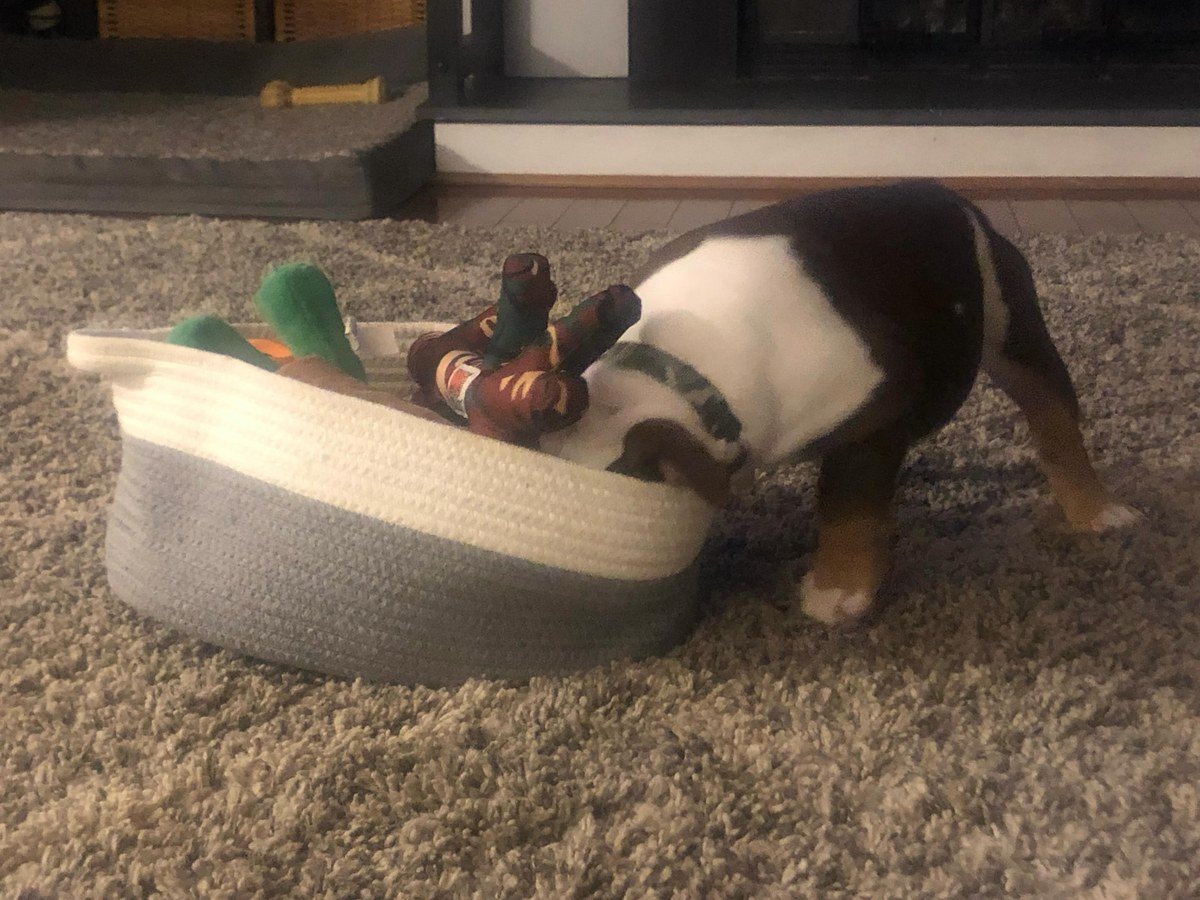
Here is the counterintuitive truth about small spaces: fewer toys out at once makes both the apartment and the dog calmer. A mountain of toys is visual noise for you and background static for her — she stops valuing any of them. The rotation system fixes it: keep two or three pretty woven baskets, fill only one at a time, and stash the rest in the closet or under-bed bin. Once a week, swap the baskets. Every toy feels new again, her brain gets novelty without new purchases, and the living room never holds more than a handful of toys. Choose baskets that match your decor — seagrass, felt, or canvas — so the one basket in play reads as styling, not clutter. Small space, small toy footprint, happier dog.
10. A Window Perch That Gives Her the Best Seat
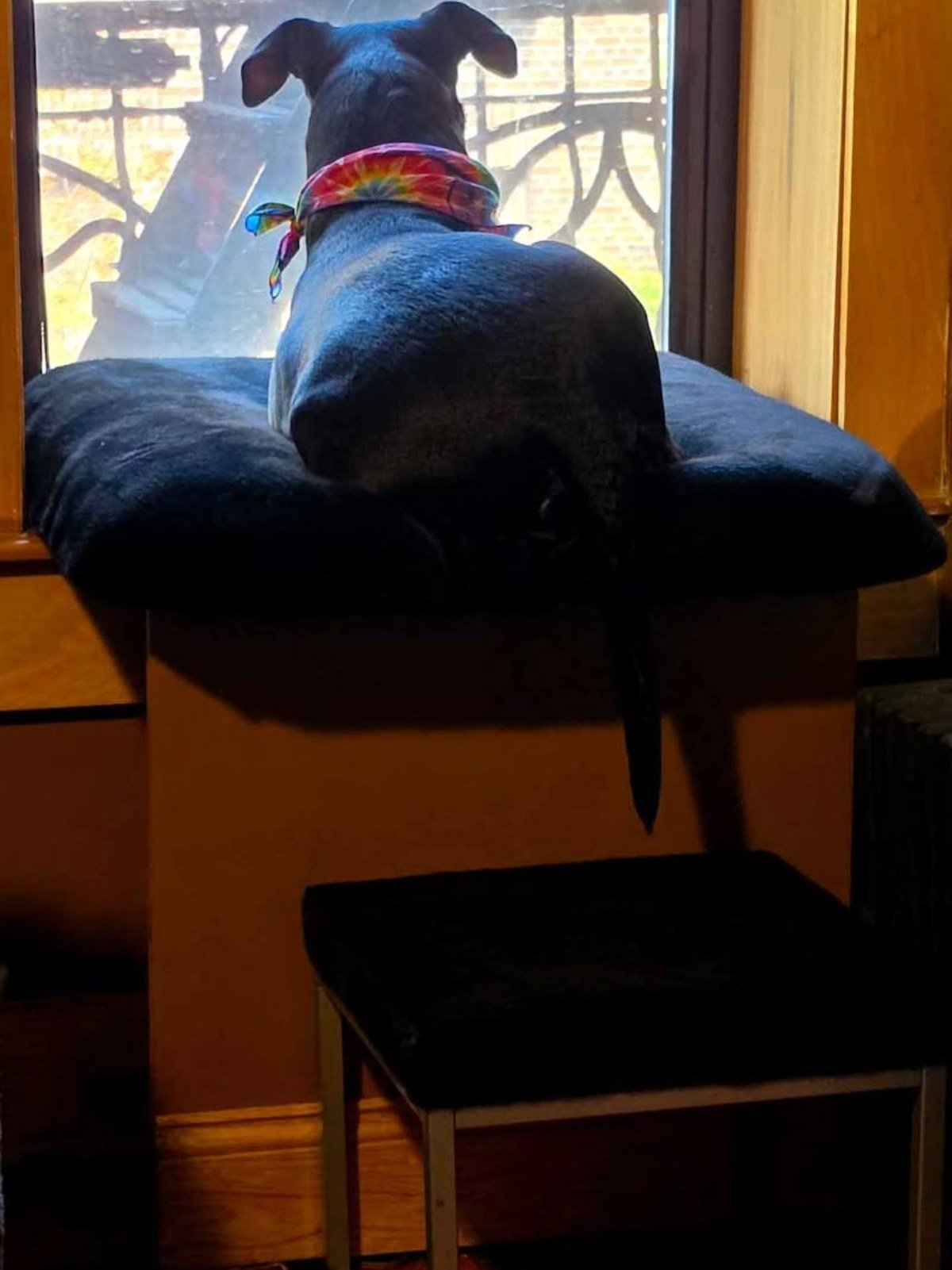
Dogs are professional people-watchers, and a window is the only television that never gets boring. In a small apartment, the window zone is dead space you are already paying for — so give it to her. For small dogs, a suction-mounted window perch creates a sunny loft bed with zero floor footprint. For bigger dogs, extend the sill with a sturdy shelf bracket and a thick cushion, turning the window ledge into a proper daybed. Add a washable cover because nose prints on glass are a lifestyle now. The perch does double duty as enrichment: street-watching burns mental energy, which means a calmer dog in fewer square feet. Just keep the setup away from cords and make sure she cannot push through the screen — safety first, views second.
Sturdy, weight-rated mount
Screen secured or window locked
Unrated suction cups for big dogs
Open windows she can push through
11. A Nightstand With a Built-In Sleep Nook
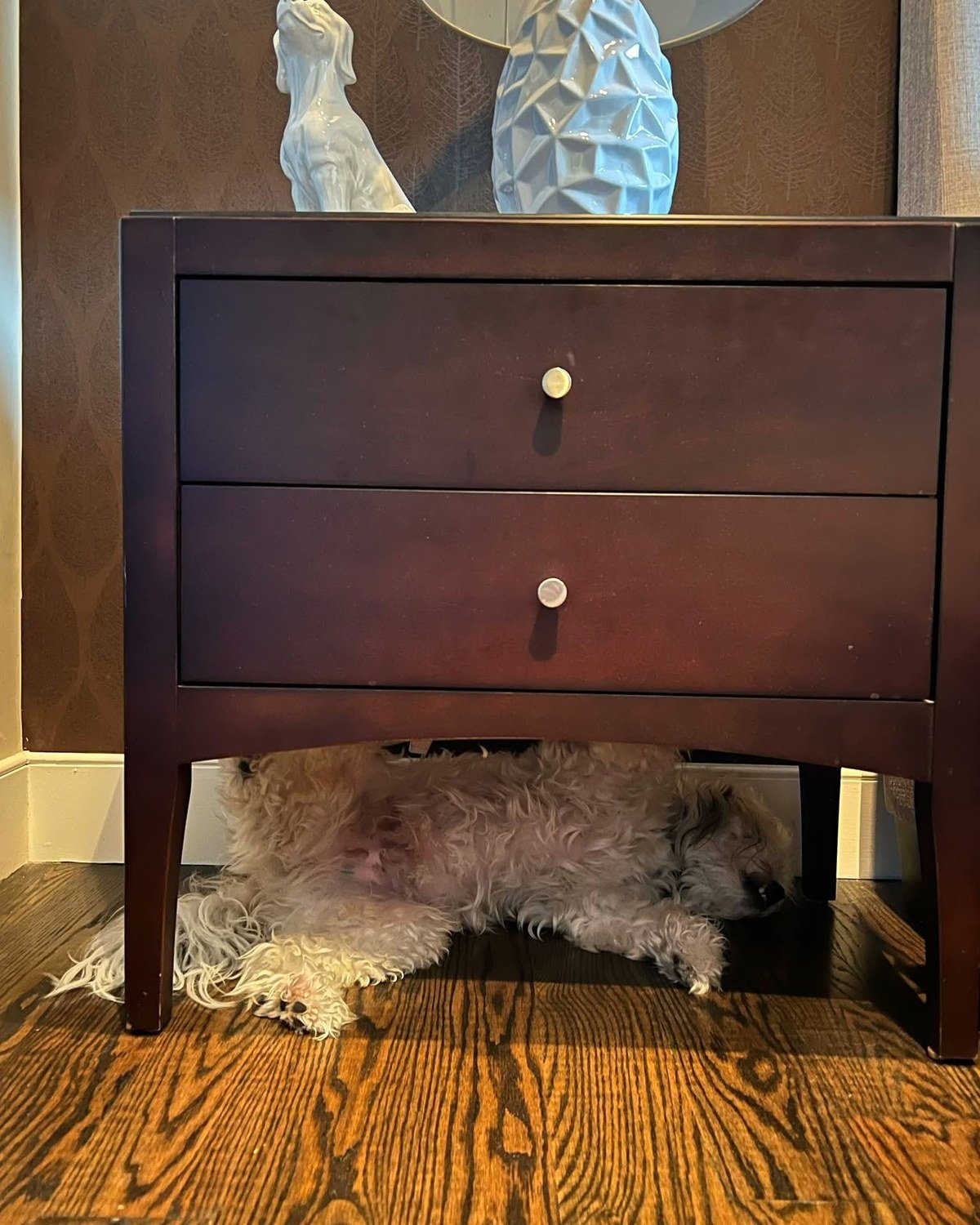
Most dogs want to sleep within breathing distance of their person, which in a small bedroom usually means a dog bed wedged into the only walkway. The nightstand nook solves it: choose an open-base nightstand or small side table, and tuck her cushion or a low crate right underneath. She gets a den-like alcove beside your bed — dark, enclosed, and close — and you get your floor back. It works in the tiniest bedrooms because the nightstand footprint was already spoken for; you are just using its vertical space. Keep a washable pad on the cushion, and skip dangly tablecloths that invite chewing. She sleeps better near you, you stop stubbing your toe on her bed, and the bedroom finally feels finished.
- Pick an open-base nightstand with at least 20 in. of clearance.
- Add a washable cushion or low-profile dog bed underneath.
- Drape a small blanket over two sides for den coziness.
- Keep cords and chargers routed away from the nook.
12. A Balcony Potty Patch for High-Rise Life
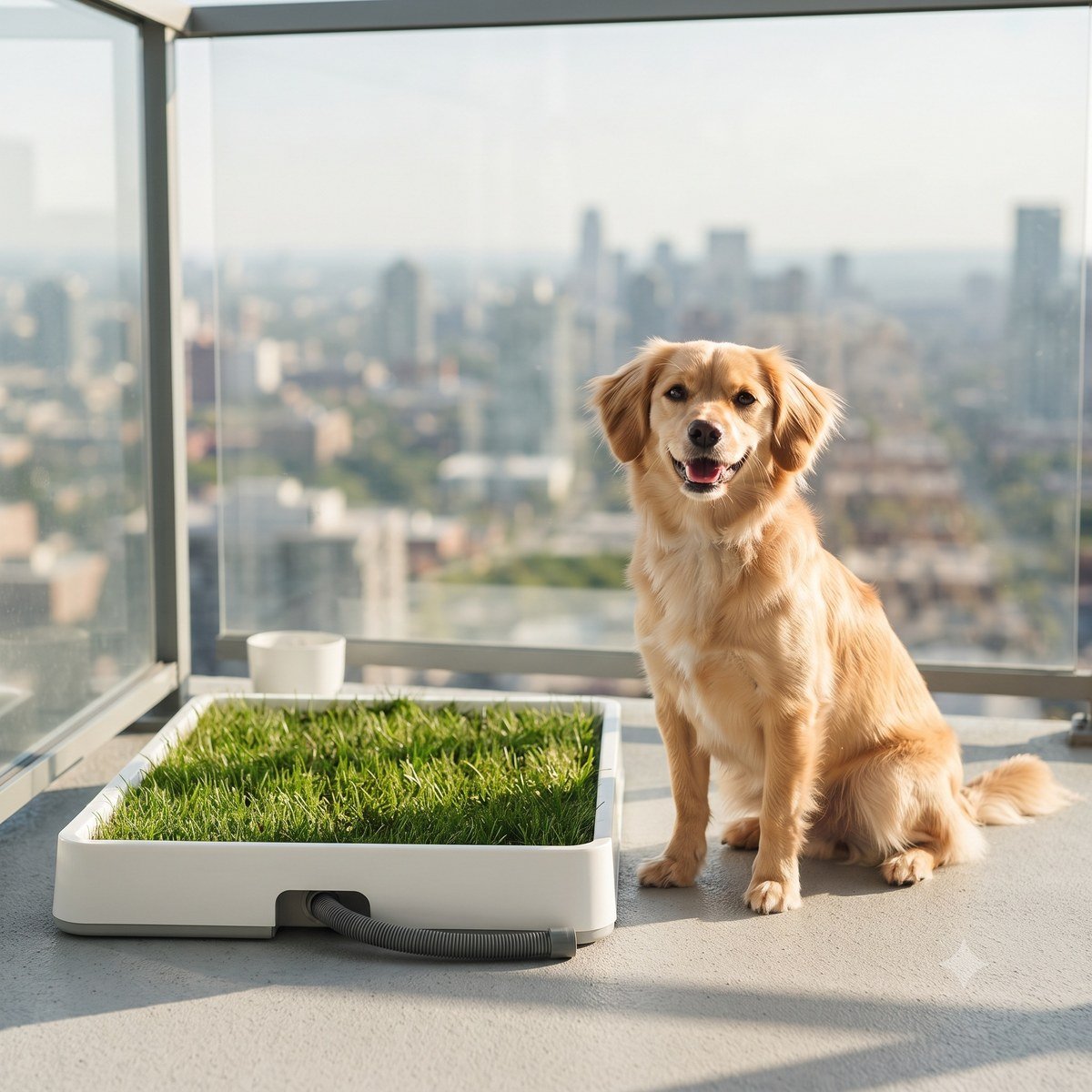
The 2 a.m. elevator ride in pajamas is a rite of passage no dog mom needs to repeat nightly. A balcony potty patch — real or high-quality faux grass in a drainage tray — gives your dog a legal, convenient spot for late nights, early mornings, and bad-weather emergencies. Size the tray to your dog and your balcony, and choose a tray with real drainage so liquid never pools. Odor control is the make-or-break: rinse real grass regularly, sprinkle baking soda under faux turf, and keep an enzyme spray in the balcony basket. This is a supplement, not a substitute — she still needs real walks for exercise and sniffing. But for high-rise life, the patch is the difference between dreading the elevator and actually sleeping through the night.
13. A Playpen That Folds Flat When Company Comes
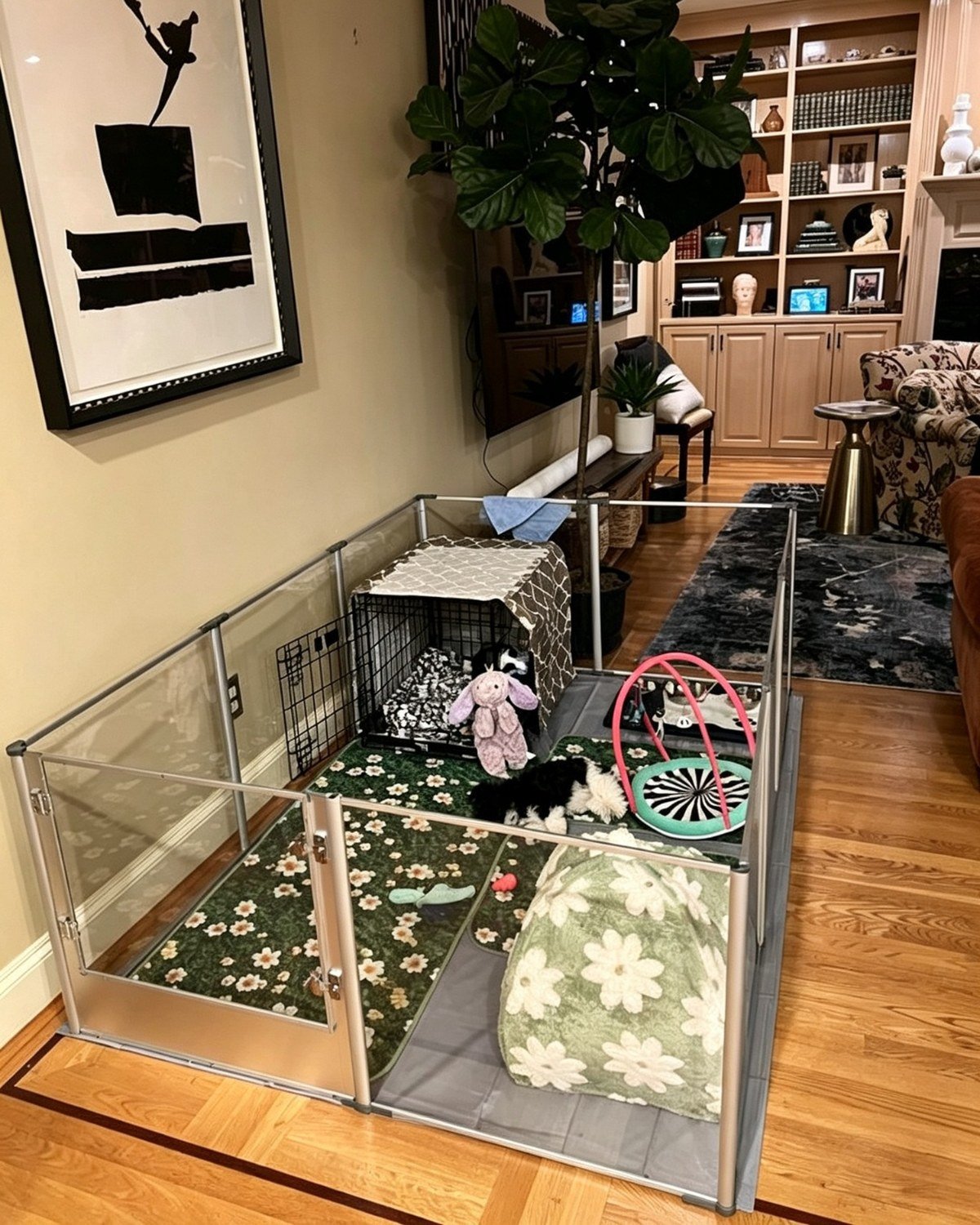
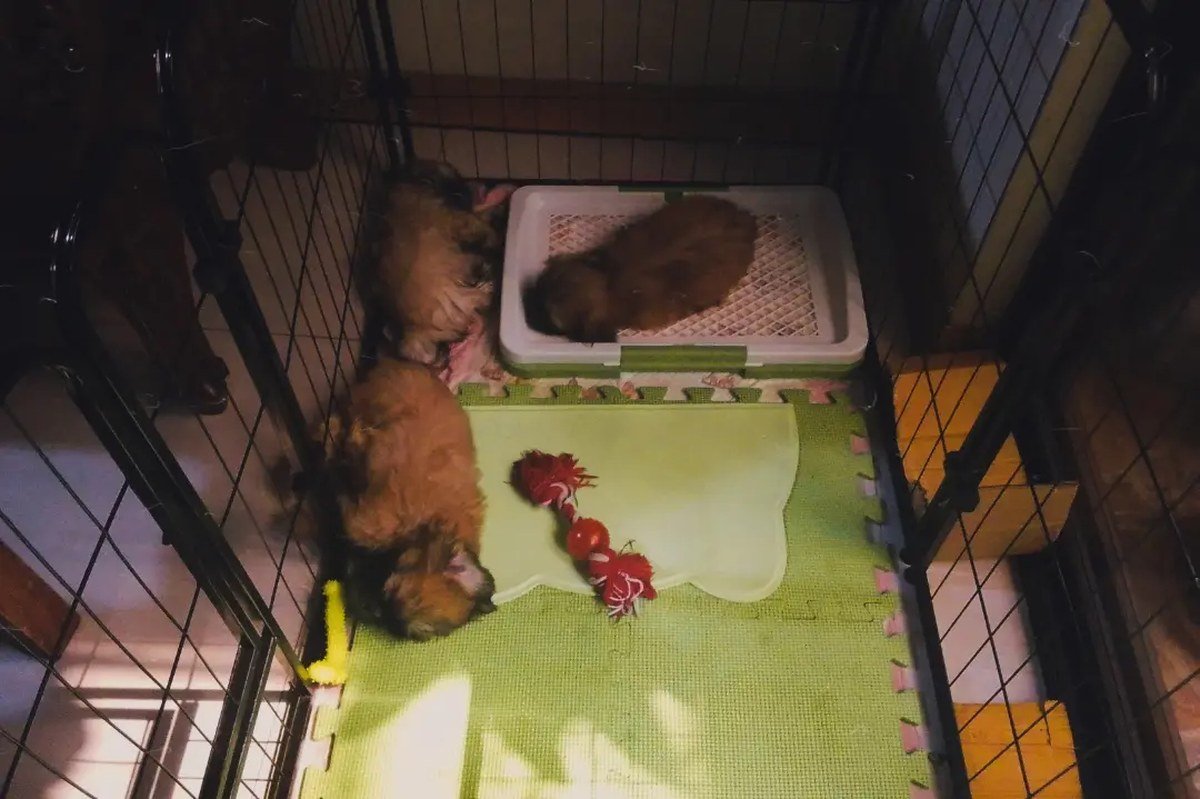
Puppies, new rescues, and recovering dogs all need containment sometimes — and in a studio, a permanent pen feels like giving up a quarter of your home. A folding exercise pen is the compromise that actually works: eight connected panels that unfold into a safe play zone in under a minute and collapse flat behind a door when the living room needs to be a living room again. Use it for enforced naps, safe alone-time, or keeping a muddy dog off the rug after rainy walks. Get the height right for your dog — a determined jumper clears a too-short pen — and anchor it in a corner so it cannot walk across the room. Containment on demand, invisible the rest of the time: that is small-space magic.
14. A Slim Rolling Caddy for Bath-Day Gear
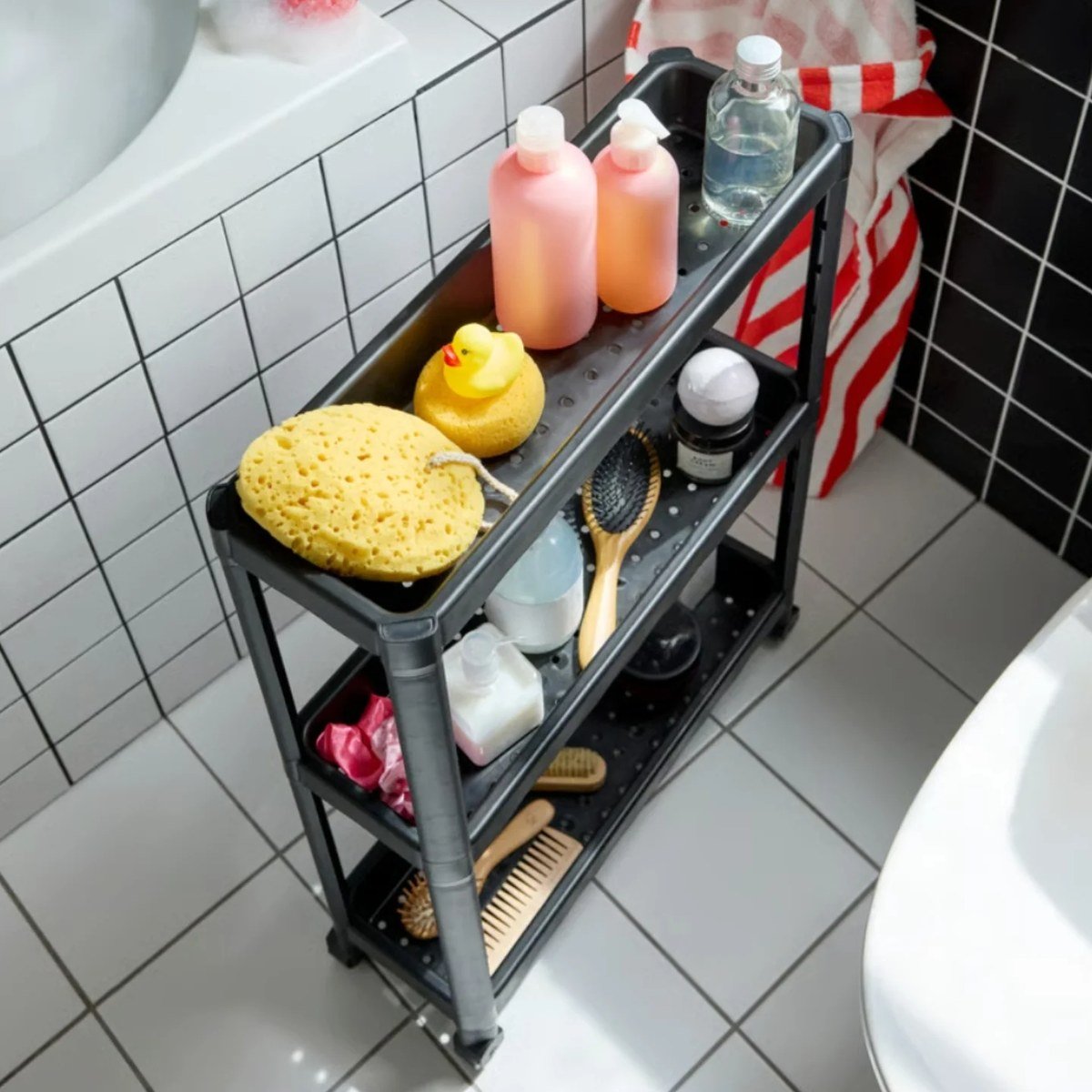
Bath day in a small apartment means shampoo in the shower, brushes in a drawer, towels who-knows-where, and nail clippers lost since spring. A slim rolling caddy — the narrow kind designed for gaps between appliances — corrals all of it into one mobile station. Stock it once: shampoo, conditioner, brush, nail clippers, ear cleaner, a stack of old towels, and treats for bribery. Then roll it into the gap beside the tub, washer, or vanity, where it lives invisibly until bath day. Everything arrives at the tub in one trip and goes back in one trip, which is the real reason bath day finally happens on schedule. Choose a caddy with a handle and smooth casters, and wipe it down after wet use so it stays fresh.
15. A Gallery Wall That Puts Her Front and Center
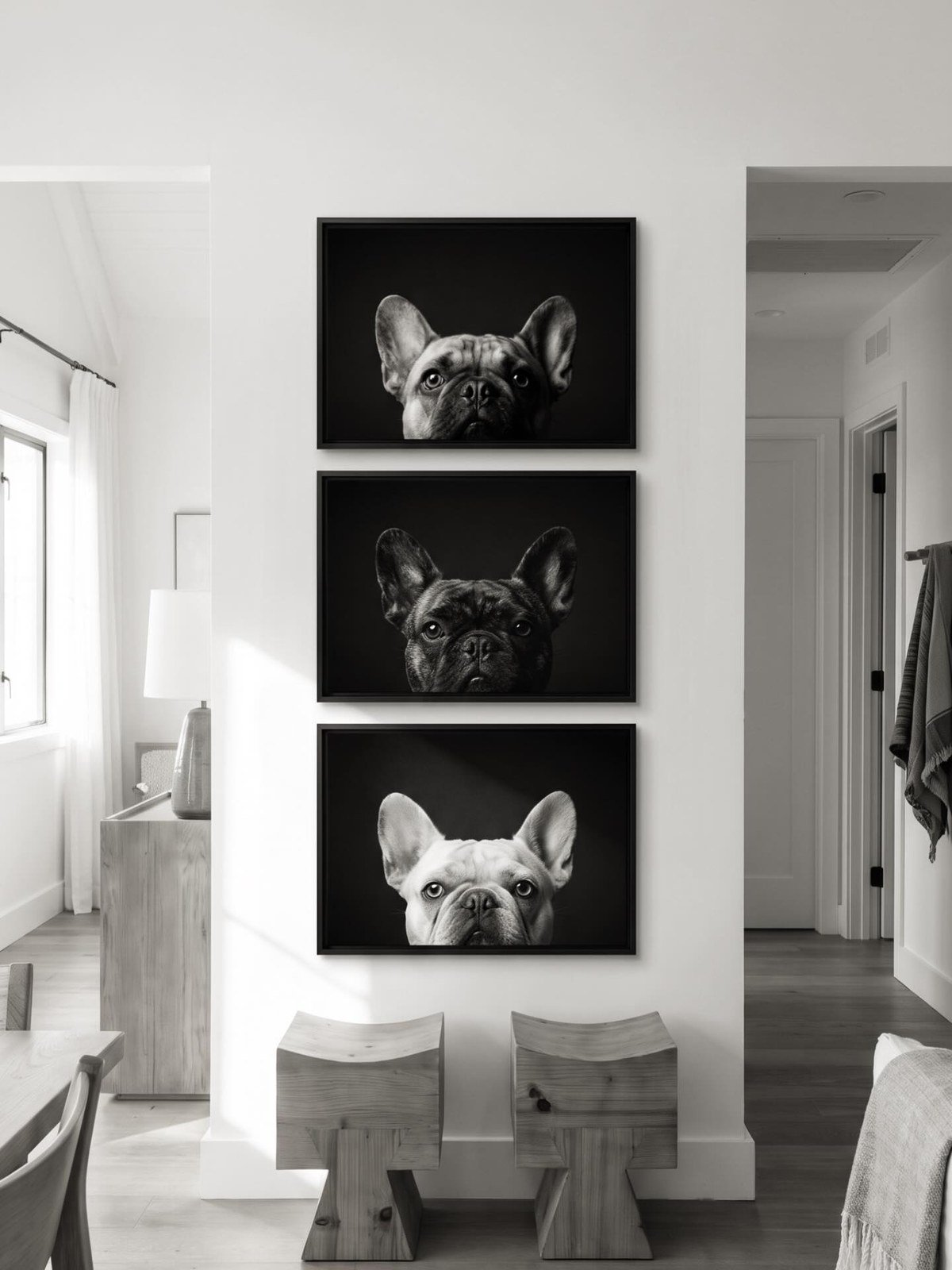
Here is the thing about small apartments: the walls are the one surface your dog cannot clutter. A gallery wall of her photos, a custom portrait print, and a few pieces of art you actually love turns vertical dead space into the most personal corner of your home. Mix framed phone photos with one larger statement piece — a portrait in your wedding-gallery style makes her officially family. Keep frames consistent (all black, all oak, all brass) and the arrangement reads as curated rather than chaotic. Lay it out on the floor first, start from the center, and use damage-free hanging strips so your deposit survives. Zero square feet used, and every guest immediately understands whose home this really is.
Grid
Same-size frames, even spacing — calm and modern
Salon
Mixed sizes around one hero portrait — collected feel
Ledge
Picture ledges, layered frames — easiest to rearrange
Frequently Asked Questions
Quick answers to the most common questions.
+What size dog works best in a small apartment?
Energy matters more than size. A calm larger dog who naps all day can be easier in a studio than a bouncy small terrier who needs constant motion. That said, big dogs need bigger crates and beds, which eat floor space fast — so medium and smaller breeds are the practical pick for most apartments. Whatever size you choose, meet the dog's exercise needs outside the home and the square footage stops mattering much. Adopt for temperament and lifestyle fit, not just dimensions.
+Where should I put my dog's crate in a studio apartment?
Tuck it where it does double duty: beside the sofa as an end table, under a console, or in a dead corner dressed up as a nook. Avoid blocking walkways, heating vents, and the front door — crates in high-traffic choke points get bumped all day and your dog never truly settles. A quiet living-area corner beats the bedroom for most dogs, since they want to be near you. If the crate must sit in the open, a furniture-style cover makes it read as decor instead of equipment.
+How do I keep a small apartment from smelling like dog?
Small spaces concentrate odor, so build freshness into the routine: washable bedding and crate pads on a weekly cycle, a washable throw over her favorite sofa spot, and an enzyme cleaner for accidents instead of scented cover-ups. Grooming helps enormously — regular brushing and baths on a schedule suited to her coat. Ventilate daily, even in winter, and wipe down the feeding area often since old kibble dust adds its own funk. Clean the dog, clean the textiles, air the space.
+Can I have a dog in an apartment with no yard?
Absolutely — most apartment dogs live full, happy lives without private outdoor space. What they need is you: consistent walks, sniff time, and play that burns energy and engages the brain. A balcony potty patch handles emergencies and late nights, but it never replaces real outings. Build a routine of two to three walks plus a weekly adventure and your dog will not know what she is missing. Many behavior issues blamed on "no yard" are really just under-exercised dogs.
+How do I store dog food in a tiny kitchen?
Decant kibble from the bulky bag into a slim airtight container that slides into a cabinet, under the sink, or into the gap beside the fridge — then recycle the bag. A week's worth can live in a pretty canister on the counter if you like the look. Treats and chews go in a small lidded jar near the training spot. The trick is buying smaller bags more often rather than one giant bag with nowhere to live. Your kitchen stays human-first, and mealtime stays simple.
+What flooring setup protects a rental from dog damage?
Layer washable rugs over the landlord's floors in every zone your dog uses: a runner in the hall, a large washable area rug in the living room, a mat under the bowls. Rugs take the claw scratches, the muddy prints, and the accidents — then go in the machine. Add felt pads under furniture she bumps and a waterproof mat under the crate. When you move out, the floors underneath look untouched, which is the whole game for getting your deposit back.