Here's the thing nobody tells you: your dog's feeding corner is the most-used spot in your kitchen. Twice daily, you're standing right there — filling bowls, wiping splashes, watching her happy-dance for dinner. So why does it so often look like a sad afterthought? A couple of chipped bowls shoved against the baseboard, a stained mat that's seen better days. Your girl deserves better, and honestly, so do you. A stylish feeding station isn't about being precious — it's about honoring the little ritual you share with her. These nineteen ideas prove her corner can be as considered as the rest of your home. Let's make the spot where she eats feel like it belongs in your beautiful kitchen.
1. The Raised Wooden Feeder That Anchors Your Kitchen Corner
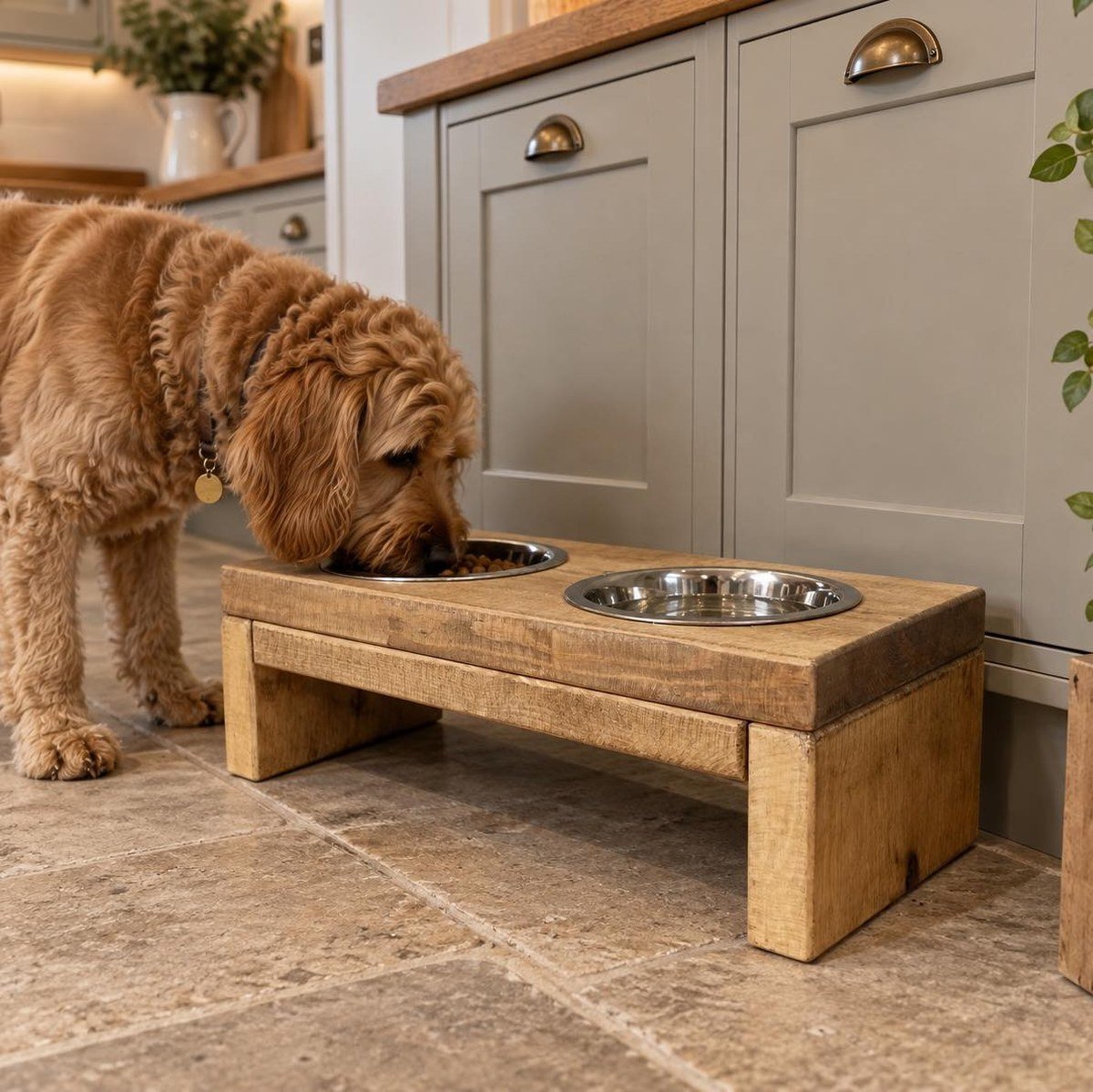
Raise her dinner and watch the whole corner fall into place. An oak or walnut stand lifts her bowls to the right height — less neck strain while she eats, and a tidier floor, since bowls snug in cutouts can't slide around mid-meal.
Measure from the floor to the bend of her front leg — her shoulder height is your target — so the bowl rims land within an inch or two. Choose food-safe finishes only (hardwax oil or a water-based non-toxic sealer) and wide, weighty legs she can't nudge over.
Then style it like the vignette it is: a woven tray underneath catches crumbs, a small framed print goes above, and suddenly your feeding corner photographs like the Pinterest kitchens you save. Warm wood, calm dog, kitchen tour ready.
2. The Pull-Out Cabinet Drawer That Hides Her Bowls
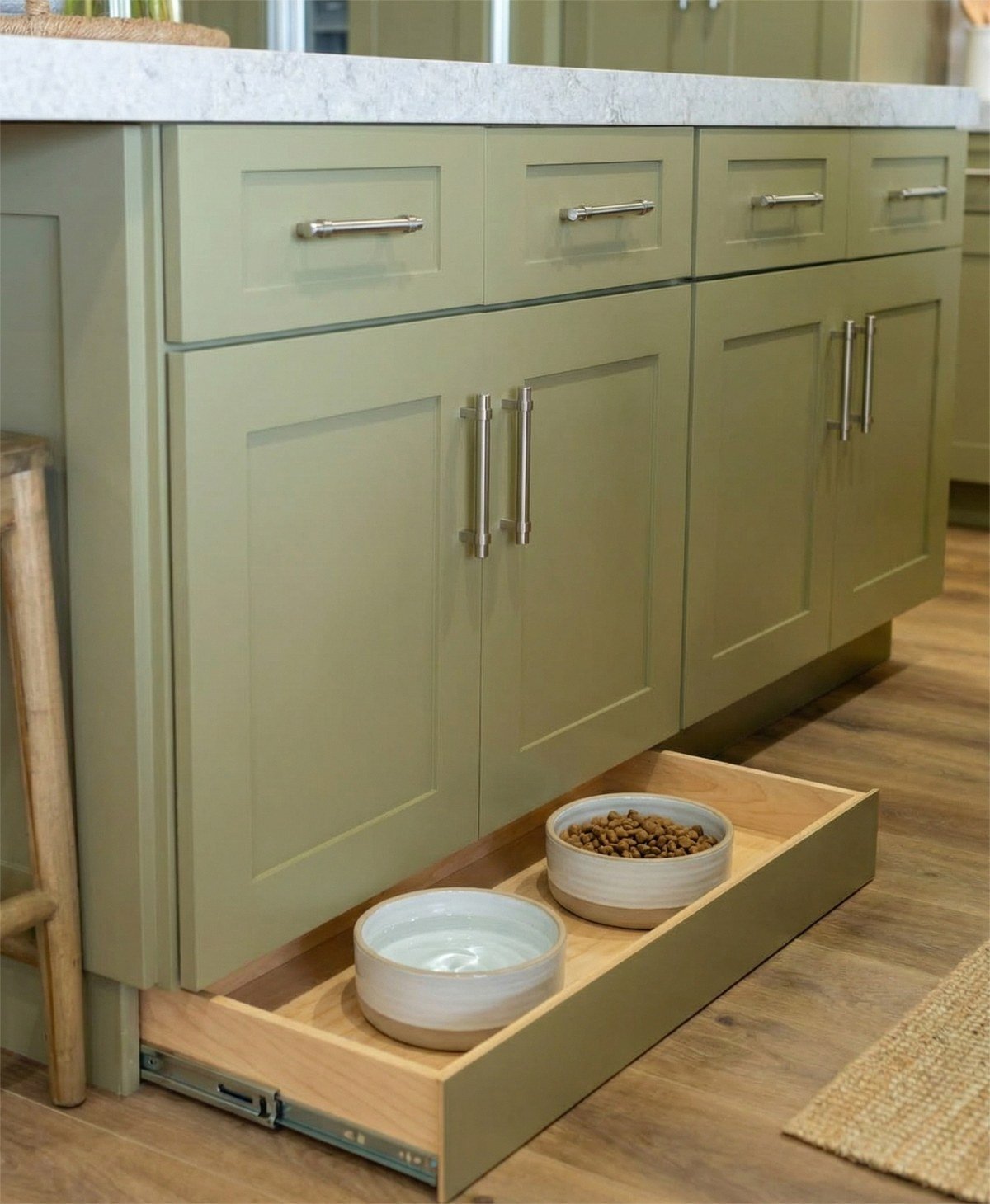
Your girl has the sweetest habit of nudging her empty bowl across the kitchen floor at 6 p.m. — but guests don't need to see it. A low cabinet drawer fitted with two bowl cutouts turns feeding time into a disappearing act: slide it open, she eats, slide it closed, and your kitchen is pristine again. Have the cutouts routed a half-inch wider than your bowls so they drop in flush, and seal the drawer front with a food-safe, non-toxic finish that wipes clean with one swipe. Anchor the cabinet so the drawer can't tip, because dinner shouldn't wobble. There's something quietly luxurious about a kitchen that feeds your dog beautifully and hides the evidence — she knows where her bowls live, and that's all that matters.
3. The Tiled Feeding Nook Made for Messy Eaters
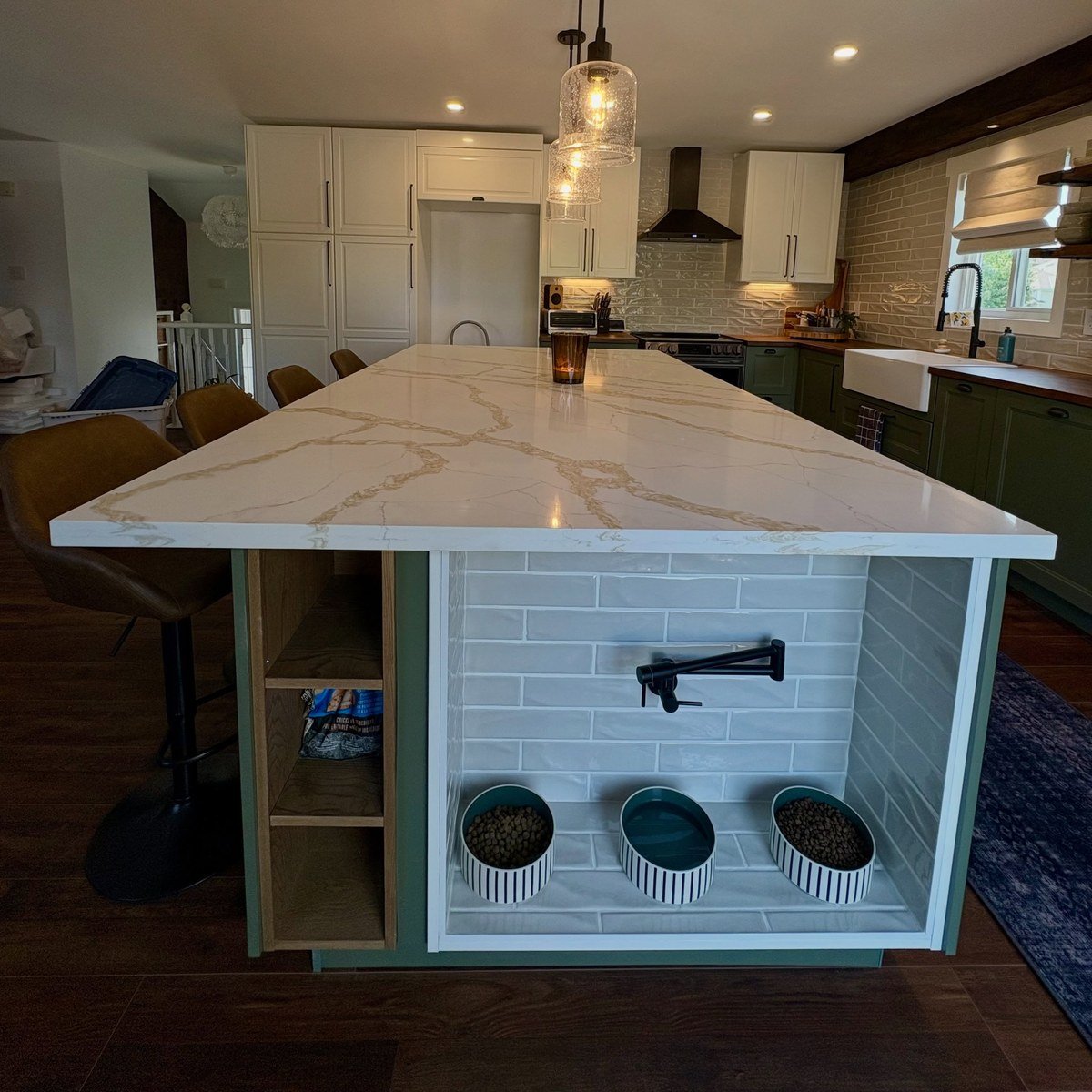
Some girls eat like it's a sport, and her splash zone doesn't have to look like a crime scene. Tile the little alcove where her bowls live — backsplash-style, baseboard up about 18 inches — and every splatter of kibble mush lands on something you can wipe clean in seconds. Use non-toxic, food-safe grout and sealant, and keep finishes clear of her bowls' edges so nothing flakes into her dinner.
Set her bowls into a low, tip-proof wooden stand — or a heavy waterproof mat — so nothing slides mid-scarf. Then the payoff: patterned tile turns her messiest habit into something that looks completely intentional. Honestly, wiping down a chic little nook beats scrubbing a grimy wall any morning.
Tile your nook — three ways
All three wipe clean in seconds — pick the one that fits your budget.
4. The Clear Acrylic Feeder for Minimalist Homes
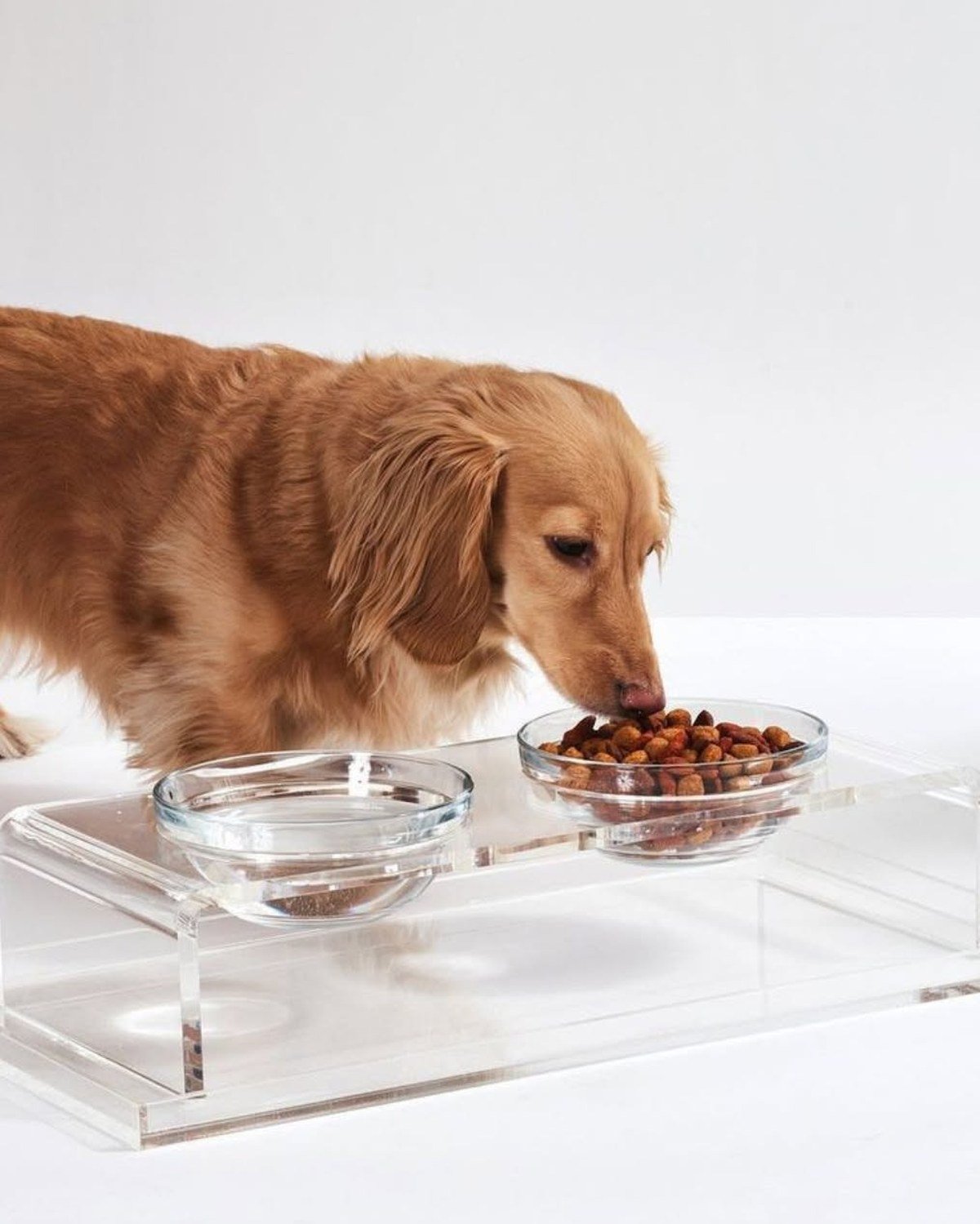
If your kitchen is all clean lines and quiet surfaces, a bulky wooden feeder ruins the vibe the second it hits the floor. A clear acrylic stand practically vanishes — all you see are her two bowls floating at the perfect height. Choose food-safe, non-toxic acrylic (5mm or thicker so it feels solid) with a wide, tip-proof base and non-slip feet; raised lips around each opening stop spills from sliding off mid-meal.
Cleaning is the easiest part. A quick rinse and a microfiber wipe keep it streak-free in under a minute, and a drop of food-safe mineral oil revives any cloudy spots.
Your girl gets the comfortable elevated height her neck deserves, and your kitchen stays the calm, uncluttered space you designed it to be.
✓ Acrylic Feeder Buyer’s Checklist
- ☐ Food-safe, non-toxic acrylic — 5mm+ thickness
- ☐ Bowls fit snugly in the cutouts (no wobble)
- ☐ Non-slip silicone feet on a wide, tip-proof base
- ☐ Raised rim around openings to catch spills
- ☐ Rounded, polished edges (no sharp corners)
5. The Farmhouse Feeding Station With a Distressed Finish
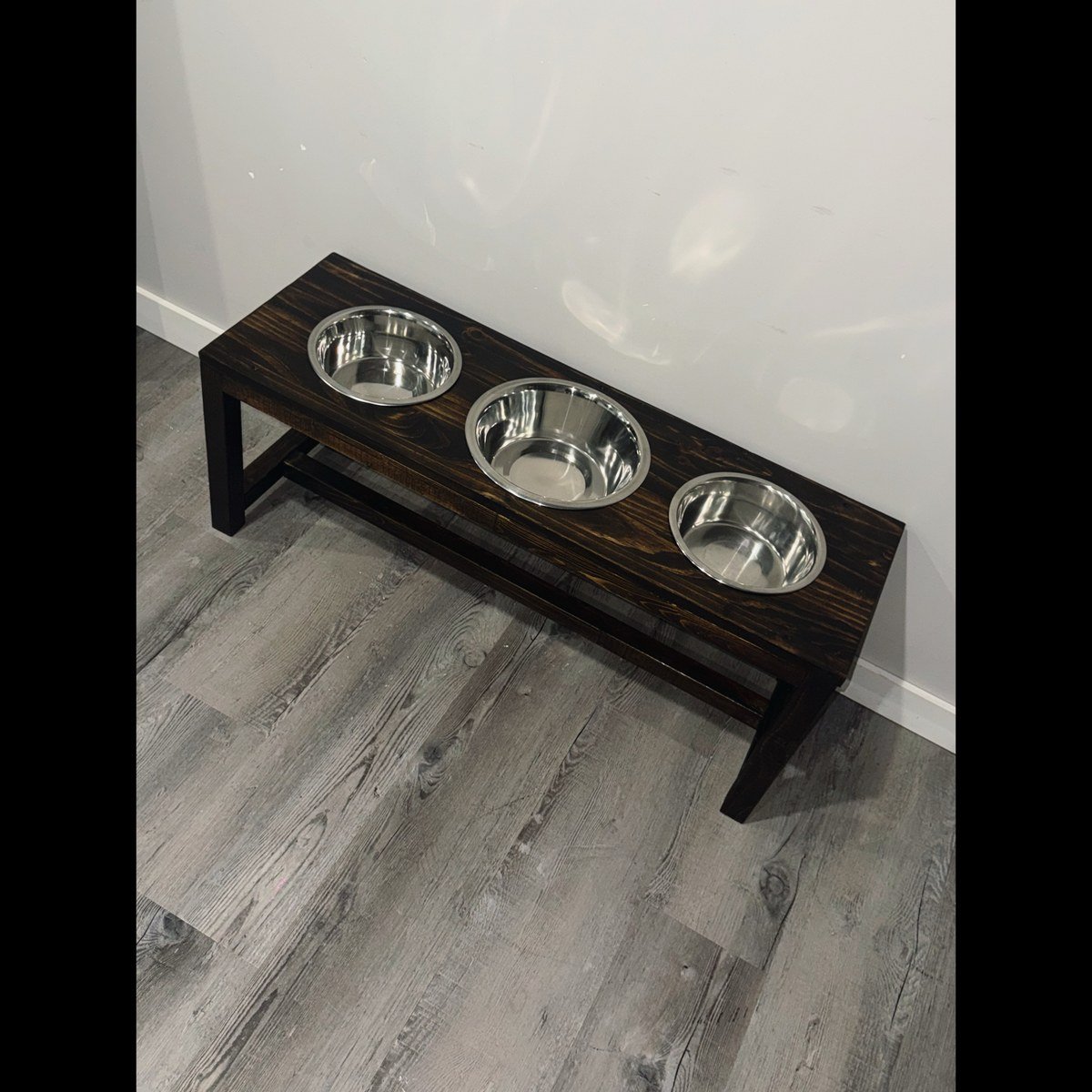
If your kitchen already leans shiplap and linen, her feeding corner deserves to speak the same language. A whitewashed wood stand with black metal bowl rings looks like it wandered out of a farmhouse market — and it stops her bowls from skating across the tile every time dinner lands.
Seal the distressed wood with a food-safe, non-toxic topcoat so drool and crumbs wipe away instead of soaking in. Set the bowl rims about four inches below her shoulder height, and keep the base at least sixteen inches wide so it stays tip-proof when she leans in.
Then hang her little chalkboard name tag and watch her trot to her spot every morning, tail going wild. Suddenly your kitchen feels a little more like home.
6. The Feeding Station With Hidden Kibble Storage
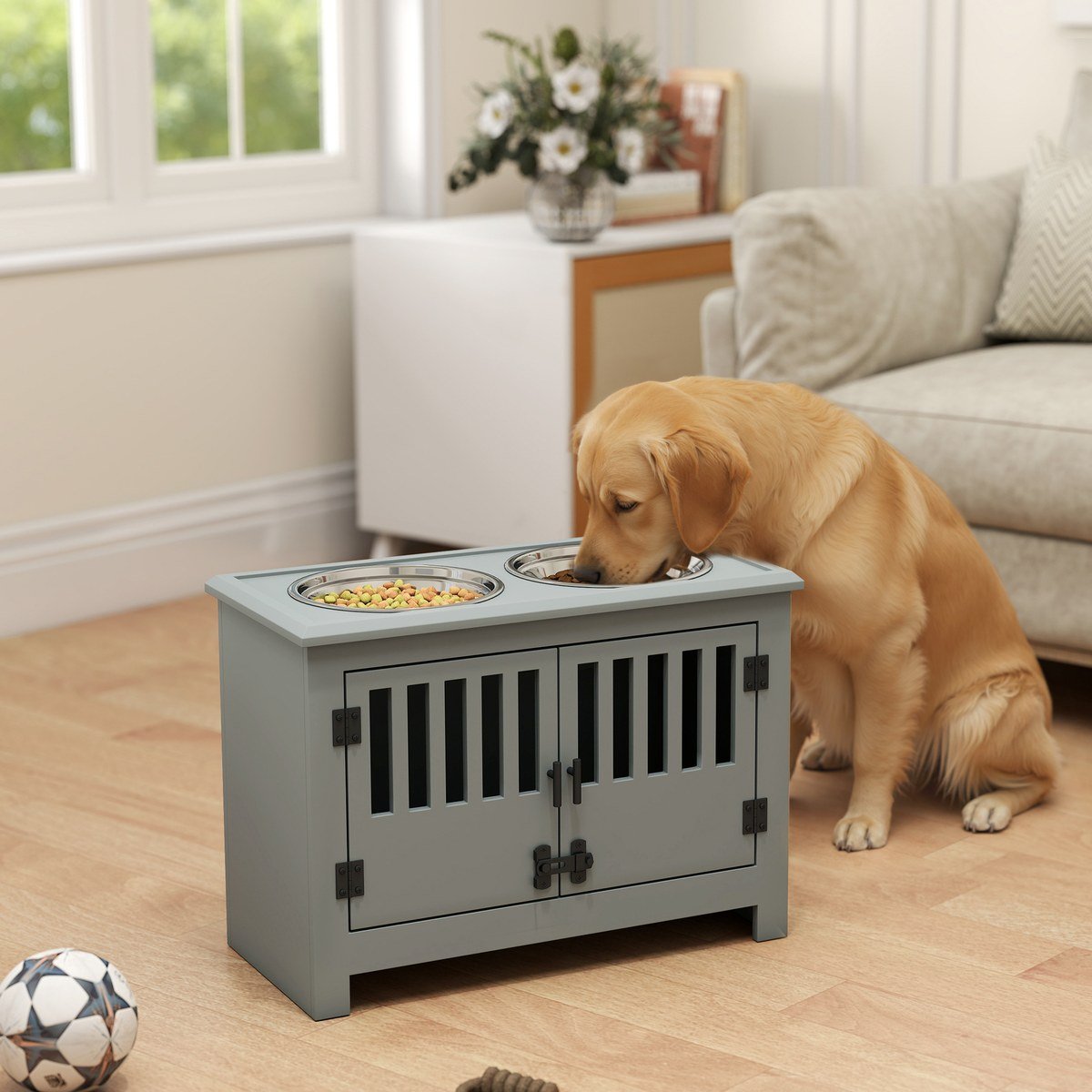
Tired of your girl's dinner setup looking like a backroom at a pet store? A cabinet-style feeding station hides a sealed bin right inside the base, so her kibble stays fresh, scoop-ready, and totally out of sight. One beautiful piece does the whole job.
Size the bin to hold at least a week's worth of food — for a medium dog, roughly 10–12 liters on a smooth sliding runner. Seal the interior with a food-safe, non-toxic finish and keep the base wide and tip-proof, because excited dinner-dancers are real. Wipe the tray zone weekly with a damp cloth.
Guests see furniture, not a feeding corner. And you get that small, smug satisfaction of opening the cabinet to find everything exactly where it belongs.
Kibble bag slumped on the pantry floor, scoop lost, dust on everything — clutter you see three times a day.
A styled cabinet feeder: sealed bin inside, food-safe finish, tip-proof base — her dinner spot now looks like furniture.
7. The Fold-Down Feeder That Vanishes After Dinner
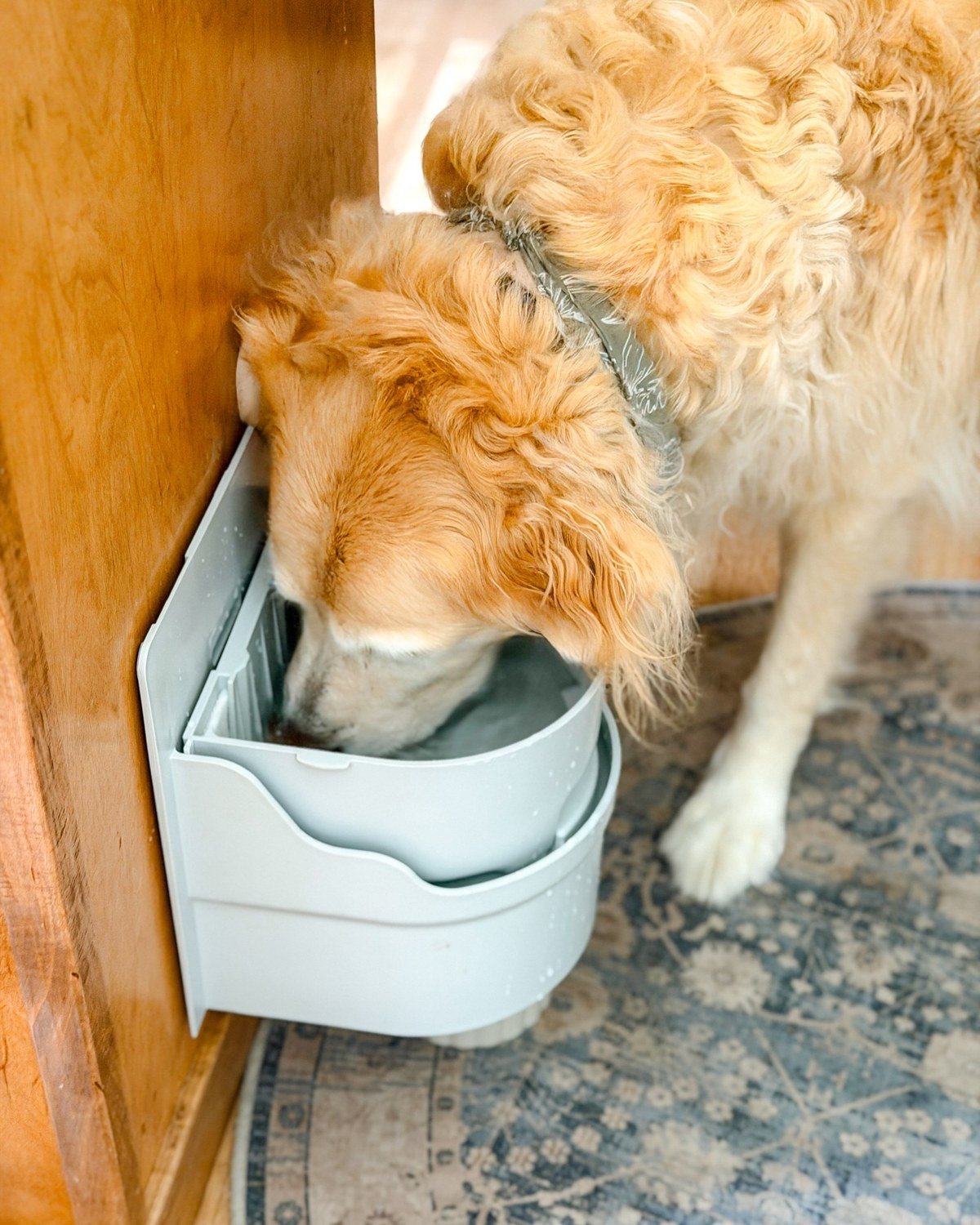
A tiny kitchen doesn't mean your girl's dinner station gets to look like a clutter zone. Mount a sturdy fold-down shelf to the wall, and at mealtime she gets a proper little dining spot — the second she's done, it folds flat against the wall like it was never there.
Use a solid wood or metal shelf rated for at least 25 pounds, mounted into studs, with a lip edge so the bowls can't slide off. Stainless or BPA-free ceramic bowls in a food-safe, non-toxic finish keep things tip-proof and wipe clean. There's something deeply satisfying about flicking it up, bowls in place, hearing your girl's tail thump against the cabinets in anticipation.
Then fold it down. Kitchen reclaimed. Nobody would ever guess dinner happens there.
Mounting Tip
“Always mount the shelf into wall studs, never drywall anchors — then set a small level on the shelf before your first pour so water bowls sit flat instead of slowly creeping toward one edge.”
— For a fold-down feeder that stays rock-solid at 25 lbs+
8. The Curated Mat and Bowl Set That Looks Like a Tablescape
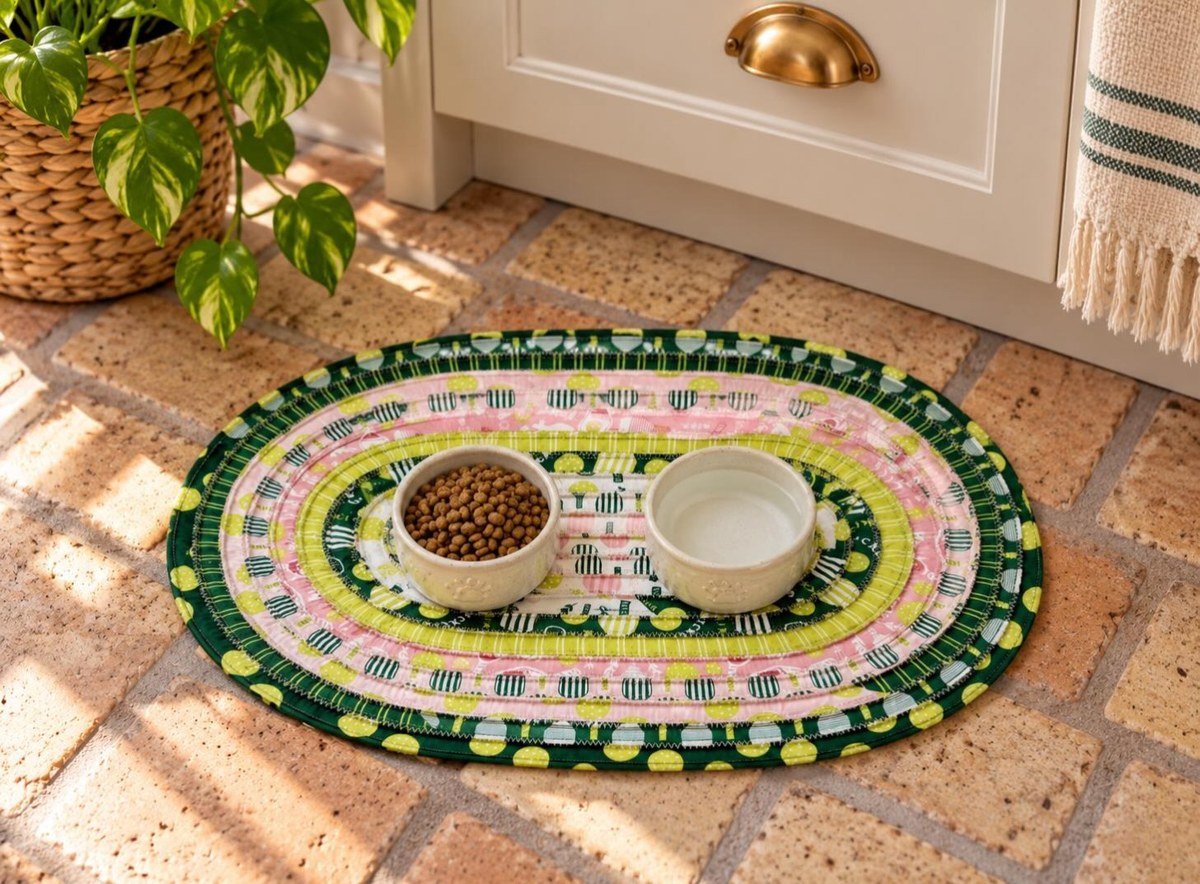
The secret to a feeding corner that looks designed instead of dumped? One washable runner mat with a real pattern, layered under two stoneware bowls. Suddenly it's not bowls on the floor — it's a tiny tablescape, and your kitchen feels more pulled together.
Choose food-safe, lead-free stoneware in a heavy, wide-bottomed shape that can't be nudged across the floor; a silicone base ring makes them practically tip-proof. Size the mat so the bowls sit fully inside with a few inches of border to spare — that margin catches the crumbs.
Shake the mat out daily and toss it in the wash weekly. That one layered moment turns the busiest corner of your kitchen into something you love looking at — and dinner feels like an occasion for your girl.
washable weekly
heavy & balanced
bowls tip-proof
9. The Long Multi-Dog Station With a Bowl for Everyone
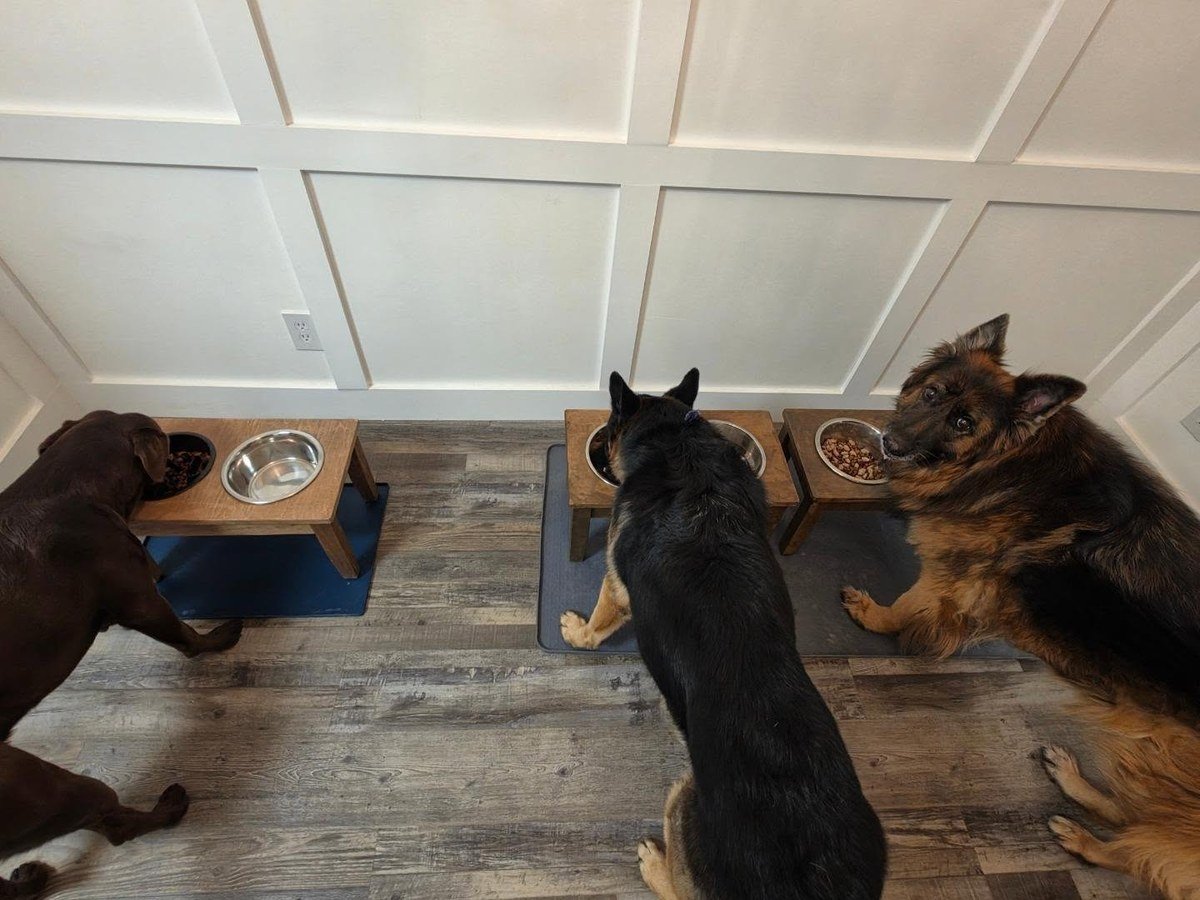
If you're running a multi-dog household, you know the pre-dinner chaos: bowls sliding across the floor while everyone pretends she hasn't eaten first. A long, low console with one bowl cutout per girl ends the bowl-shuffle for good — every dog learns her own place setting, and the mismatched-dish pileup just… stops.
Allow at least four extra inches per dog beyond the widest bowl, seal the wood in a food-safe, non-toxic finish, and build it on a wide, low, tip-proof base — because the alpha eats like it's a race.
There's something deeply satisfying about calling the girls and watching each march to her own spot like dinner service at a very good restaurant. Calm floor, happy pack, and furniture that actually looks like it belongs in your home.
10. The Portable Feeding Set That Travels in Style

Your standards don't drop just because you're out of the house, so why should hers? A roll-up silicone placemat with two collapsible bowls in a matching pouch keeps your girl's routine intact — at the cabin, the in-laws', or the patio café.
Look for food-safe, BPA-free silicone and bowls with a weighted, tip-proof base — hotel floors are slick, and nobody wants kibble skittering under the bed. Unroll the mat, pop the bowls open, and she eats like nothing changed.
She relaxes faster in unfamiliar places when mealtime feels familiar — that's the real payoff. And pulling out a tidy, coordinated set instead of a crumpled plastic bowl says everything about the kind of dog mom you are.
Rinse, shake, roll — five minutes.
11. The IKEA-Hack Feeder You Can Build in an Afternoon
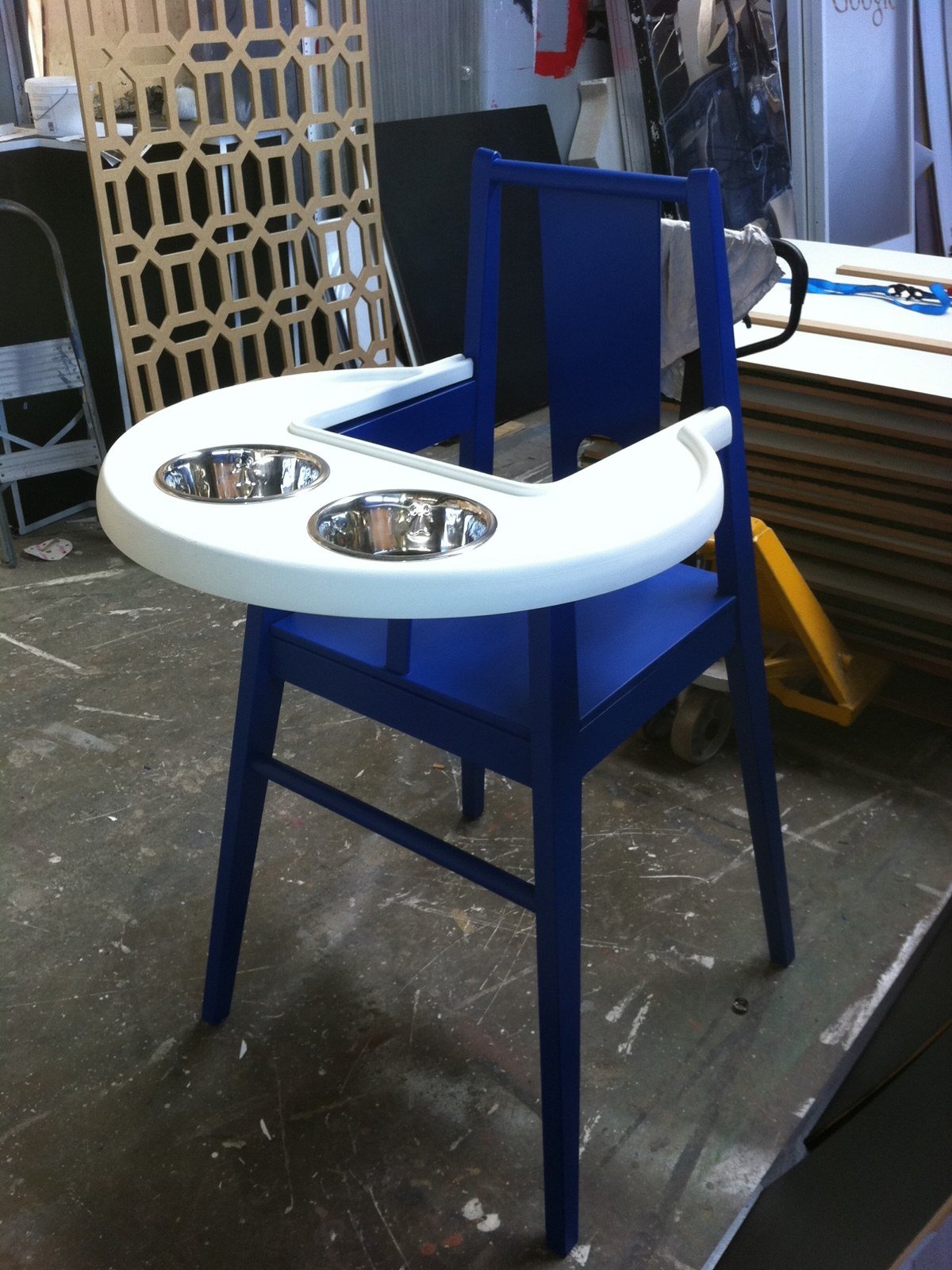
Grab a BEKVÄM step stool or a small FLISAT-style cabinet and you're halfway there. Trace your bowls, cut the holes with a jigsaw, and sand every edge smooth so her chin never catches. Paint it to match your cabinets with a food-safe, non-toxic finish, and keep the base wide and low so it never wobbles mid-meal. Total damage: usually under fifty dollars, built in a single afternoon while she's napping nearby.
The payoff is ridiculous for the effort. Instead of a sad bowl sliding around your tile, she gets a station that looks bespoke — like you planned the kitchen around her, which, let's be honest, you did. Wipeable paint and a washable silicone mat underneath mean dinner cleanup takes thirty seconds flat.
12. The Marble-Top Feeder That Matches Your Counters
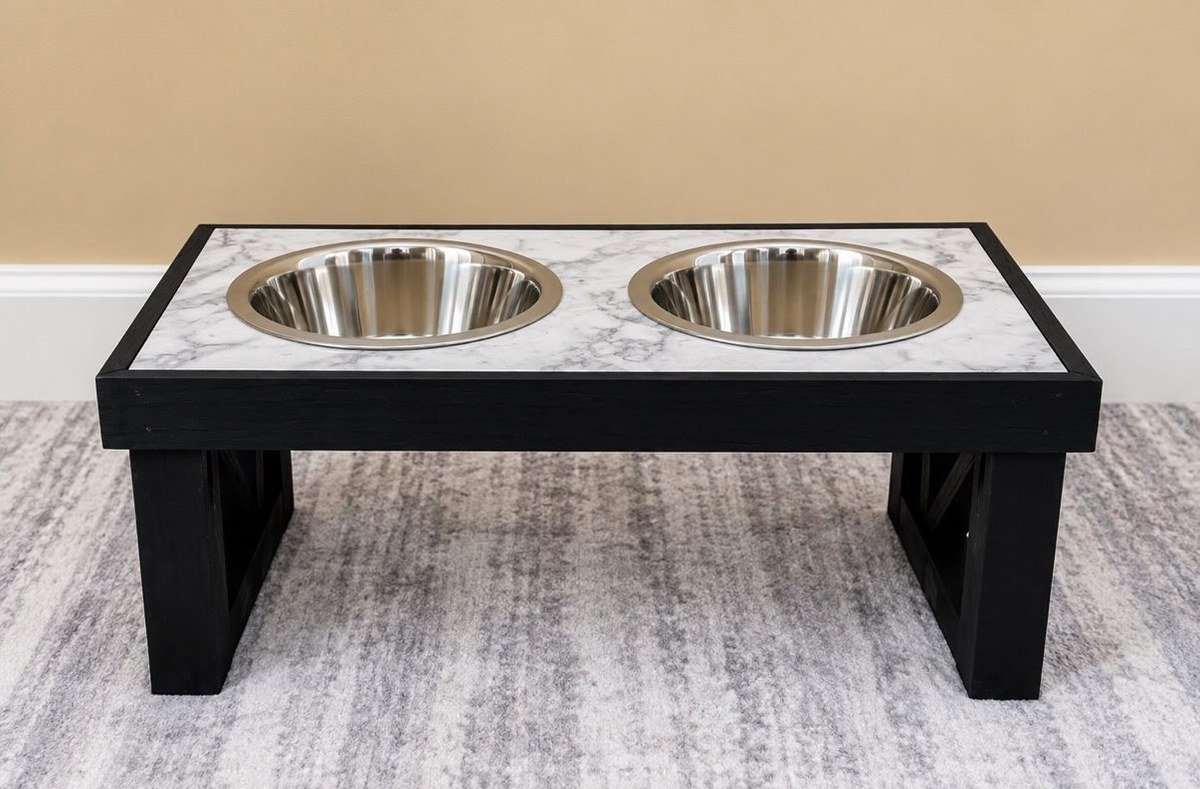
Your girl eats like dinner is a timed event, and every stainless bowl on the market slides across the kitchen floor. This is where a slab of real marble earns its keep. Set a heavy stone top — just a 12-by-24-inch remnant, the kind countertop shops sell for scrap — onto a low wooden base with raised rims, and it echoes your counters so well it looks intentional. It won't budge a centimeter while she inhales her kibble.
The cold stone stays fresh under her chin, and cleanup is one swipe with a damp cloth. Use a food-safe mineral-oil finish on the wood and keep the base low and wide so nothing tips. Quietly luxurious? Absolutely. But mostly, it just feels like your kitchen finally included her.
13. The Feeding Nook Built Into Your Kitchen Island
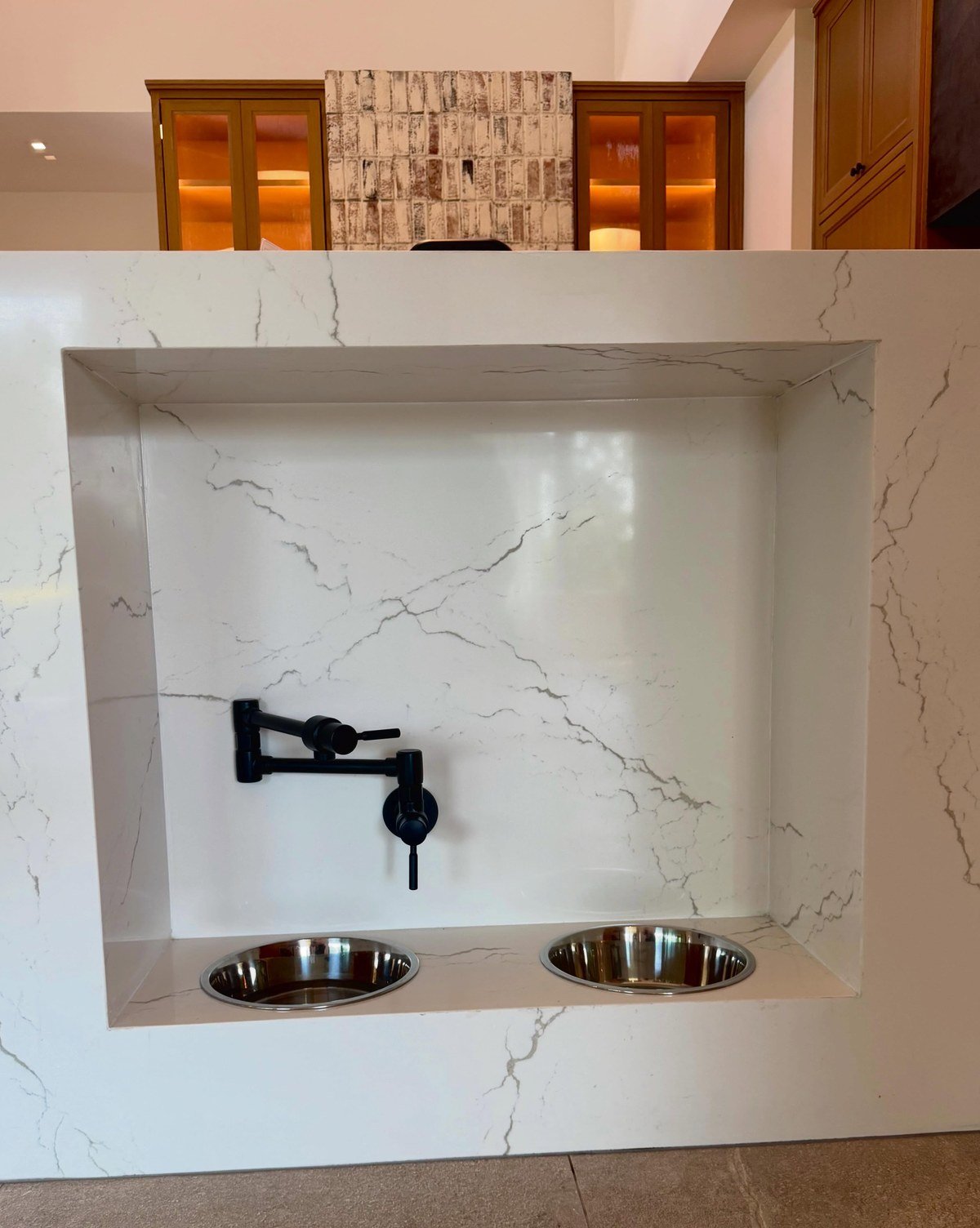
She already parks herself at your feet while you chop dinner, so give her a real place in the action. Cut two round openings into the end panel of your kitchen island and her bowls become a built-in detail that looks intentional, not improvised. No mat creeping across the tile, nothing to shove aside when you sweep.
Measure her bowls at their widest point and cut the holes a half inch wider — the gap keeps them easy to lift without rattling. Seal raw wood with food-safe, non-toxic polyurethane, and anchor a slim rubber mat underneath so enthusiastic eating can't shift the bowls.
Then comes the payoff: you glance down from the stove and she's right there, your little sous-chef. The kitchen finally feels designed around your actual life together.
Can I retrofit my existing island?
Yes — any flat end panel works. Use a jigsaw with a fine-tooth blade, sand the edges smooth, and seal with food-safe finish. Thirty minutes, one tool.
Will it weaken the cabinet?
Not if you cut into the decorative end panel, not the frame. Keep cuts 2+ inches from edges and the structure stays rock solid and tip-proof.
How do I clean spills inside the cabinet?
Slip a shallow tray beneath the bowls to catch drips. The sealed panel wipes clean in seconds — no crumbs trapped in corners.
14. The Feeder With Her Name Engraved on It
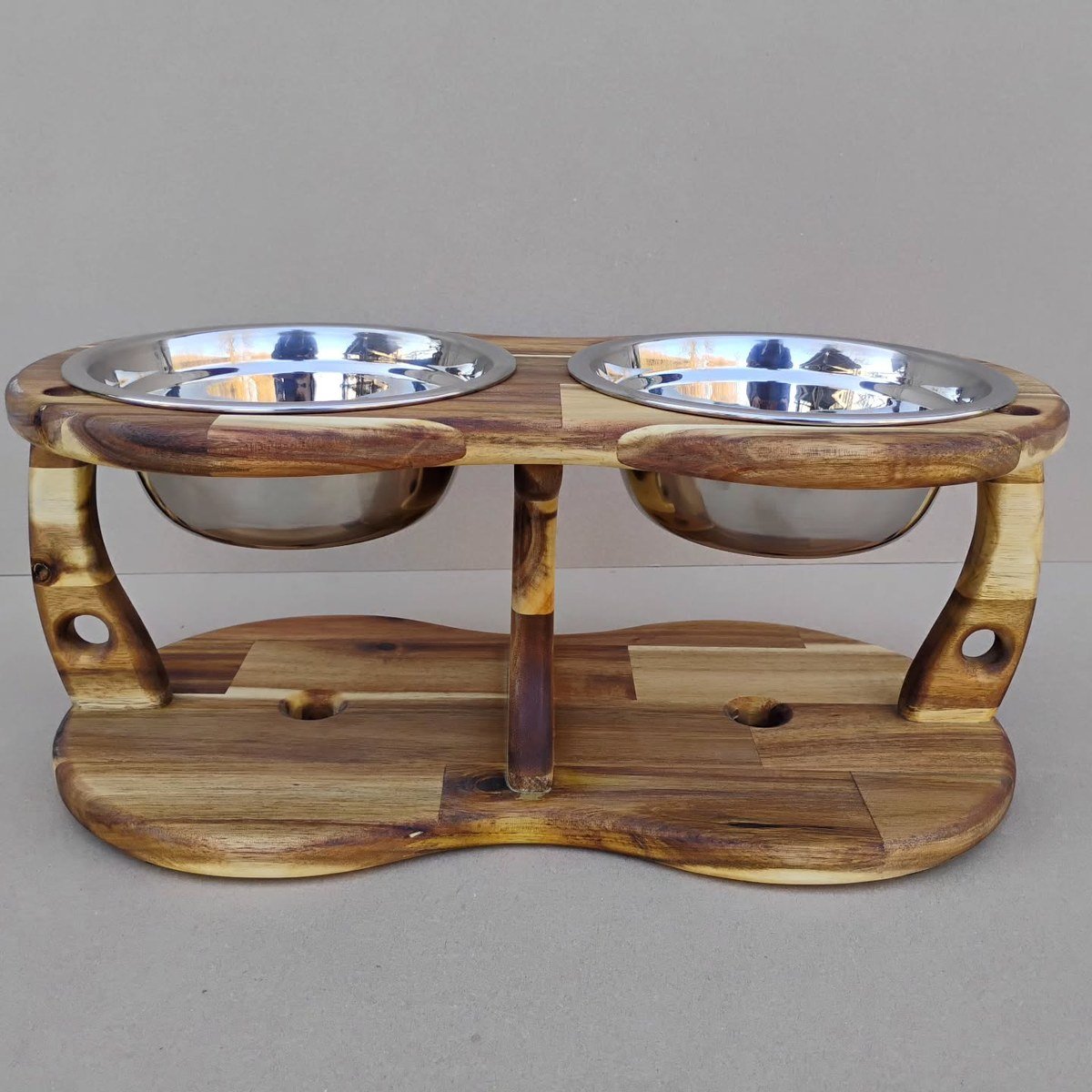
There is something about walking into the kitchen and seeing her name etched in brass that just gets you. Not a sticker — her actual name, laser-engraved on her feeder. Guests always stop to read it. You always smile at it.
The detail that matters: choose a plate sealed with a food-safe, non-toxic lacquer on a weighted, tip-proof feeder. Order it at least 1 × 3 inches so her name has room to breathe, and fix it with two tiny screws instead of glue so it never peels.
Polish it now and then with a soft cloth. That small gleam of brass turns a feeding corner into a statement: she lives here, she is loved here — and everything in this home carries her name, including dinner.
Pick Her Nameplate Finish
Brushed Brass
Matte Black
Antique Bronze
Rose Gold
Seal every finish with a food-safe, non-toxic lacquer
15. The Slow-Feeder Bowl That Doesn't Look Like a Maze Toy
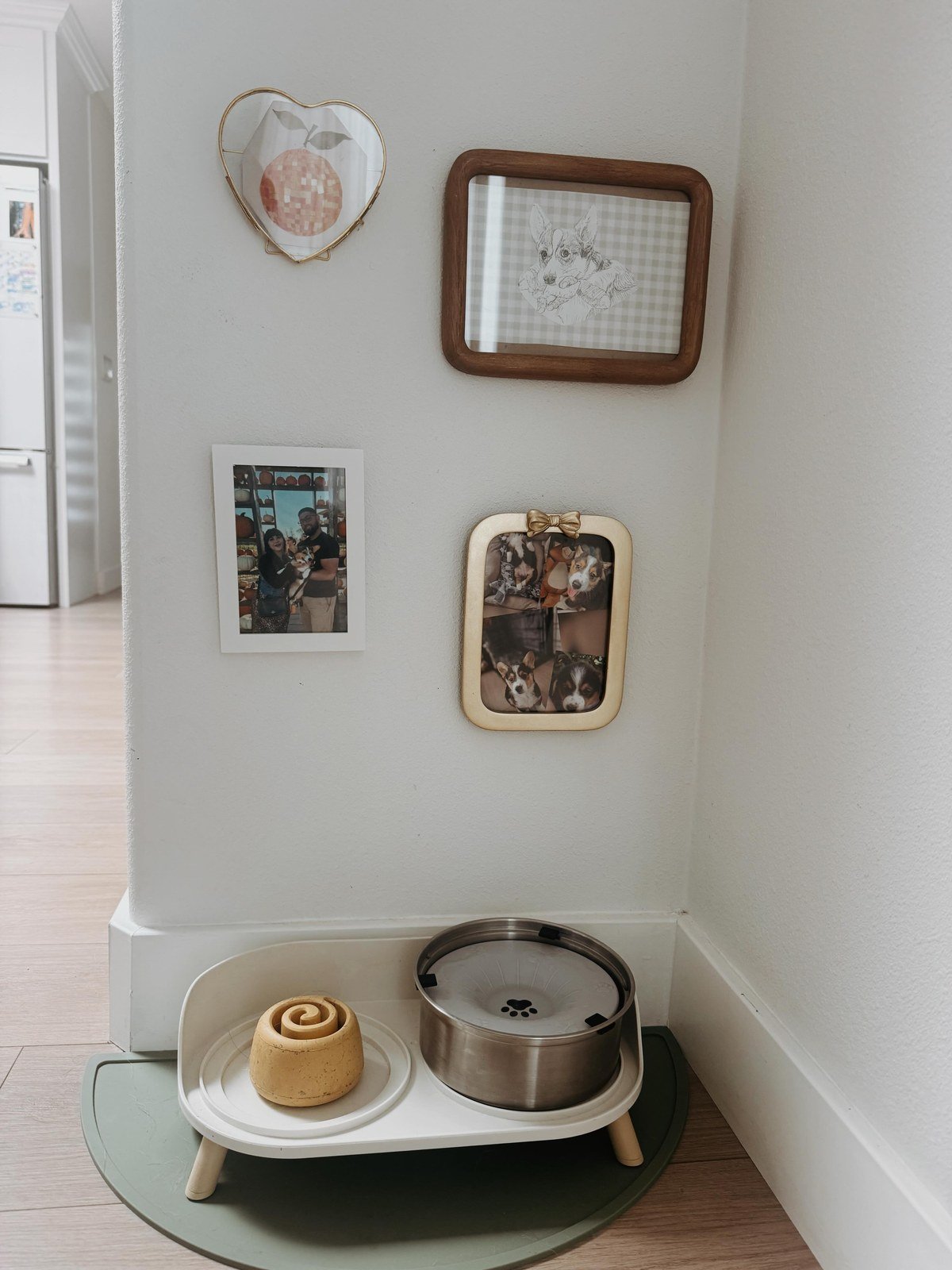
You know that sound — your girl inhaling dinner like the bowl might vanish. It's hard on her stomach, but those old-school slow feeders? They look like plastic toddler toys parked on your kitchen floor, which is not the vibe you curated.
The new generation comes in soft stoneware with sculptural ridges that make her nose work for every single bite. Same slower pace, less gulp-and-gag drama, less risk of bloat — but it actually looks like decor. Pick a food-safe, lead-free glazed ceramic with a wide, weighted, tip-proof base so nothing slides across the tile mid-dinner.
She gets calmer meals, and you get the loveliest payoff of all: silence at dinnertime instead of vacuum-cleaner noises. Leave it out. It belongs there.
Fast eaters gulp air with every bite — a top risk factor for bloat and choking.
16. The Tall Elevated Feeder Made for Large Breeds
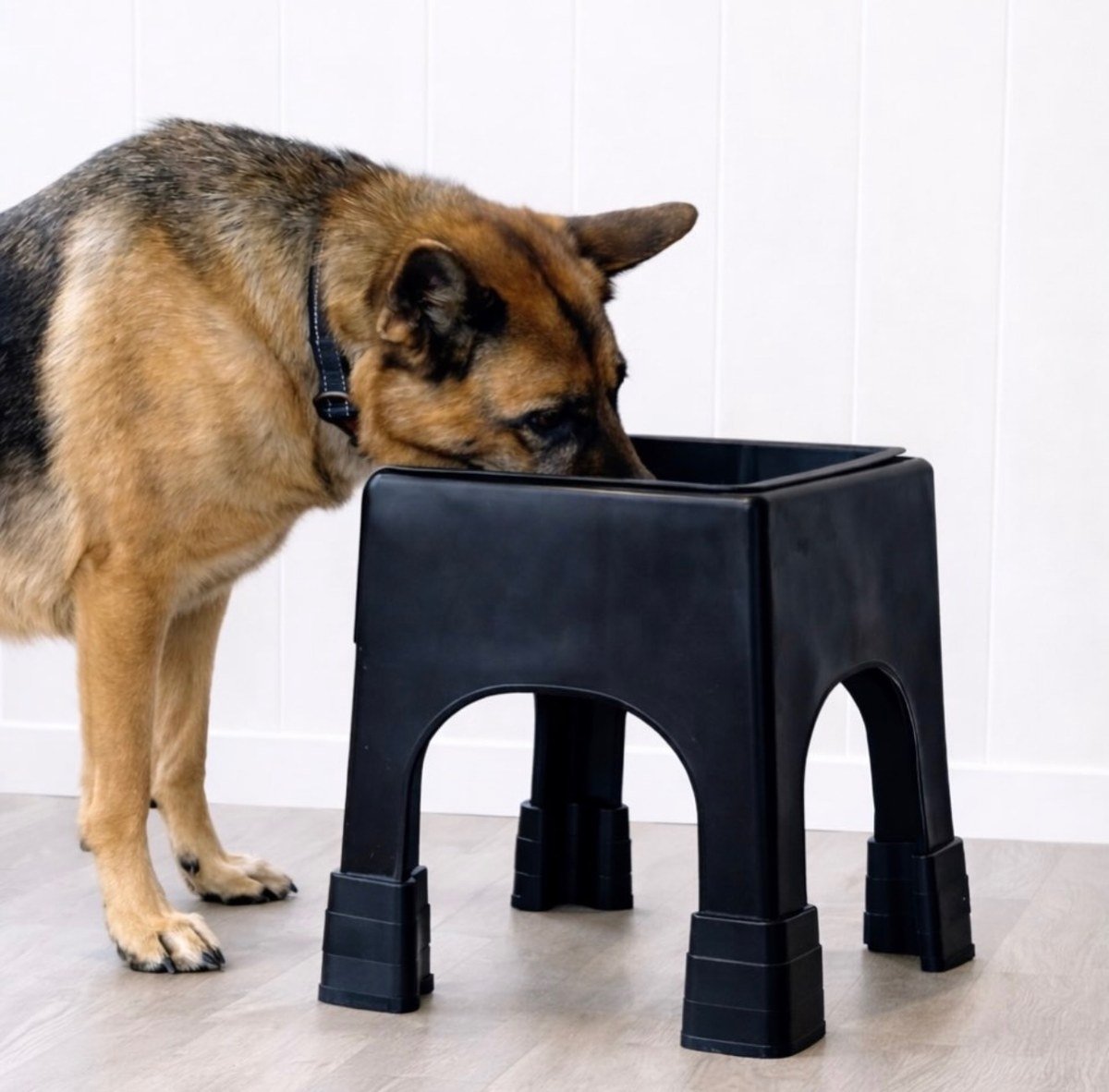
When your girl stands nearly three feet at the shoulder, a standard feeder is barely worth her notice — she has to fold herself in half to reach it. A sturdy extra-tall stand, built to her actual height, lets her eat with her neck straight and relaxed, and it reads as real furniture rather than a wobbly afterthought.
Measure her floor to shoulder — that number is your stand height, bowl rims landing a couple of inches below. Pick a heavy, tip-proof base she can't shove around, and seal it only with a food-safe, non-toxic finish like hardwax oil — nothing that chips near her food. Then enjoy the simple pleasure of a big girl eating calmly, no craning: dinner finally looks as good as it feels.
❌ Slides and wobbles
❌ Looks like a dog-supply aisle
✓ Heavy, tip-proof base
✓ Furniture look for your kitchen
17. The Minimalist Ceramic Bowl Set in Gallery Whites
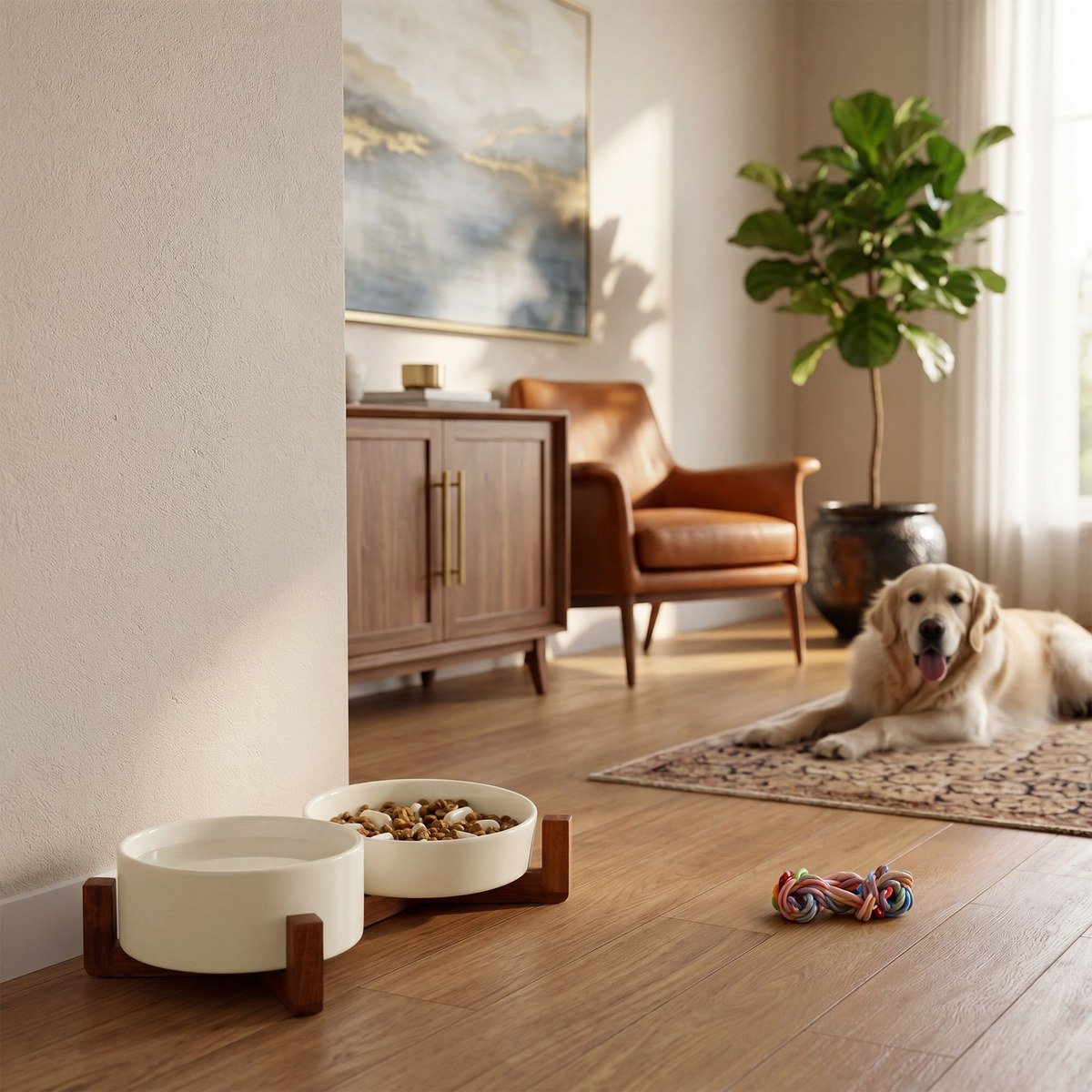
There is a particular pleasure in crouching down at feeding time and seeing two perfect, matte-white bowls instead of a plastic free-for-all. Hand-thrown ceramic bowls, in soft glaze tones or pure gallery white, sit directly on the floor like quiet sculpture. Your girl eats from them and they look like they belong in a ceramics studio.
Keep it safe and simple: choose food-grade, lead-free glaze and a wide, low profile with a weighted base so an enthusiastic eater can't nose it across the tile. Ceramic beats plastic here for hygiene, too — no scratches harboring bacteria.
The payoff is sensory. You hear the gentle clink as you set them down each morning, and instead of an eyesore, her corner becomes part of the room you actually designed.
Glaze — food-safe, lead-free
Base — weighted, tip-proof
18. The Feeding Station With a Built-In Water Fountain
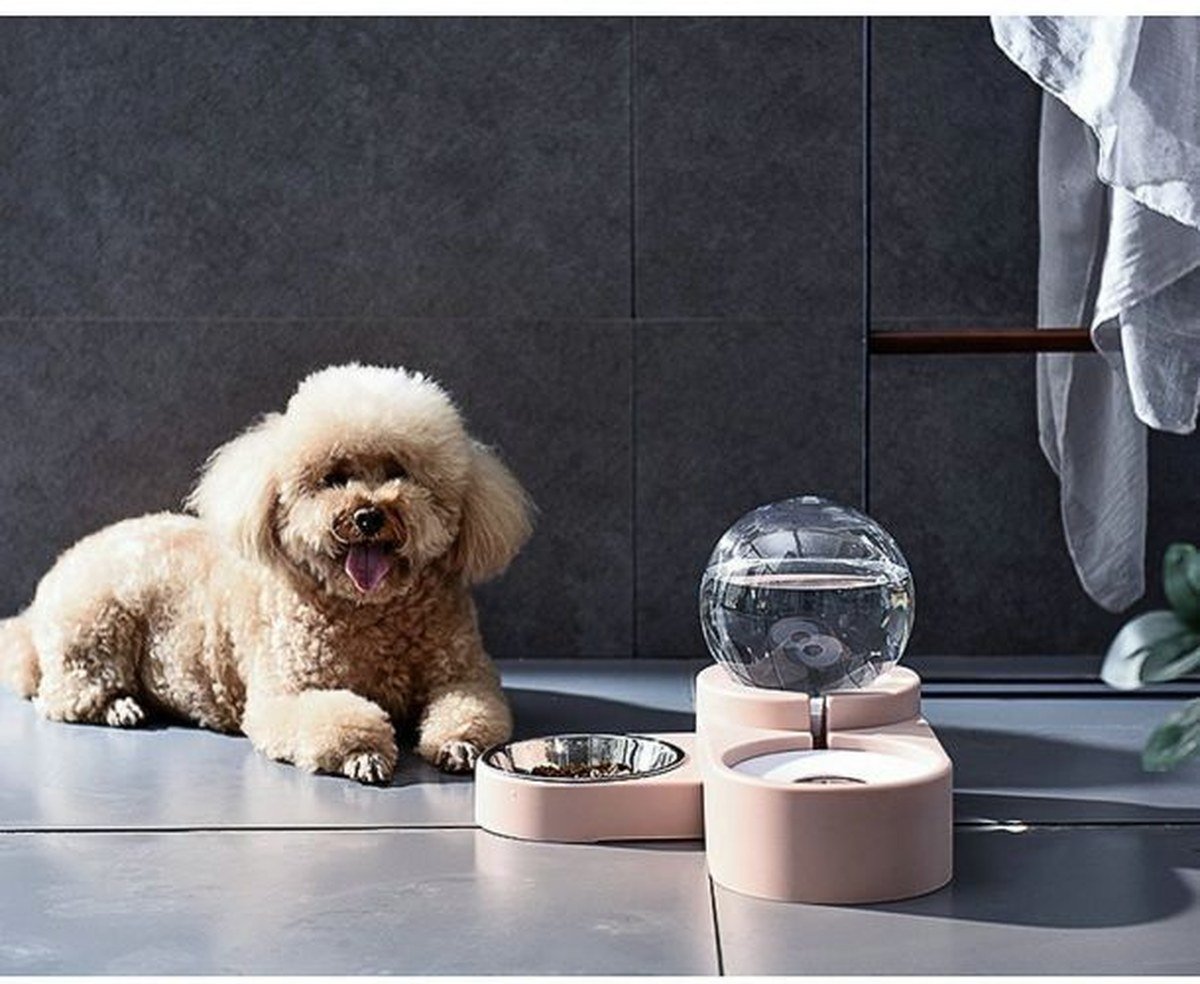
Your girl deserves better than water that's been sitting since breakfast. Tuck a circulating ceramic fountain beside her food bowl and she gets filtered, fresher water — dogs genuinely drink more from moving water, and the gentle burble makes your kitchen the calmest room in the house. Choose food-safe glazed stoneware from a brand that publishes its lead-free testing, set on a non-slip silicone mat or weighted tray so it never slides or tips.
Here's your cleaning hack: soak the pump in vinegar water every two weeks and it runs whisper-quiet for months instead of grinding into that annoying hum. Once you hear that soft waterfall every time she pads over for a drink, you'll wonder why her corner wasn't the prettiest part of the kitchen all along.
💧 Fountain Tiers: Pick Your Flow
Step 1 · Starter (~$25–40)
Basic ceramic fountain + carbon filter. Great trial run to see if she likes moving water.
Step 2 · Everyday (~$45–80)
Larger reservoir, quieter pump, dishwasher-safe tiers — the sweet spot for most kitchens.
Step 3 · Statement (~$90–150)
Handmade glazed stoneware in decorator colors — hydration station that doubles as decor.
19. The Feeding Corner You Style With the Seasons
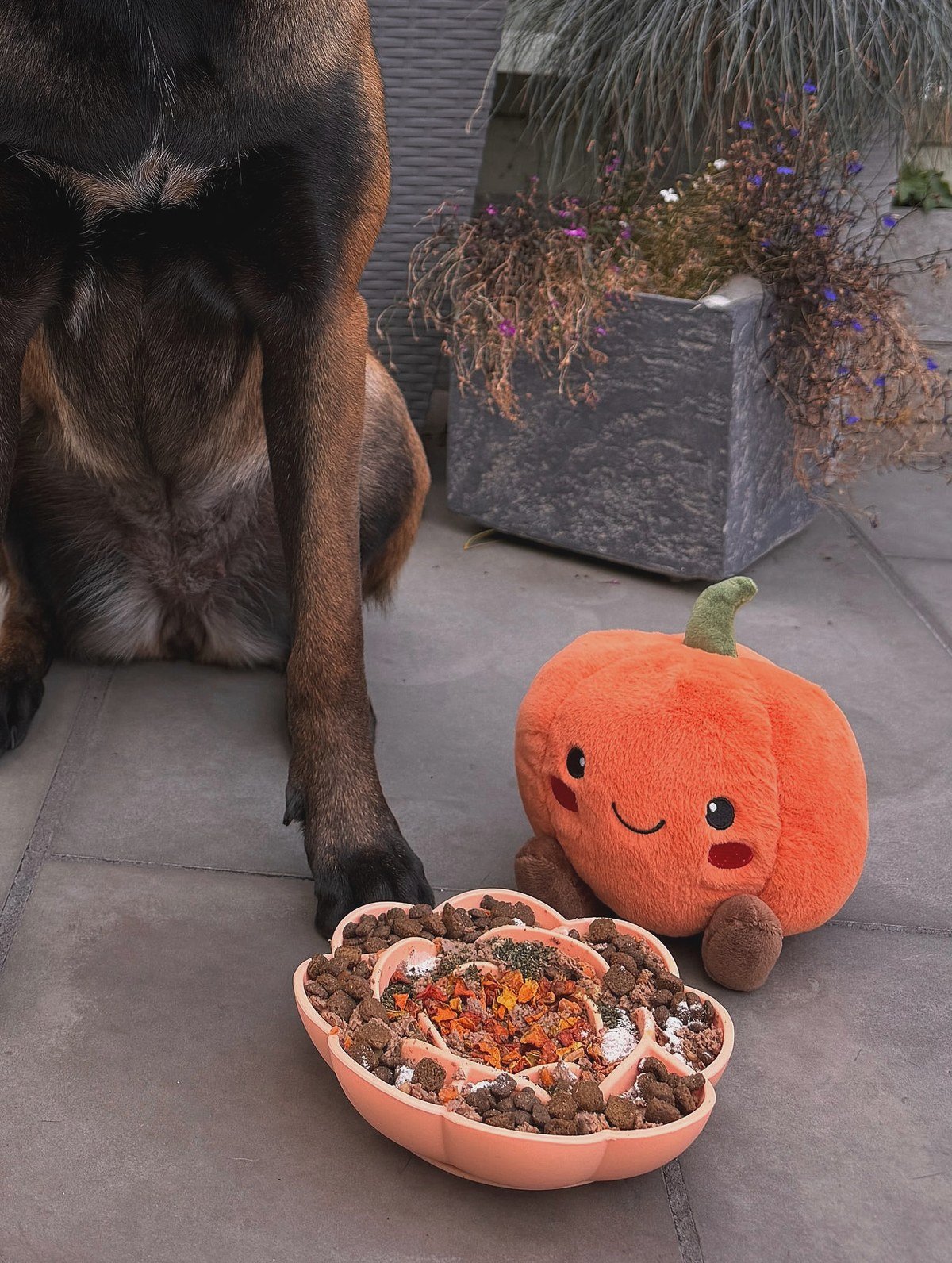
Give your feeder the redecorating treatment: a neutral wood stand or matte ceramic set in soft cream, then let the seasons style it. In October, a tiny pumpkin beside her bowls. Come spring, a sprig of eucalyptus in a bud vase on the shelf above.
She keeps her routine while you get a fresh styling moment every few months — one small swap scratches that redecorating itch for pennies. Keep seasonal pieces beside or above the feeder, never inside her bowls: small gourds and faux berries tempt your girl's teeth.
Practical pick: a stable, tip-proof base with a non-slip bottom, at least 12 inches wide for a medium dog, finished food-safe and non-toxic — no lead paint or chipping varnish near her meals.
Frequently Asked Questions
Quick answers to the most common questions.
+How high should an elevated feeder be, and how do I measure?
Measure your girl standing naturally, from the floor to the top of her shoulders (her withers), then subtract about six inches — her bowl rim should sit near chest height so she eats comfortably without straining. Small dogs usually do well at four to six inches, medium dogs around eight to twelve, and large breeds at twelve to sixteen or taller. Many handmade stands are built to order, so send the maker her withers height and they'll size it perfectly.
+What materials are safest and easiest to clean?
Stainless steel and glazed ceramic are the gold standards: non-porous, non-toxic, dishwasher-safe, and they won't harbor bacteria the way scratched plastic does. For the stand itself, choose sealed hardwood or food-grade finishes rather than raw or flaking paint, since she'll lick around it daily. Avoid bowls with chipped glaze, and skip anything with a strong chemical smell out of the box — if it smells like a factory, it doesn't belong under her dinner.
+How many bowls do I need for a multi-dog home?
Give every dog her own complete set — one food bowl and one water bowl each — to prevent resource guarding and mealtime tension. A shared water bowl can work if your girls are easygoing, but separate is always calmer. Plan one cutout or setting per dog with enough spacing that nobody crowds a neighbor. Label each spot with a nameplate if your crew has different diets or medications, so the right serving always lands in the right bowl.
+How do I keep ants and pests out of the feeding station?
Pick up uneaten food after twenty to thirty minutes instead of leaving bowls down all day — free-feeding is the number one ant invitation. Wipe the feeding area daily, since even invisible kibble dust attracts pests. Store her food in a sealed airtight container rather than an open bag, and wash bowls every day. If ants persist, a thin line of food-grade diatomaceous earth around the station's base (never in her food) creates a barrier most crawling insects won't cross.
+Which parts of a feeding station are dishwasher-safe?
Stainless steel and glazed ceramic bowls are almost always dishwasher-safe — just avoid pieces with decorative metallic trim, which can flake off. Silicone mats and slow-feeder inserts are typically top-rack safe too. Wooden stands, bamboo, acrylic, and anything with an engraved nameplate should be hand-washed instead, since heat and detergent dull finishes and loosen adhesives. When in doubt, check the maker's care card; a quick hand wash keeps a beautiful stand looking new for years.
+What's a realistic budget for a stylish feeder?
Expect twenty to sixty dollars for a standalone raised feeder with bowls included, and sixty to one-fifty for handmade wooden or personalized pieces. Built-in options like cabinet pull-outs or tiled nooks run a few hundred in materials if you DIY, more with a carpenter. IKEA-hack feeders can land under fifty dollars. Decide what matters most — the look, the personalization, or the built-in factor — and spend there; even the simplest upgrade beats sad bowls on the floor.