A tired dog is a happy dog — and the fastest way to tire one out isn't always a longer walk. Mental enrichment, the kind that makes your dog think, sniff, and problem-solve, burns energy in ways physical exercise can't. Best of all, the most effective enrichment games cost nothing: they live in your recycling bin, your linen closet, and your freezer.
This collection gathers 15 DIY enrichment games for dogs built entirely from household items: muffin tin puzzles, homemade snuffle mats, lick mats, cardboard box hunts, ice block digs, and more. Each section includes a compact how-to-play card with exactly what you need and how to set it up, plus notes on supervision and difficulty. Whether you're surviving a rainy week, calming pre-vet jitters, or just keeping a clever pup out of mischief, there's a game here that will do the trick.
1. Muffin Tin Puzzle

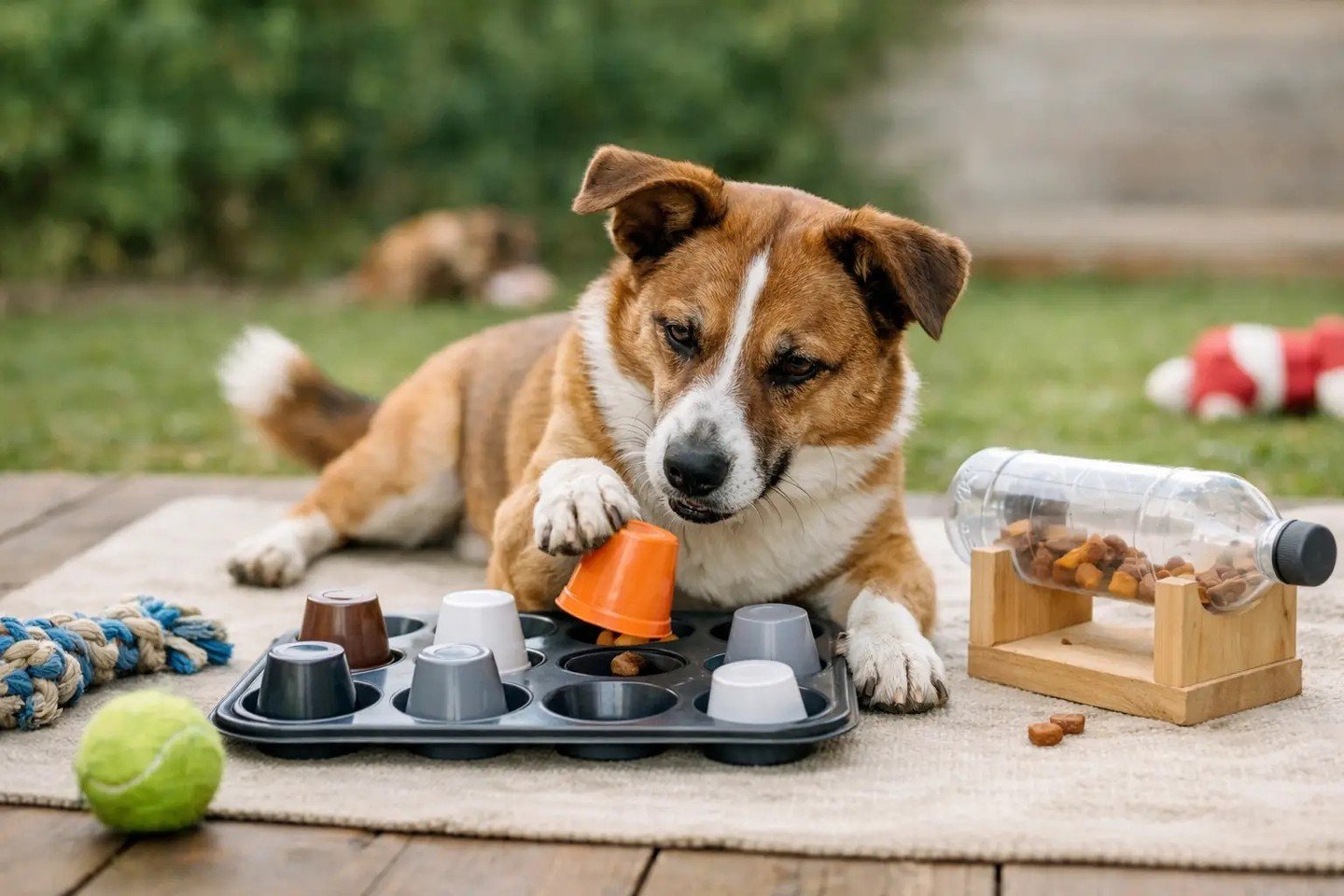
Your muffin tin is secretly a puzzle toy. Drop a treat into each cup, then place a tennis ball on top of every one — suddenly breakfast becomes a treasure hunt. Your dog has to figure out that nosing or pawing the balls off reveals the prize underneath, and the lightbulb moment is pure joy to watch. It's one of the easiest enrichment games to set up: under a minute, zero cost, and it genuinely slows down dogs who inhale their meals. Start with just a few covered cups so the game stays winnable, then cover them all as your dog gets the hang of it. Supervise ball-obsessed chewers — swap the tennis balls for crumpled paper if your dog is tempted to gnaw rather than nudge.
How to play: Muffin Tin Puzzle
You need: muffin tin · 6–12 tennis balls · small treats
- Place one treat in each cup.
- Cover every cup with a tennis ball.
- Let your dog nose the balls off to win.
2. DIY Snuffle Mat

Fleece strips tied through a rubber mat turn mealtime into a foraging expedition. Snuffle mats tap into your dog's strongest sense — smell — and give them a job that feels deeply satisfying: hunting for every last crumb hidden in the folds. They're brilliant for fast eaters, anxious dogs who need a calming activity, and rainy days when walks get cut short. Making one takes about 30 minutes: cut fleece into strips and knot them through the holes of a rubber sink mat until it's shaggy. Scatter kibble deep in the fibers and watch your dog go to work. Machine wash the mat weekly, and always supervise heavy chewers who might try to eat the fleece itself.
How to play: DIY Snuffle Mat
fleece strips
kibble
Knot fleece strips through every hole until shaggy → scatter kibble deep in the fibers → let your dog forage.
3. Towel Roll Treats

A bath towel is all it takes to build a custom difficulty puzzle. Scatter treats across a towel, roll it up tight, and let your dog figure out how to unroll it — nosing, pawing, and dragging until the goodies spill out. The genius is how adjustable it is: a loose roll is a perfect first puzzle for puppies, while a tight roll with a loose knot in the middle will keep a clever border collie busy for a solid ten minutes. Use an old towel you don't mind getting slobbery, and keep the treats small so the reward rate stays high. It's a wonderful rainy-day reset for dogs who get restless indoors, and cleanup is just tossing the towel in the wash.
You need
1 old bath towel
small treats
Steps
1. Scatter treats on the towel
2. Roll it up tight
3. Let your dog unroll it
4. Cardboard Box Hunt
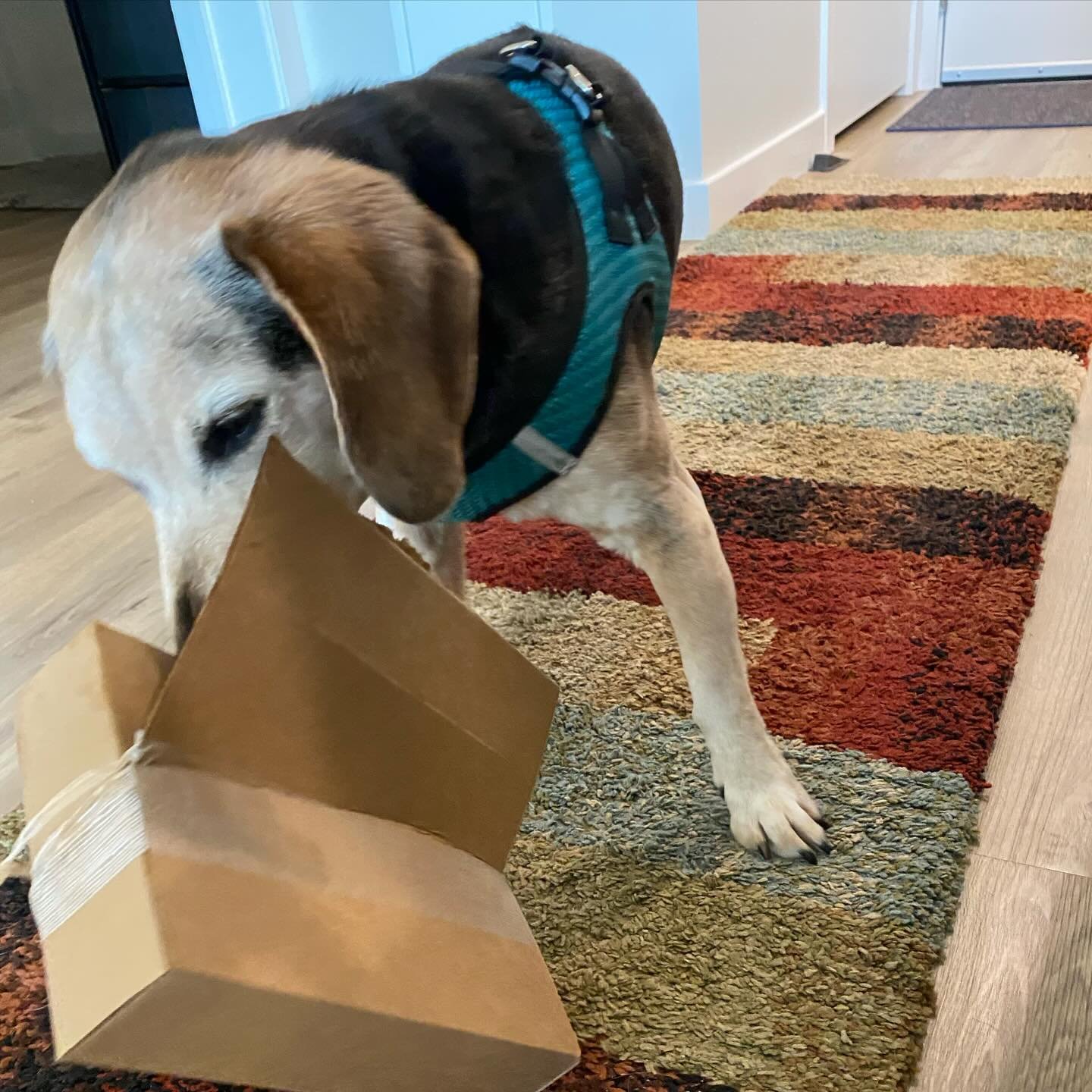
Save your delivery boxes — they're the raw material for the ultimate destruction-approved game. Nest a few boxes inside each other with crumpled packing paper and treats tucked between the layers, then give your dog permission to do what dogs dream of: rip it all apart. Shredding is a natural canine behavior, and channeling it into a game beats finding it aimed at your couch cushions. Keep the boxes tape-free and remove any staples or plastic first, and supervise the whole session so your dog spits out cardboard rather than swallowing it. For dogs who don't naturally shred, start with one open box and treats visible on top, then add layers as their confidence grows.
How to play: Cardboard Box Hunt
You need: 3–4 cardboard boxes · packing paper · treats
Nest boxes with paper and treats between layers → let your dog shred to find them.
Supervise: remove tape, staples, and plastic first.
5. Lick Mat Calm-Down
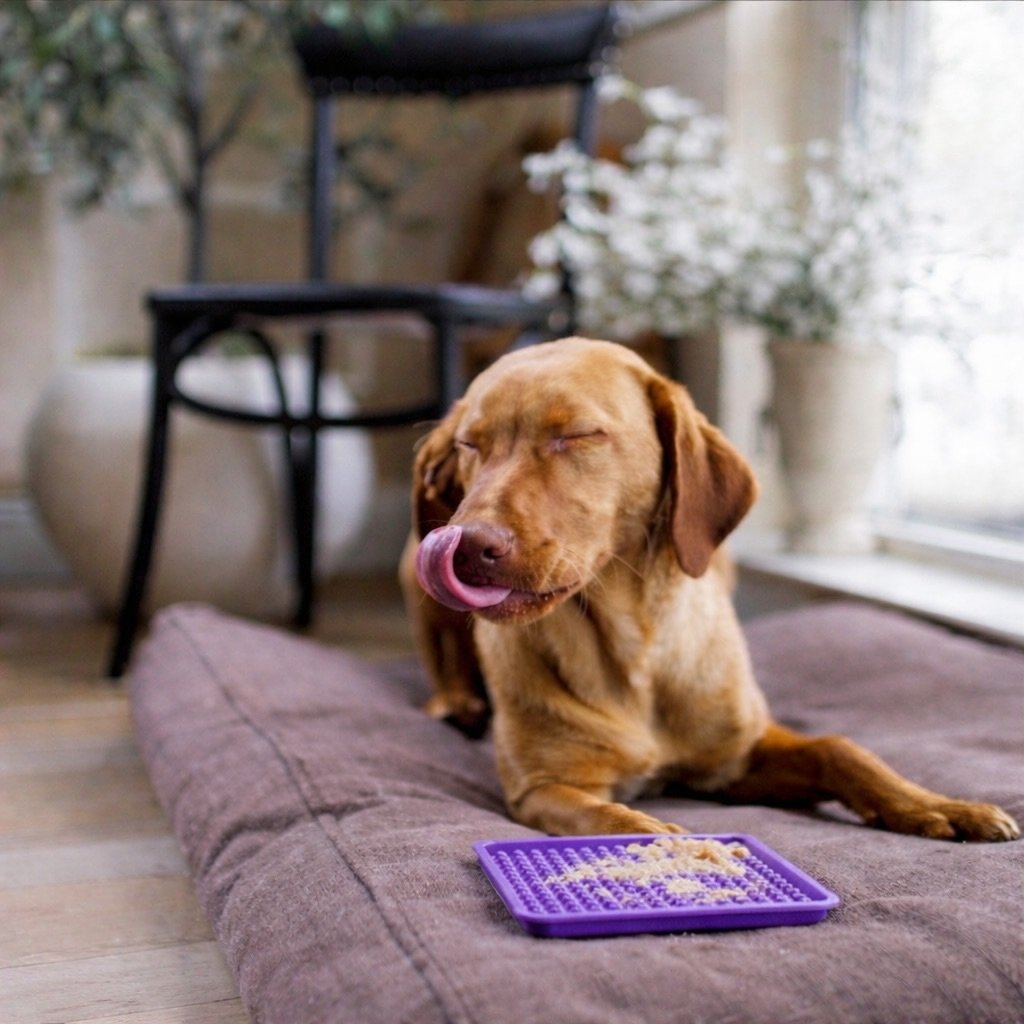
Licking is a self-soothing behavior for dogs, and a lick mat turns it into a full activity. Smear xylitol-free peanut butter — or mashed banana, plain yogurt, or pumpkin purée — across a textured silicone mat and let your dog work every groove clean. Ten minutes of licking releases calming endorphins, which makes this a brilliant pre-groomer, pre-vet, or thunderstorm-distraction tool. Freeze the loaded mat for an hour to double the challenge and stretch it to twenty minutes. Use a mat with a suction-cup back so it stays put on tile, and always check that your peanut butter is xylitol-free before serving. Supervise power chewers who might try to eat the mat itself.
How to play: Lick Mat
- Silicone lick mat with suction back
- Xylitol-free peanut butter, yogurt, or pumpkin
Steps: Smear spread into the grooves → freeze 1 hour for extra challenge → let your dog lick.
6. Ice Block Treasure Dig
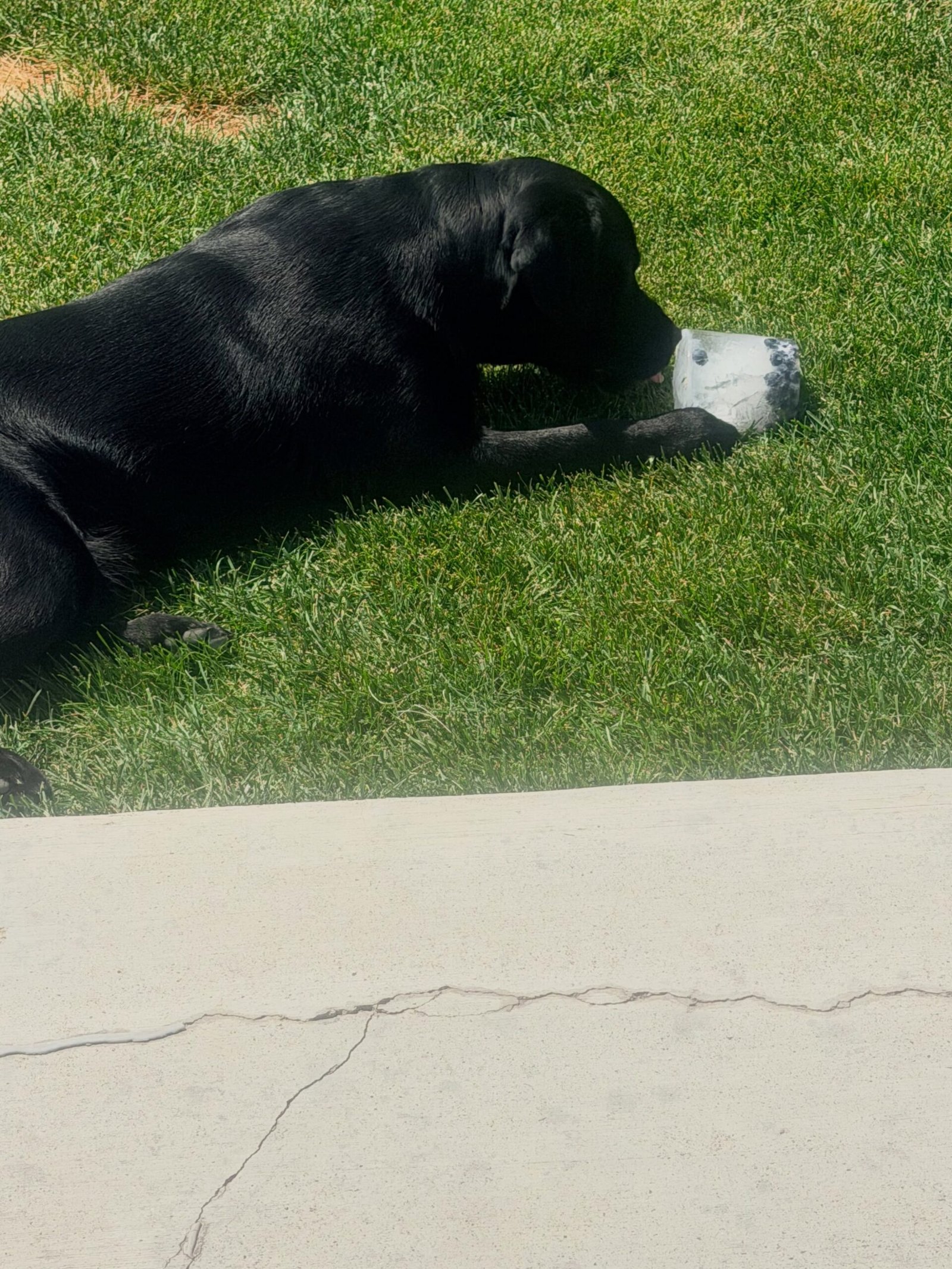
On hot days, the freezer is your best enrichment tool. Drop treats, blueberries, or a favorite toy into a mixing bowl of water and freeze it solid — then pop the whole block out for your dog to excavate. Licking and nosing at the melting ice keeps dogs cool and occupied for up to half an hour, and every revealed treat feels like a jackpot. Use a shallow, wide container so the block isn't too thick to make progress on, and serve it outside or on a washable mat because it will get gloriously messy. Supervise dogs who chomp hard objects — if your dog crunches ice aggressively, freeze treats in individual cubes instead of one big block.
How to play: Ice Block Treasure
You need: mixing bowl · water · treats, fruit, or a toy
1 · Fill bowl, drop in treasures → 2 · Freeze solid → 3 · Serve outside and let your dog excavate
7. Bottle Spin Puzzle

An empty plastic bottle on a wooden spoon becomes a spinning treat dispenser that fascinates most dogs. Thread a dowel or sturdy wooden spoon through two holes cut in the bottle, mount it across a small box or between two chairs, and drop kibble inside — your dog learns that nudging the bottle spins it and spills the goods. It teaches cause and effect in the most delicious way possible, and the clattering sound adds extra excitement. Always remove the cap and the plastic ring first, and use a smooth-edged bottle with the label peeled off. Supervise every session and retire bottles once they get cracked or chewed, since sharp plastic edges are no fun.
How to play: Bottle Spin Puzzle
Cut holes in a clean bottle; remove cap and ring
Thread a dowel through and mount it
Add kibble; let your dog spin it
8. Blanket Snuffle Search
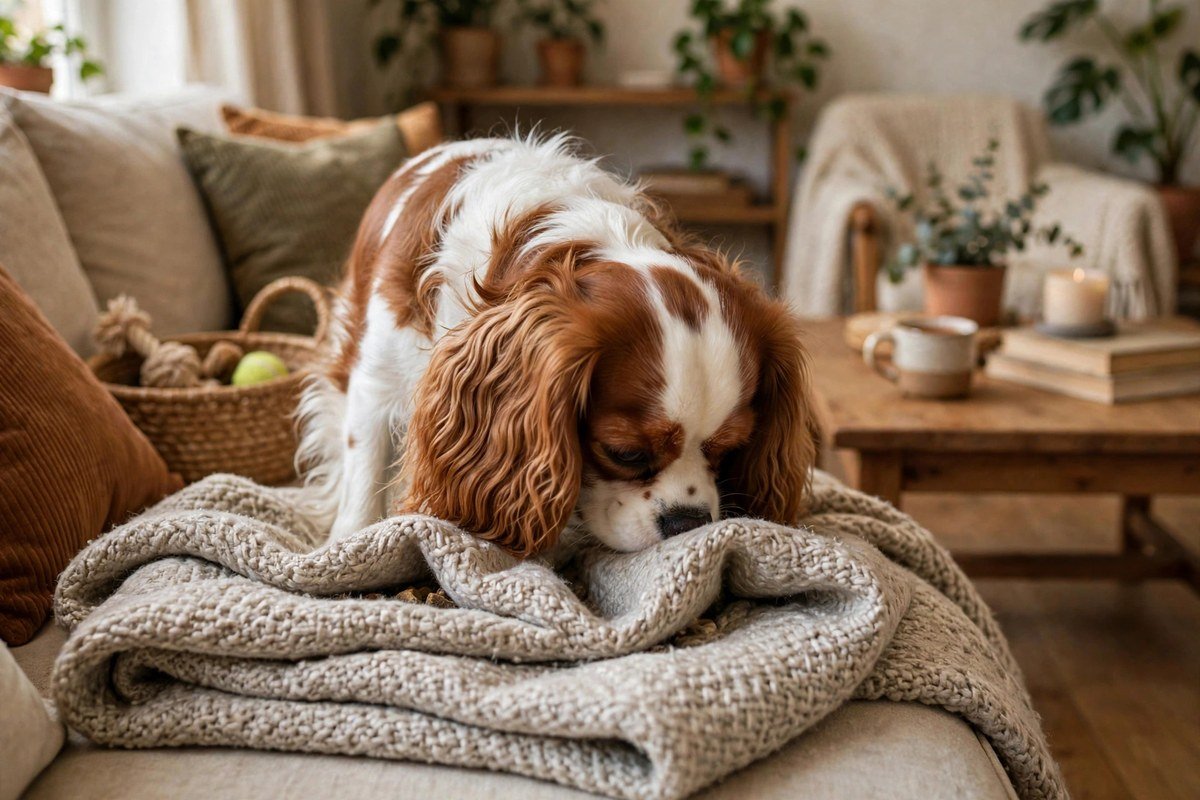
Turn any old blanket into a snuffle playground with nothing but your hands. Scatter kibble across a flat blanket, then scrunch, fold, and twist it into a lumpy landscape of hiding spots — your dog will happily spend fifteen minutes nosing through every fold. It's the same nose-work magic as a snuffle mat, minus the crafting, and you can reshape it differently every time so the game never gets stale. Use a machine-washable blanket and shake it out afterward to catch stray crumbs. This one is ideal for senior dogs or pups recovering from surgery, since all the action happens at nose level with zero jumping, running, or rough play required.
How to play: Blanket Snuffle Search
You need: 1 old washable blanket · kibble
- Scatter kibble across the flat blanket.
- Scrunch and fold it into hiding spots.
- Let your dog nose through the folds.
9. Cup Shell Game
The classic shell game isn't just for street magicians — it's a brilliant focus exercise for dogs. Hide a treat under one of three opaque cups while your dog watches, shuffle them slowly, and let your dog choose by nosing or pawing the right one. It builds impulse control because the reward only comes from choosing carefully, not from knocking everything over. Start with the cups far apart and no shuffling so your dog wins fast, then increase the difficulty as they catch on. Use sturdy cups that won't crack under an enthusiastic paw, and keep sessions short — five minutes of brain work tires a dog out more than you'd expect.
How to play: Cup Shell Game
Hide
Place a treat under one of three cups
Shuffle
Move the cups slowly at first
Choose
Let your dog nose the winner
10. Egg Carton Forage
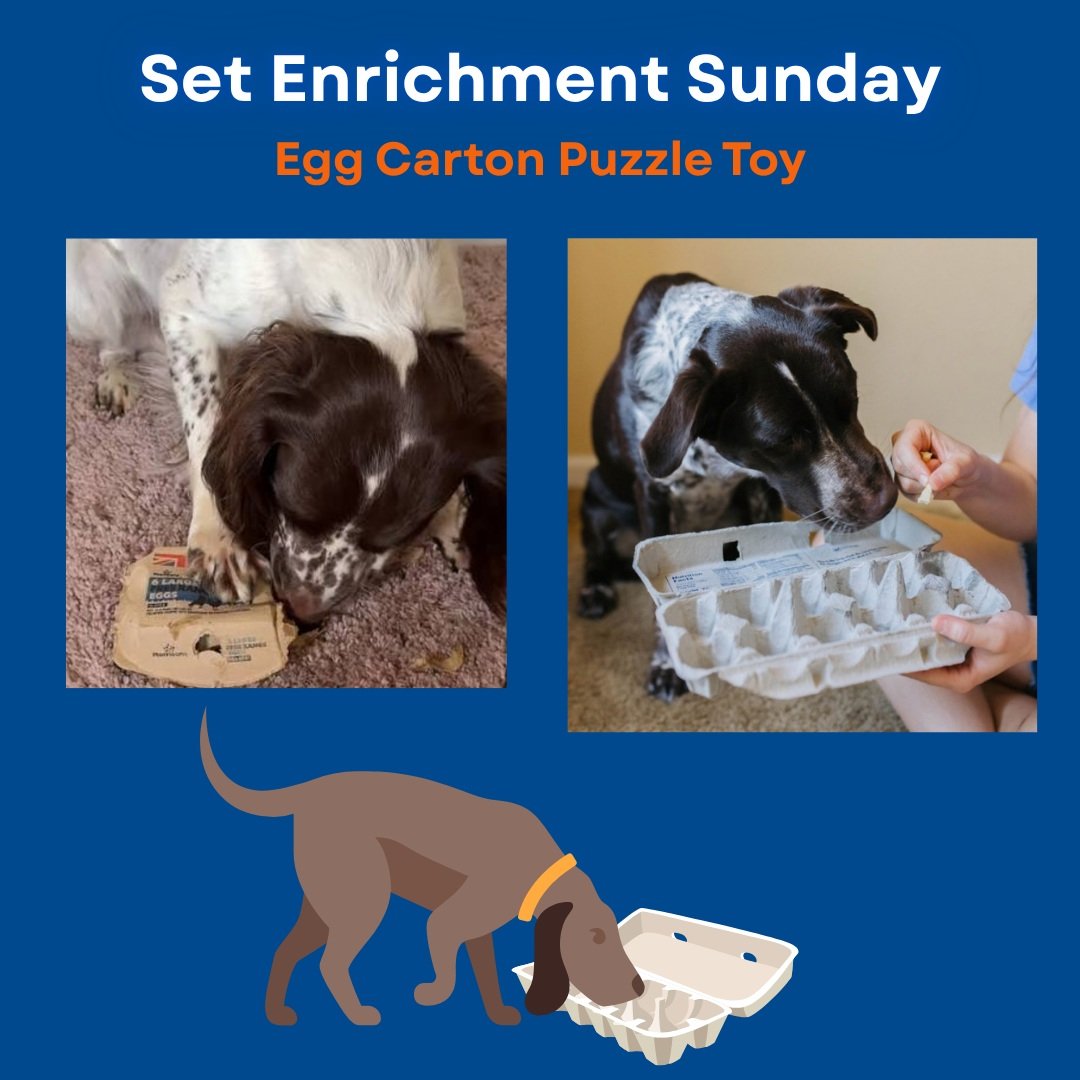
That empty egg carton headed for recycling has one more job first. Tuck a treat into each cup, close the lid, and hand your dog a puzzle that rewards prying, nosing, and gentle destruction. Paper cartons are ideal because they're easy to rip and satisfying to crunch, and the twelve little compartments make every find feel like a mini victory. Only use plain paper cartons — never foam or plastic — and supervise so your dog doesn't swallow chunks of cardboard. For beginners, leave the lid open with treats visible, then close it once they understand the mission. It's a five-minute setup that buys you twenty minutes of happy, focused foraging.
You need
1 paper egg carton · 12 small treats
Steps
Tuck a treat in each cup → close the lid → let your dog pry it open.
11. Frozen Kong Layers

The frozen Kong is the undisputed heavyweight champion of dog enrichment. Layer kibble, a smear of xylitol-free peanut butter, and a spoonful of plain yogurt inside a sturdy Kong, then freeze it overnight — what emerges is a long-lasting puzzle that can occupy a dog for forty-five minutes. Licking and working at the frozen layers is deeply calming, which makes this perfect for crate training, alone-time practice, or settling a busy puppy in the evening. Size the Kong to your dog's jaw and always supervise the first few sessions. Prep several at once and keep them in the freezer, and you'll always have a boredom-buster ready to grab.
12. Paper Bag Bash
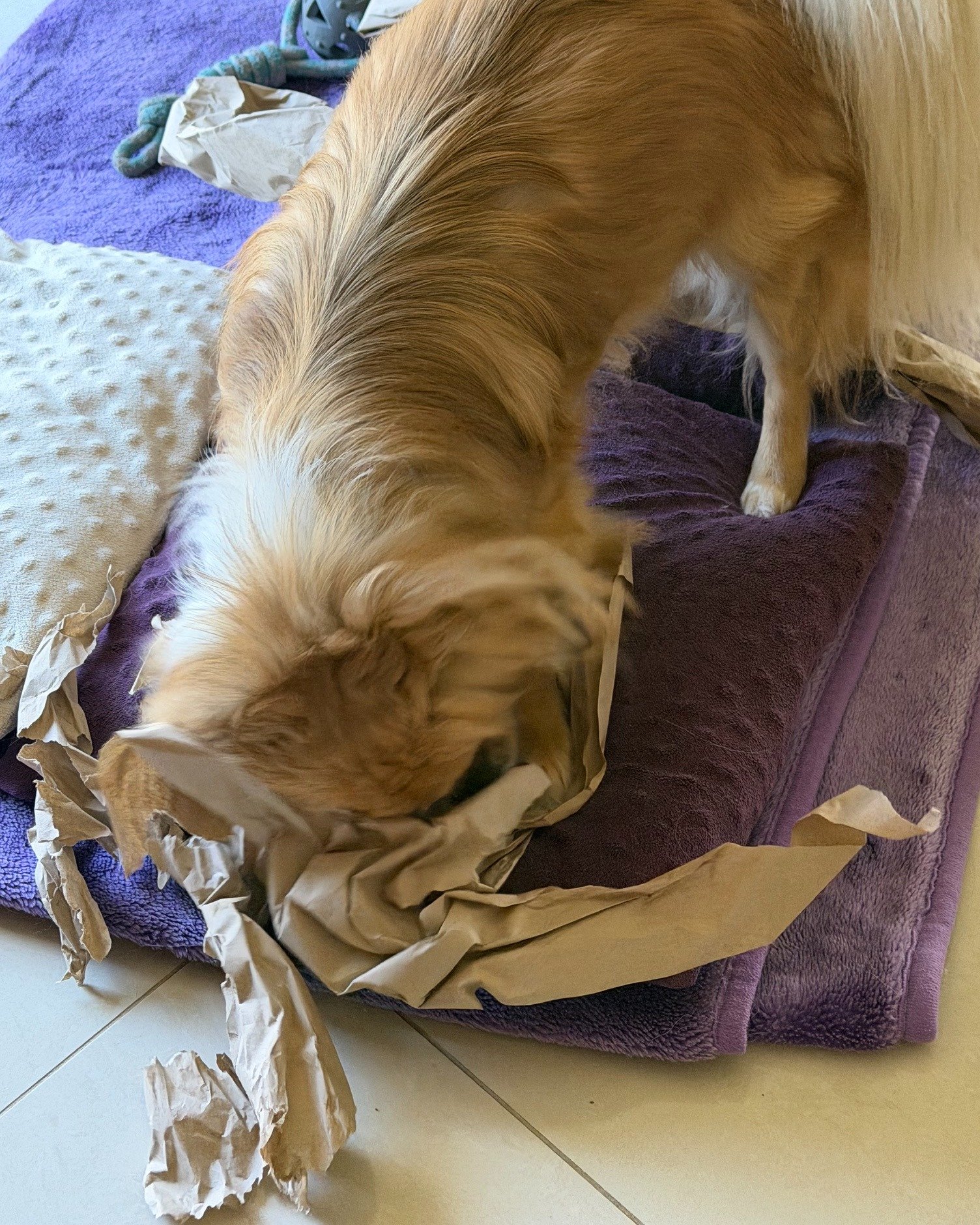
Sometimes the best enrichment is gloriously simple: treats in a paper bag, top crumpled shut. Your dog gets to rip, rustle, and dive nose-first into the bag — a full sensory party that satisfies the urge to shred in an approved way. It's fantastic for building confidence in shy dogs, because every rip delivers a reward and there's no wrong way to play. Use plain paper bags with no handles, staples, or printed ink-heavy logos, and supervise so your dog doesn't eat the bag itself. Start with the bag open and treats on top for cautious dogs, then crumple it tighter as they get bolder. Cleanup is one trip to the recycling bin.
How to play: Paper Bag Bash
| You need | plain paper bag (no handles/staples) · treats |
| Steps | Drop treats in → crumple the top → let your dog rip it open |
13. Scatter Feed Lawn

Ditch the bowl and let the grass do the work. Scatter feeding — tossing your dog's kibble across the lawn instead of serving it in a bowl — turns every meal into a natural foraging session that engages nose, brain, and body at once. It slows down gulpers dramatically, adds gentle movement to mealtime, and costs absolutely nothing. Make sure your lawn is free of pesticides, herbicides, and cocoa mulch before you start, and skip this one right after fertilizing. In wet weather or for apartment dwellers, the same game works beautifully scattered across a clean patio, a snuffle mat, or even a crumpled blanket indoors.
“The cheapest enrichment of all: dinner, but make it a treasure hunt.”
How to play: Toss kibble widely across a chemical-free lawn → let your dog forage the whole meal. Works on patios and blankets too.
14. Treat Trail Game

Lay a breadcrumb trail — but make it treats. The treat trail game has you dropping a line of small rewards around the house or yard, winding around furniture and corners, ending in a jackpot of something extra special. It exercises your dog's nose in the most joyful way and doubles as brilliant recall practice when you hide at the end of the trail and call them in. Start with treats close together and visible so your dog learns to follow the line, then space them out and add turns as their nose gets sharper. It's also a wonderful rainy-day energy burner that tires dogs out without a single lap around the block.
15. Water Bobbing Apples
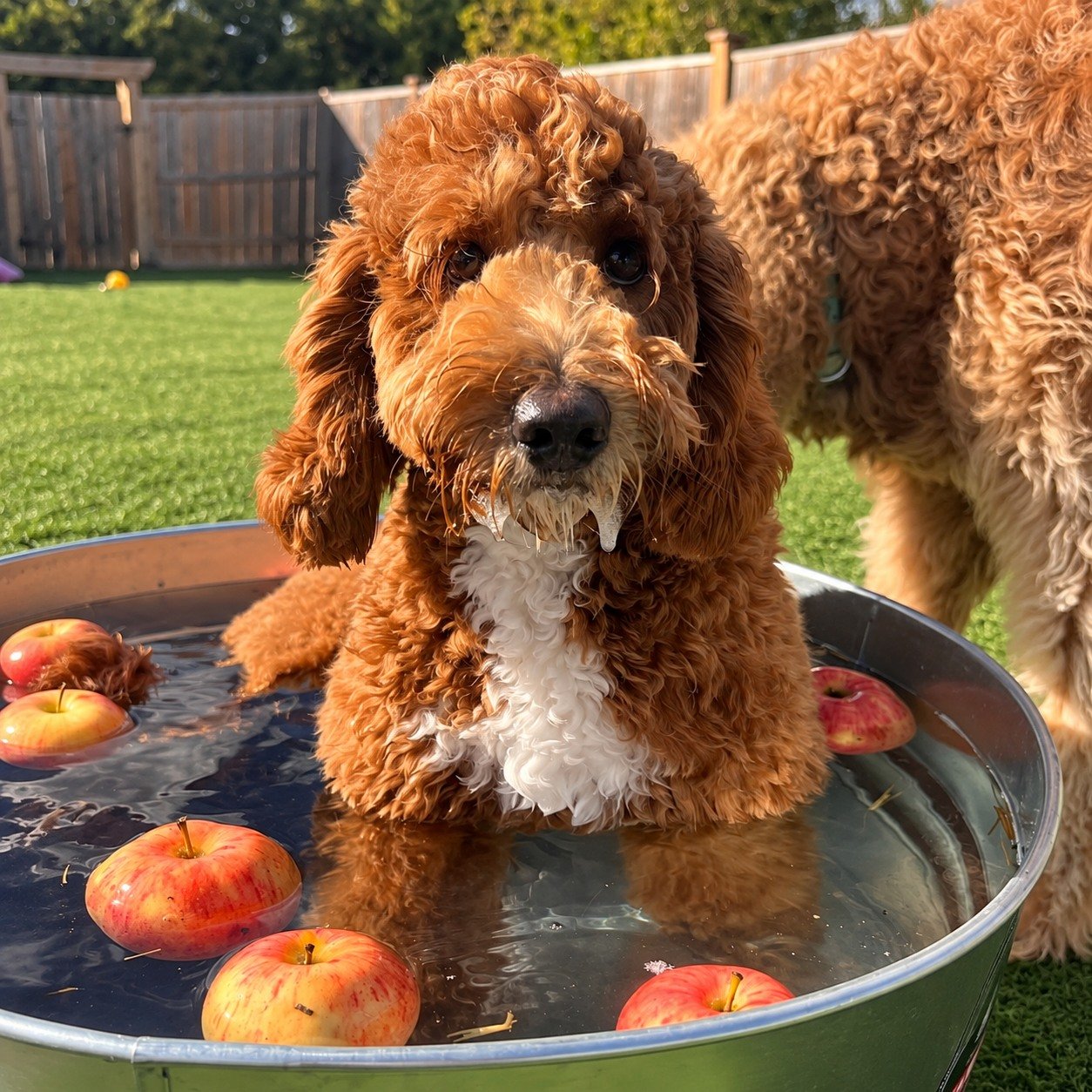
Apple bobbing isn't just for Halloween parties. Fill a shallow tub with a few inches of water, float apple slices on top, and let your dog dunk for them — it's cooling, hilarious to watch, and surprisingly tiring as they figure out the grab-and-lift technique. Use seedless apple slices only, since apple seeds aren't dog-friendly, and keep the water shallow enough that your dog stays comfortable standing in it. This is strictly a supervised, outdoor game: expect splashing, soggy paws, and one very proud pup. On scorching days, toss a few ice cubes in too for extra chill. Dry ears afterward, especially for floppy-eared breeds.
How to play: Water Bobbing Apples
You need: shallow tub · water · seedless apple slices
Fill tub with a few inches of water → float the apple slices → let your dog bob for them (supervised, outdoors).
Frequently Asked Questions
Quick answers to the most common questions.
+What is enrichment for dogs?
Enrichment is any activity that engages your dog's natural instincts — sniffing, foraging, chewing, licking, and problem-solving. In the wild, dogs spend most of their day working for food; pet dogs get it in a bowl in thirty seconds, which leaves a lot of mental energy with nowhere to go. Enrichment games fill that gap by giving your dog a job to do. The result is a calmer, more content dog and fewer destructive behaviors born of boredom. Every game in this list counts as enrichment.
+How much enrichment does my dog need each day?
Aim for 20–30 minutes of active enrichment daily, split across one or two sessions — that's roughly equivalent to an extra walk in terms of tiredness. Puppies and high-energy breeds may want more, while seniors do well with shorter, gentler games like the blanket snuffle search or lick mat. Watch your dog, not the clock: if they walk away, the session is over. You can also replace one bowl-fed meal with a foraging game so enrichment happens automatically as part of their routine.
+Do I need to supervise enrichment games?
Yes — especially with anything involving cardboard, plastic bottles, paper bags, or ice. Supervision lets you step in if your dog starts eating the puzzle instead of solving it, which is the main risk with DIY games. Lick mats, snuffle mats, and scatter feeding are lower-risk, but still watch the first few sessions until you know your dog's style. Never leave a dog alone with a plastic bottle puzzle or an ice block, and retire any game piece that gets cracked, torn into swallowable chunks, or chewed aggressively.
+What if my dog destroys every puzzle instead of solving it?
Destruction-prone dogs need tougher, simpler games. Skip cardboard and paper and lean on lick mats, frozen Kongs, scatter feeding, and the towel roll — games with nothing to rip apart. For bottle puzzles, use thick bottles and retire them at the first crack. Interestingly, many "destroyers" are actually under-stimulated, and regular enrichment often reduces the frantic shredding over time. Start with frozen games, which reward licking (calming) rather than ripping, and build up to more complex puzzles as your dog learns the rhythm.
+Are these games suitable for puppies and senior dogs?
Yes, with adjustments. For puppies, keep games easy and winnable — a loose towel roll, an open egg carton, a wide treat trail — so they build confidence instead of frustration. Short sessions of five minutes are plenty. For seniors, favor low-movement games: lick mats, blanket snuffle searches, and scatter feeding on soft surfaces. Skip anything requiring jumping, hard chewing, or slippery floors. Both age groups benefit enormously from nose work, which is gentle on joints and deeply satisfying at any age.
+How do I know if my dog is overstimulated?
Signs include frantic rather than focused behavior, barking at the puzzle, giving up and walking away repeatedly, or getting mouthy and rough. Overstimulation usually means the game is too hard, the session is too long, or your dog is already tired. Make the next round easier — fewer covered muffin cups, a looser towel roll, treats closer together on the trail — and end on a win. A good enrichment session ends with your dog settling down contentedly, not wired. When in doubt, stop early; you can always play again tomorrow.