Thanksgiving travel with a senior dog is a different kind of trip. Your girl may have made this journey happily for years, but stiff joints, a slower bladder, poorer eyesight and a lower tolerance for noise all change what she needs from a car ride and a busy house. The good news is that none of it needs to stop her coming with you. With a little planning, she can travel comfortably, rest well at your destination, and still be part of the celebration.
This list is built for real senior dogs, not just dogs in general: vet checks, ramps, joint-friendly beds, shorter driving days, quiet retreats and a firm plan for food and guests. Pick the tips that fit your girl, practise the new ones at home before you leave, and give her the calmest version of the holiday you can. A rested dog and a relaxed owner make the best Thanksgiving.
1. Book a Senior Vet Check Before You Travel
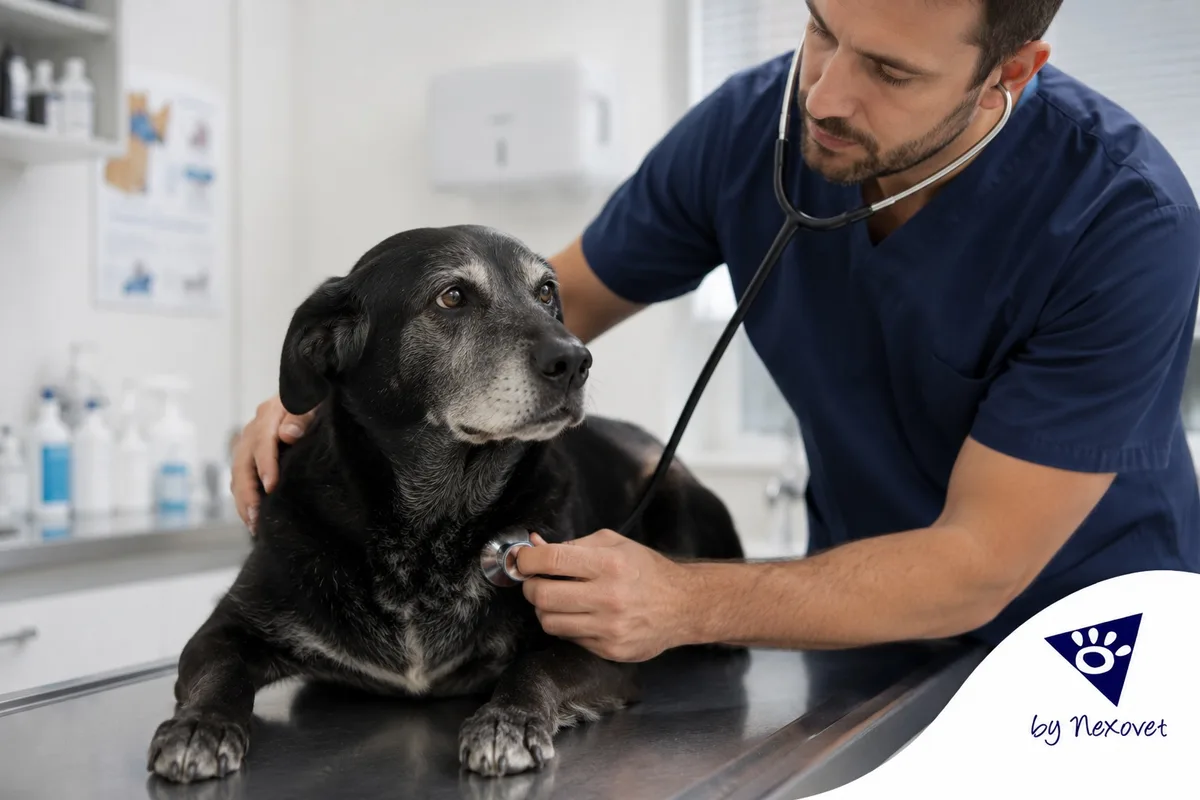
Has your girl had her travel check yet? Book it a few weeks before Thanksgiving, not in the week you leave, and ask your vet plainly whether she is fit to travel, whether her vaccinations are current, and whether her medication, pain relief or feeding should change while you are away.
Tell your vet about any small changes you have noticed, like drinking more, hesitating on stairs, sleeping more or eating less, and say how long the journey will be. If anything is flagged, you still have time to adjust her medication, pick up a spare supply or choose a calmer route, instead of solving a health question on the road.
2. Use a Ramp or Lift Help So She Never Has to Jump
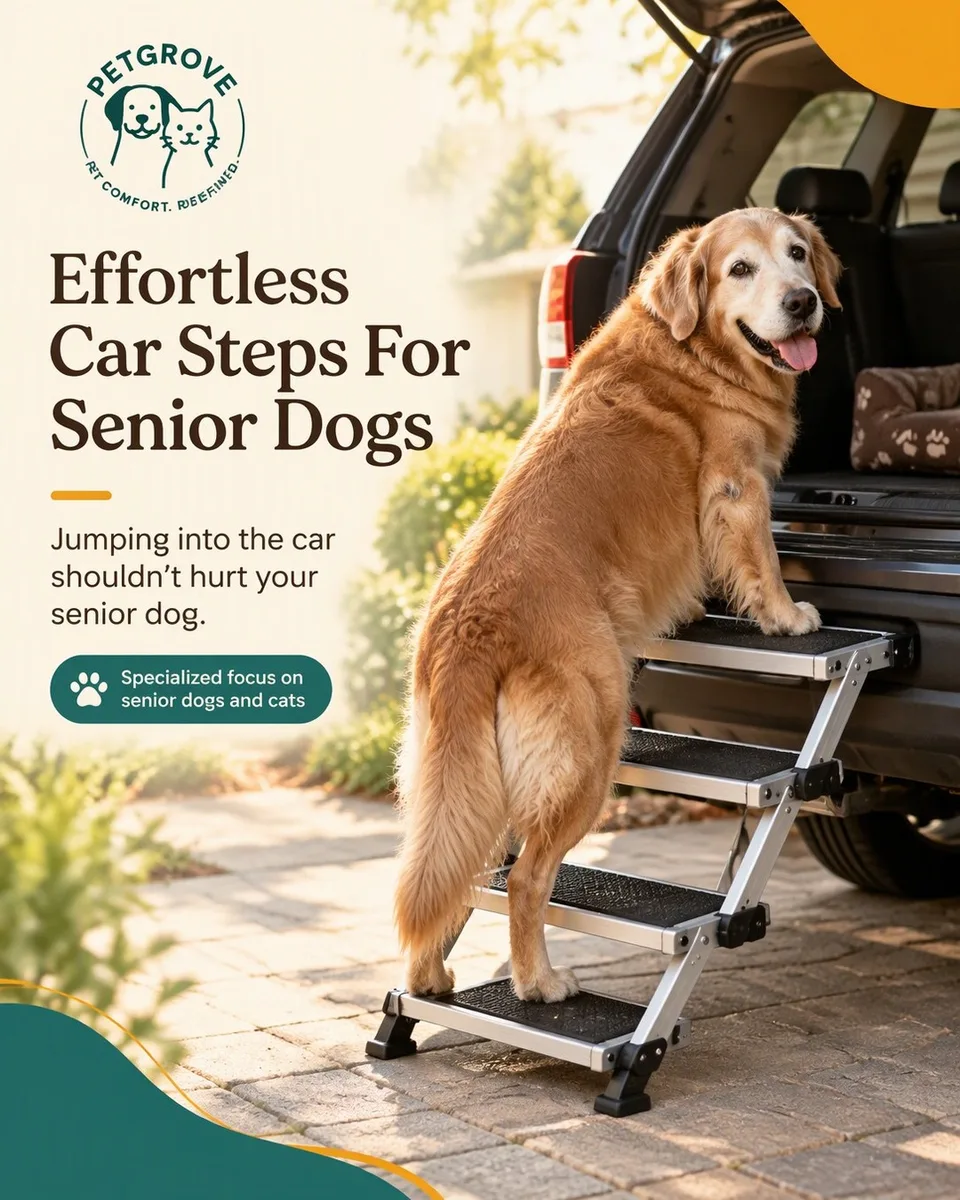
Protect her stiff hips and elbows: set up the ramp before Thanksgiving, so your girl never has to jump in or out of the car.
- Practise at home first, flat on the floor, then raised onto a low step.
- Choose a non-slip surface with a gentle slope, and press it firmly into place.
- Guide her with a calm voice and a short leash, and let her pause halfway.
- Use a lifting harness with hip handles as backup, and never lift her from her collar or front legs.
- Keep the ramp in the car and use it at every stop, including the drive home.
One rule for the whole trip: ramp every time, both ways
Every stop counts
Use it at rest stops and at family homes, not only at your own front door.
The way back matters
Leave the ramp in the car so a tired girl never has to jump on the drive home.
Her pace, not yours
A pause halfway is fine. Let her settle, then coax her on with a calm voice.
3. Secure Her With a Harness or Roomy Crate

- Warning: never let your girl ride loose in holiday traffic. A sudden stop can throw a stiff, unsteady senior across the back seat before you can react.
- Choose a crash-tested harness or a roomy crate, and fit it properly. Look for wide padded straps, check two fingers of slack under each strap, and refit her a week before you travel.
- Let her wear the harness at home first, then clip the tether short so she can sit and lie down but cannot climb into the front seat.
- Choose a crate she can stand and turn in, pad it with a non-slip mat, brace it so it cannot slide, and stop every couple of hours so she can drink and stretch.
4. Plan a Potty and Stretch Break Every Couple of Hours

Do:
- Your girl will not always tell you she needs to stop, so plan a break every couple of hours before she gets desperate.
- Choose a grassy patch away from fast traffic, not a narrow layby, and keep her on a short lead from the moment the car door opens.
- Let her sniff, wee and walk at her own pace, offer water, then watch how she moves and give extra minutes or a hand if she is slow to stand.
Don’t:
- Do not wait until she is restless or struggling to get out.
- Do not rush her back onto the road before her legs loosen.
5. Pack a Senior Travel Kit With Meds, Food and Records
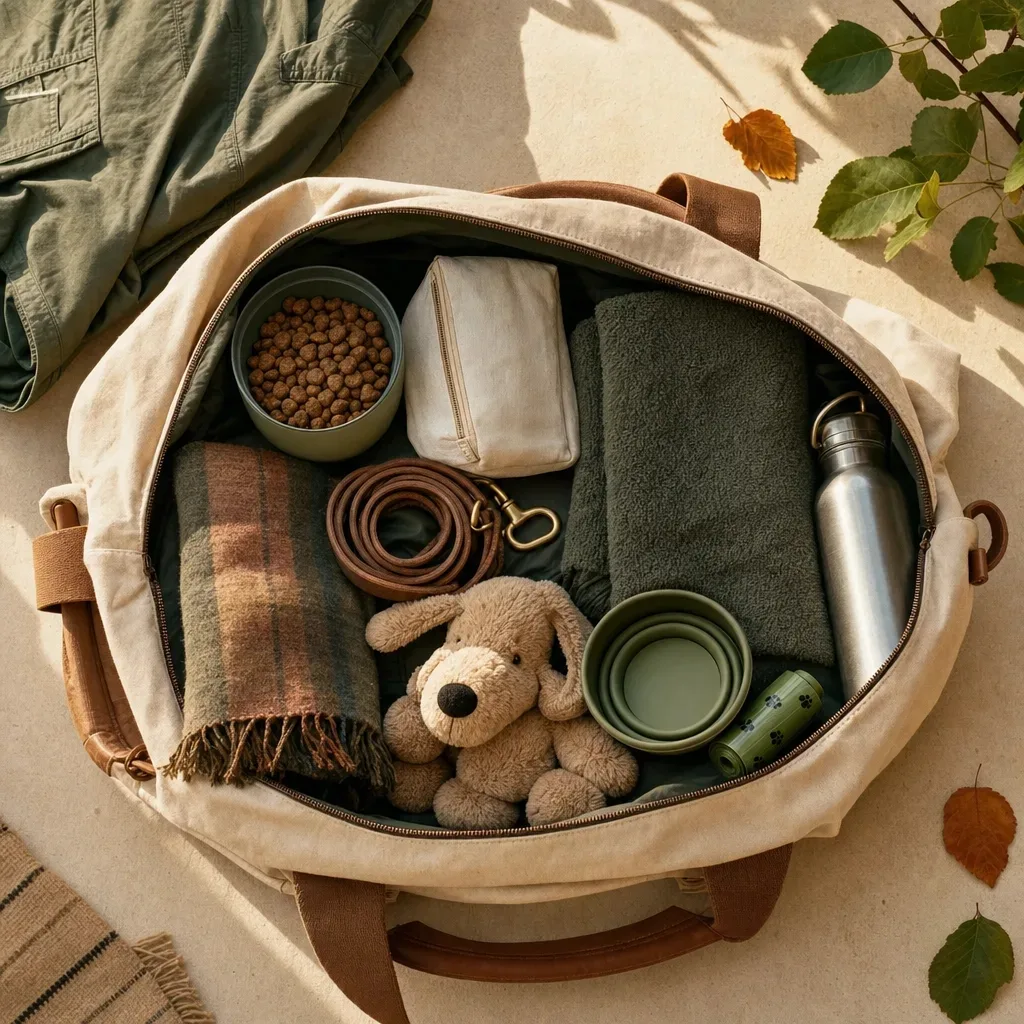
One bag, packed the night before, keeps Thanksgiving morning and your girl’s routine intact. Put her medication in its original bottles or a labelled organiser, with a card inside the lid noting each dose and time. Measure her usual food into sealed bags, one per meal, plus an extra day in case the trip runs long. Add bottles of water from home and her own collapsible bowls, since a change in water can unsettle a senior stomach. Print her vet records and save the emergency vet’s number in your phone and on paper, so help is ready if she needs it away from home.
Best for: overnight stays and long holiday drives | Effort: one evening of packing | Keep it: by the front door, not buried in the car
6. Keep Her Routine Close to Home
Q: What stays the same when everything else changes?
A: Her meals, her portions and her walk times. Feed her when you always feed her, in the same amounts, and walk her when she expects it, even when the house is busy. Those small anchors stop a senior girl pacing and worrying.
Q: What should you agree with your host before you arrive?
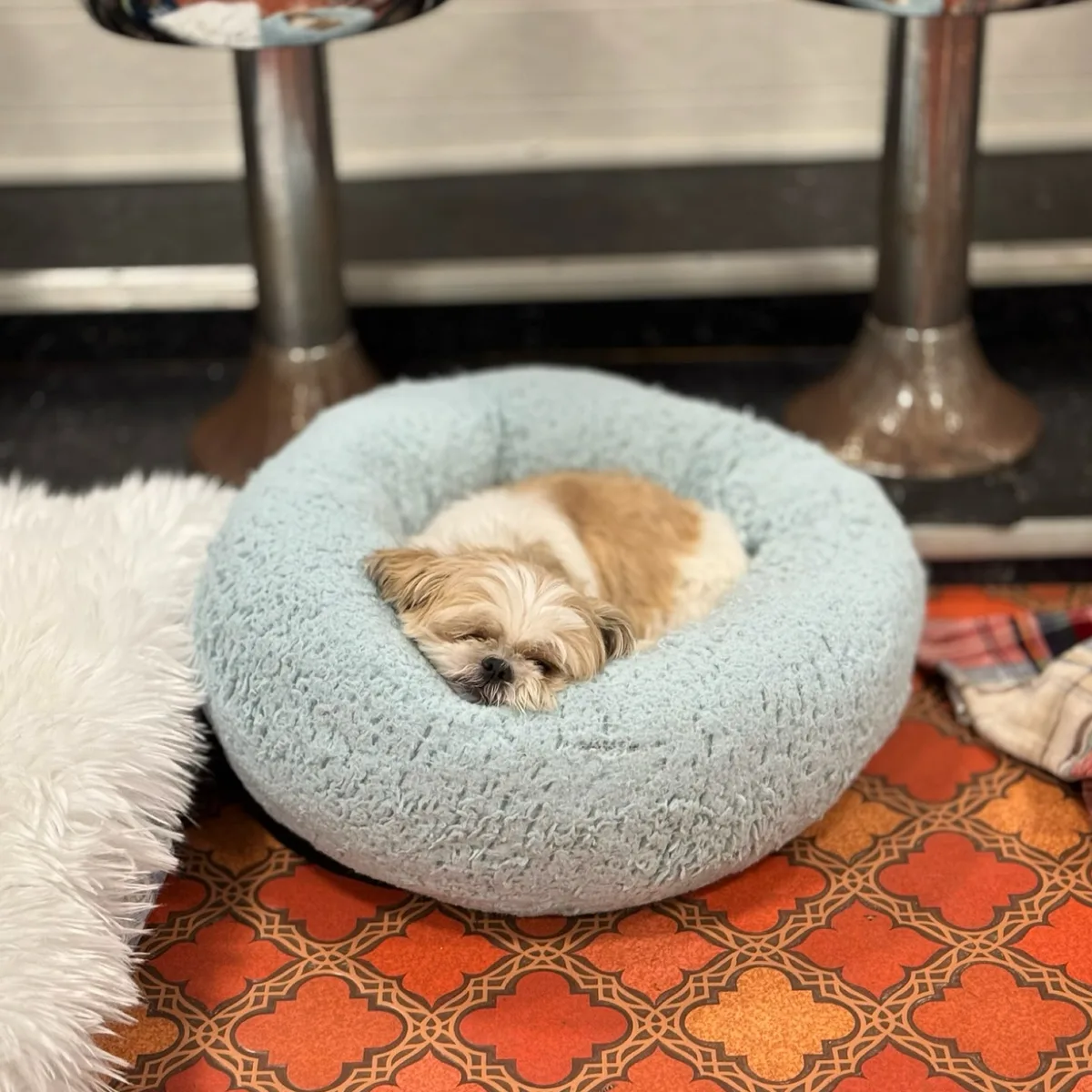
A: Where her bed lives, where her bowls sit, and which door you will use for walks. Set her bed in a quiet corner with her own blanket and a familiar toy, so she can sleep undisturbed, away from kitchen traffic and the front door, and check on her between courses with a calm word and water.
7. Bring Her Orthopedic Bed and a Blanket From Home

| Pack | Why it helps |
|---|---|
| Her own orthopedic bed | It spreads her weight evenly, so stiff hips and elbows rest on support instead of a hard floor. |
| Her unwashed blanket from home | Its familiar scent tells your girl this strange house is still safe, even with new voices around. |
| A quiet corner spot with water nearby | She can watch the family without blocking traffic, and nobody has to step over her to reach the kitchen. |
Bed check
Look for raised edges she can lean on and a base that stays put on smooth floors.
One bed, all day
Use the same bed for afternoon naps and for the night, so her routine stays steady in a new house.
Pack it last
Roll the blanket inside the bed cover for the car ride, so her spot is ready the moment you arrive.
8. Ask for a Ground-Floor Room and Check the Stairs
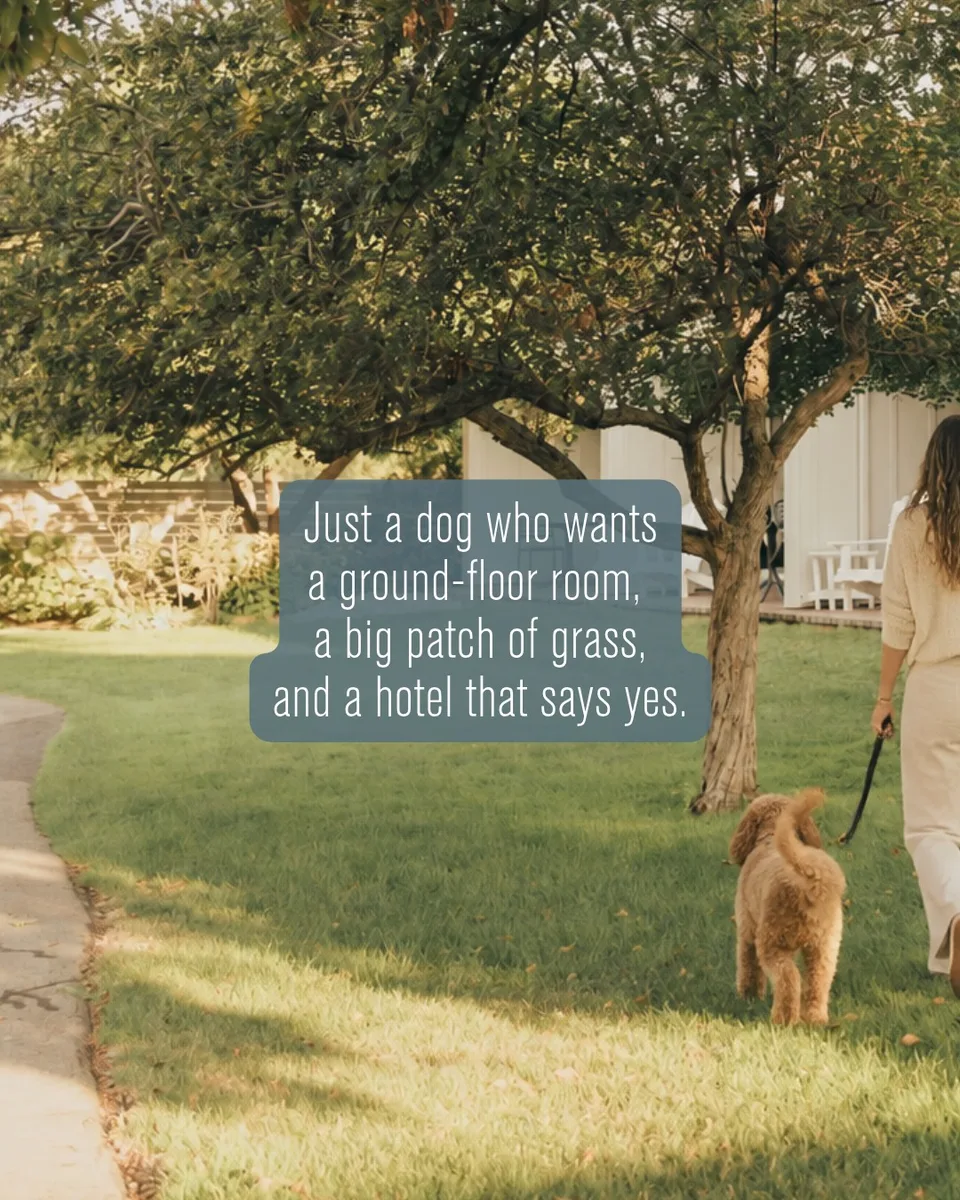
Ground floor wins
- Ask for a ground-floor room first, and confirm it in writing when you book.
- Let her sleep downstairs with you, so bed, water and the door outside stay on one level.
- Keep rugs on slick floors and her own bed in a quiet corner, so she settles fast.
Upstairs risks
- Steep, bare wood or tile stairs strain stiff joints and weaker back legs, especially late at night.
- Without a full handrail and a baby gate, she may try the stairs alone while you are busy.
- Tell your host or hotel in advance about her bed, rugs and ramp, so nothing is left to chance.
Where should your girl sleep?
Ask this before you book, not after you arrive.
| Ground floor | Upstairs |
|---|---|
| Bed, water, and door to outside all on one level | Every trip outside means a full flight of stairs |
| Nighttime toilet trips are short and calm | Nighttime trips need light, a lead, and a steady hand |
| Rugs and a gate manage the space easily | Needs a gate, rugs on landings, and help on every climb |
| Best for: stiff joints, poor vision, and late arrivals | Only if: stairs are carpeted, shallow, and gated at night |
If upstairs is the only option, ask for the room nearest the stairs.
9. Calm Travel Anxiety With Familiar Sounds and Scent
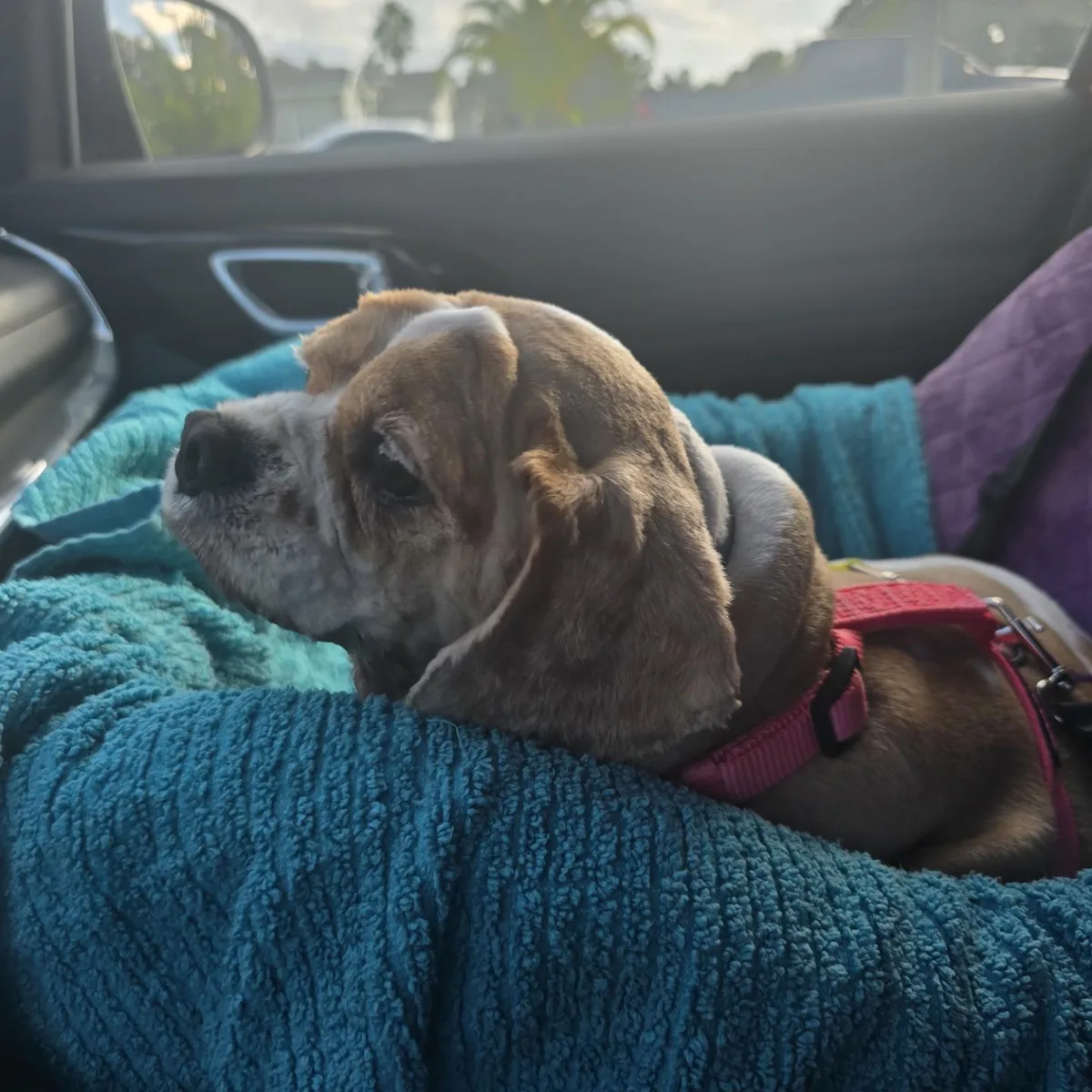
New places, new smells, and the hum of a long car journey can leave your girl restless and clingy. The kindest fix is familiarity. Run a few short practice drives before Thanksgiving week, with her usual blanket in the car and a worn t-shirt of yours beside her, and play the same calm music she hears at home. If she still struggles, ask your vet well before travel day about calming aids, and test anything new at home first. On the day itself, keep it steady: same spot, same blanket, same music, and do not wash her blanket just before the trip, since your scent on it soothes her.
Tip: finish each practice drive with something pleasant, like a gentle walk or a favourite chew at home.
Settle her before you go, then keep it the same on the road
Before the trip
Leave her blanket unwashed so it keeps the scent of home.
Put her bed in the same car spot for every practice drive.
Keep one bag packed with her lead, water bowl and usual food.
On the road
Keep the music low and steady, and avoid switching playlists.
Offer water at stops, and let her stretch her legs on a lead.
If she whines, speak softly and wait, rather than lifting her out mid journey.
10. Keep Her ID and the Destination Vet’s Number Handy

Check one small detail before you leave: her tag.
- Read your girl’s tag in daylight and replace it now if any letter is worn away, making sure it carries your mobile number, not a home landline.
- Log in to her microchip registry and confirm it shows the mobile number you will actually have with you.
- Save the vet nearest your destination and the nearest emergency clinic in your phone, with their Thanksgiving holiday hours noted.
- Pack a paper copy of her vet’s number and medication list in the car, so a helper can reach help if your phone dies.
Keep it where you can reach it
- A photo of her tag on your phone, so you still have the details if the tag itself comes off
- The vet’s number saved under a name you will find fast in a hurry, such as “Vet Thanksgiving”
- A paper copy in the glovebox, so a helper can reach the vet even if your phone dies
11. Feed Her Usual Food and Skip Table Scraps on Travel Day
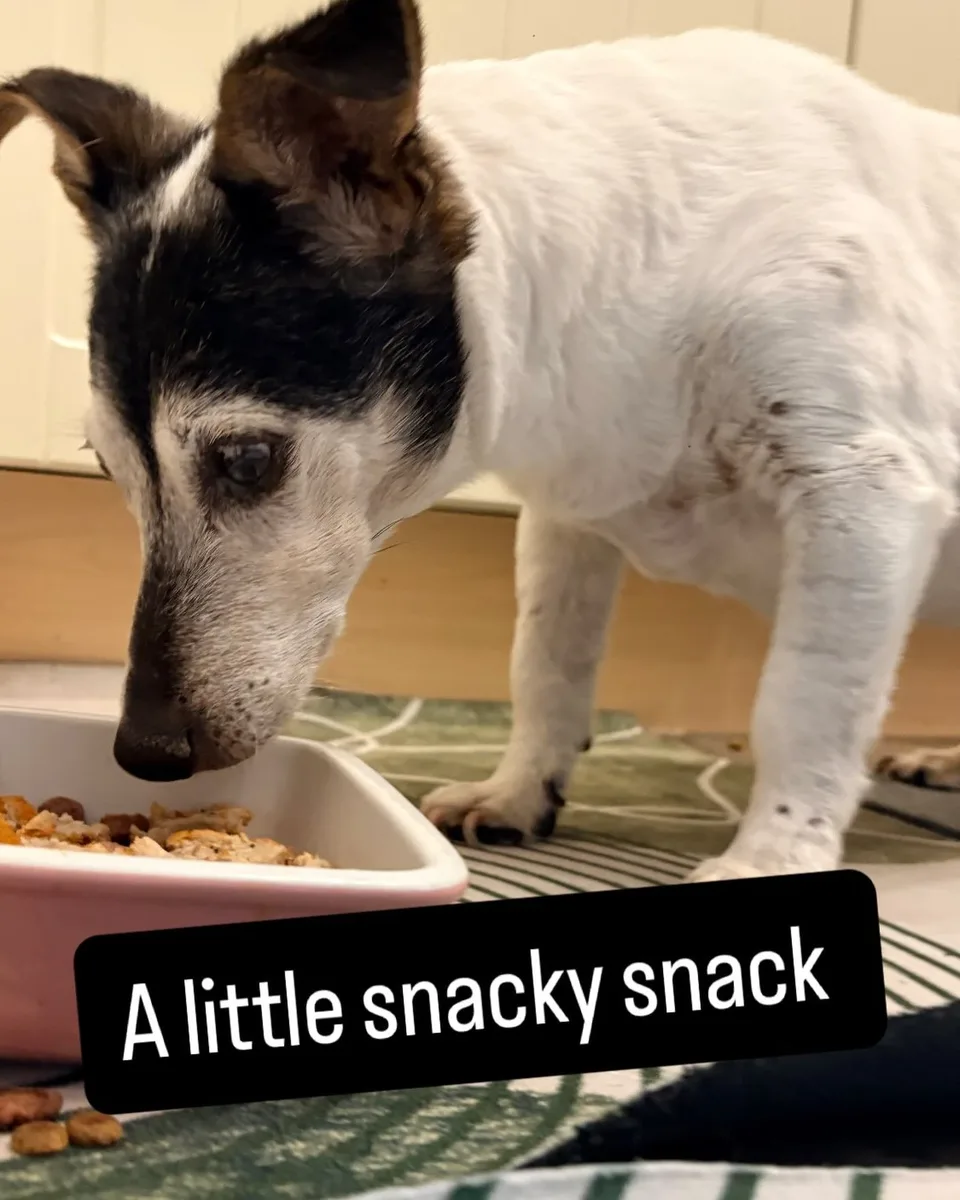
Keep her food exactly the same. Pack her usual kibble or wet food, measure it the way you always do, and feed her at her usual times in her own bowl. A familiar meal tells her body that some things have not changed on a busy day.
- Say no to the Thanksgiving plate: turkey skin, bones and rich gravy can cause vomiting, diarrhoea or a painful night, and cooked bones can splinter.
- A very small portion of plain, skinless, unseasoned turkey is the only table food worth considering, and only if your vet has already said it suits her.
- Tell guests she eats her own food only, give them a pot of approved treats, and feed her before the family meal so she is not begging hungry.
12. Watch for Motion Sickness and Keep the Car Comfortable
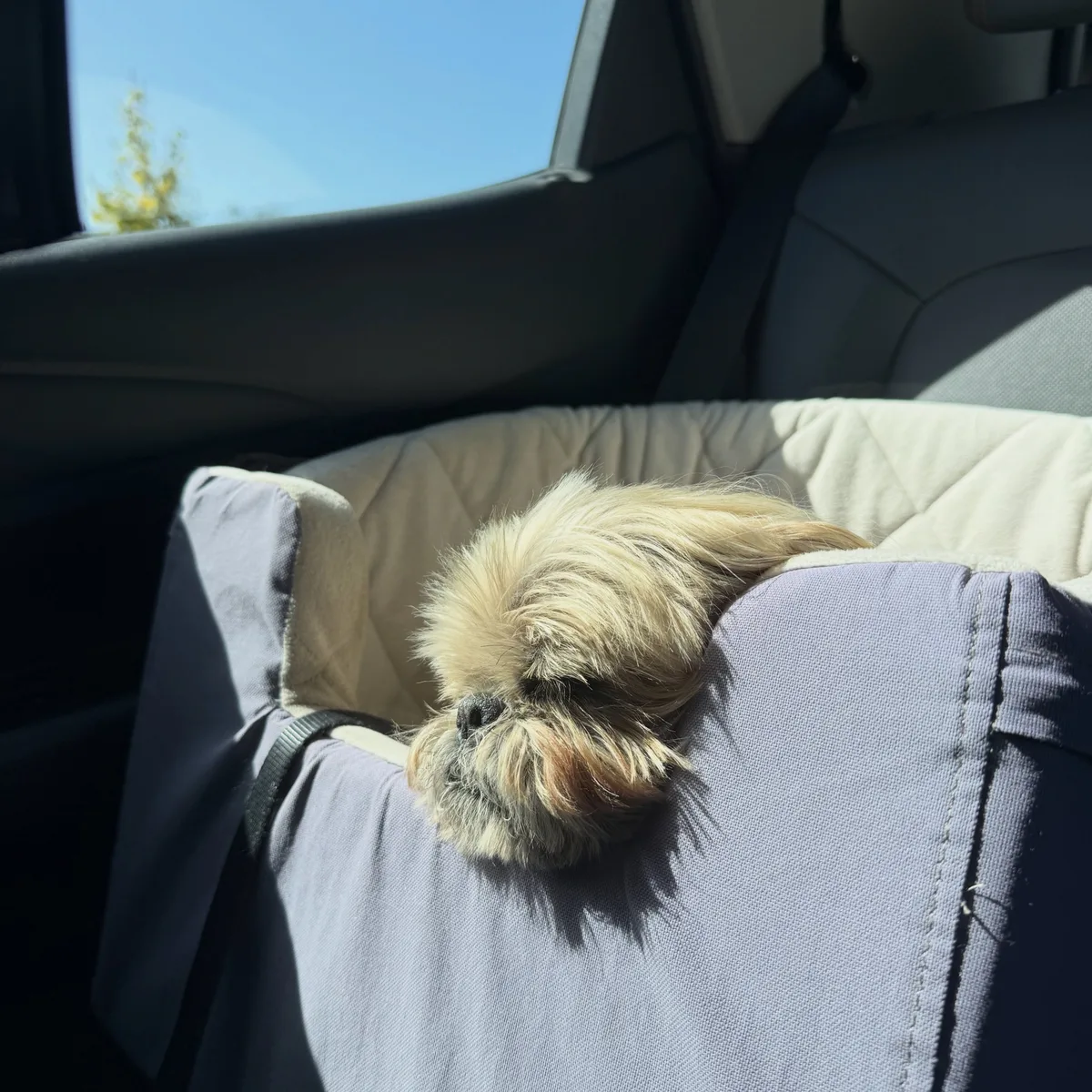
Before: Drooling, lip licking, restlessness, shifting around, whining, or suddenly going very still are your girl’s early signs, so ask your vet about a light meal or a different feeding time if she has been carsick before, and pack towels, pet wipes, bags, a spare blanket, and a small water bowl where you can reach them.
During: If you spot them, pull over somewhere safe, open a door for fresh air, and give her quiet minutes to settle, staying calm because scolding only adds stress, while keeping the car cool, calm, and gently ventilated with her head inside at speed.
After: Once she settles, reset her spot with a familiar blanket and carry on gently.
13. Keep Nights Easy With a Light, a Late Break and Water
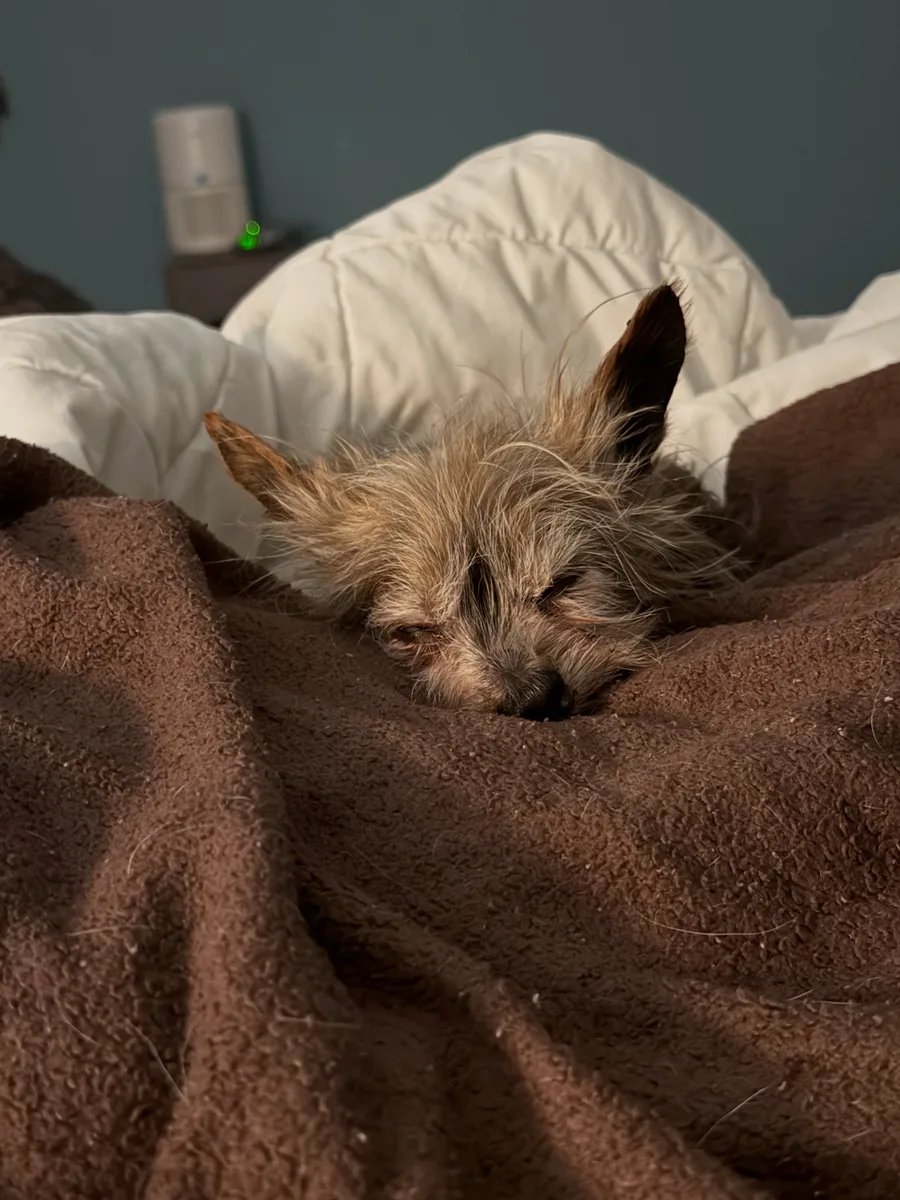
- Night changes a strange house for your girl. Rooms she knew by daylight turn dark and unfamiliar, and weaker eyesight can make her hesitate, pace, or wake you in the small hours.
- Plug in a low, dim night light along the path to the back door, then take her out for one last unhurried potty break, even if she went out an hour earlier, because older bladders do not always wait until morning.
- Settle her on her own bed with fresh water close by, and if she wakes, speak quietly and walk her to the door without turning on every light, so the night stays calm and predictable.
14. Travel Shorter Days and Beat the Holiday Traffic
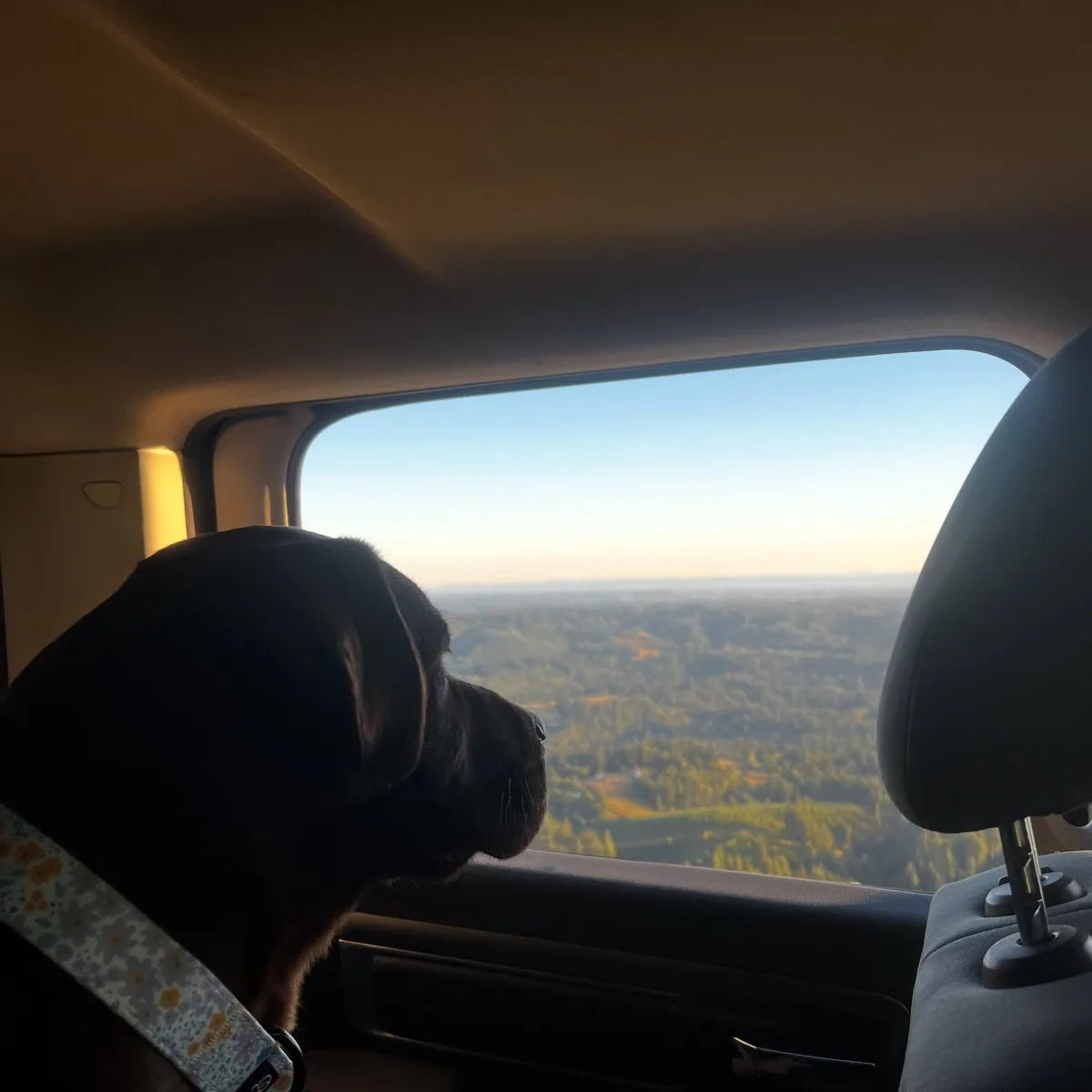
Hours in a car wear a senior girl out in ways a younger dog shrugs off. Sitting still stiffens her joints, and a bladder that once held all afternoon now asks for breaks much sooner, so every extra hour in holiday traffic means more discomfort for her and more worry for you.
Leave early, before traffic builds, and split a long journey overnight instead of pushing through. Build buffer time into the plan on purpose, so every stop feels unhurried and she arrives calm and steady, ready to enjoy the holiday.
15. Give Her a Quiet Retreat at the Gathering

Choose her calm spot before the first guest arrives. A spare bedroom works best, or a quiet corner away from the door and kitchen, set up with her own bed, fresh water, a blanket that smells like home, and a chew or toy she loves. Watch for pacing, yawning when she is not tired, lip licking, or hiding, and guide her gently to her retreat when you see them. Keep the door partway closed, check on her quietly, and refill her water.
Remember: never drag her back for greetings or photos, and let her wander back on her own terms.
“A senior dog does not need to attend every moment to enjoy the day.”
Retreat rule to share with guests: if she walks away, let her go. No chasing, no coaxing, and no photos on her bed. A quiet exit is a good choice, not a snub.
Frequently Asked Questions
Quick answers to the most common questions.
+Is my senior dog too old to travel for Thanksgiving?
Age alone does not decide it. Book a vet check a few weeks before you travel and ask plainly whether she is fit for the journey, and what her joints, heart, medication and feeding need on the road. If your vet says she is fit, keep driving days short, stop every couple of hours, and give her a quiet, familiar place to rest at your destination. If the vet flags a problem, you still have time to change the plan, and that is far better than finding out on the motorway.
+How often should we stop on a long drive with a senior dog?
Plan a potty and stretch break every couple of hours, and stop sooner if she gets restless, shifts around, or seems uncomfortable. Choose rest areas with a grassy patch away from fast traffic, keep her on a short lead from the moment the car door opens, and let her sniff, wee and walk at her own pace. Watch how she moves after the break, and give her extra minutes or a hand under her chest if she is slow to stand.
+What should I do if my senior dog gets carsick?
Watch for drooling, lip licking, restlessness, or suddenly going very still, and pull over somewhere safe when you can. Open a door for fresh air, keep her head inside at speed, and give her a quiet few minutes to settle. Ask your vet before the trip whether a light meal or a different feeding time would suit her, and pack a cleanup kit you can reach without unpacking the car: old towels, pet wipes, bags, a spare blanket, and a small water bowl.
+Can my senior dog eat Thanksgiving dinner with us?
Keep her main meal exactly as usual, and be strict about the rest. A very small portion of plain, skinless turkey with no seasoning is the only table food worth considering, and only if your vet has already said it suits her. Never give turkey bones or skin, onion, garlic, grapes or raisins, chocolate, alcohol, or anything sweetened with xylitol, and tell guests clearly that she eats her own food and approved treats only.
+How do I help my senior dog settle in a strange house?
Give her one settled spot that stays hers all weekend: her own bed and unwashed blanket, a water bowl nearby, and a corner where she can watch the family without being in the traffic. Keep her feeding, walking and sleep times as close to home as possible, ask for a ground-floor room if stairs are hard for her, and set up a quiet retreat she can walk away to when the noise gets too much. Let her opt out of greetings and photos whenever she chooses.
+What do I need if my senior dog needs a vet away from home?
Before you leave, print her vet records, vaccination history and medication list, and save the destination vet and the nearest emergency clinic in your phone and on paper. Check their holiday hours for the exact days you will be there, since a clinic open on a normal weekday may be closed on Thanksgiving Day. Confirm her ID tag is readable with your mobile number on it, and that her microchip registration shows the number you will actually have with you.