
Your Thanksgiving table should smell like herbs, glow like autumn, and be completely safe for your girl to wander past. The plants below are all chosen with a dog in the house in mind, so you can relax about a curious nose or a wagging tail instead of guarding the centrepiece all evening. Each one is checked against ASPCA guidance, and the last idea is the list of festive favourites to leave out entirely.
Mix and match a few of these ideas rather than buying all fifteen. A herb or two, one flowering plant, and a bowl of pumpkins or cranberries will make your table look abundant without crowding the food. Keep anything your girl loves to chew on a sideboard rather than at table height, and you will have a centrepiece that is beautiful, practical and dog safe.
1. Potted Rosemary Topiary
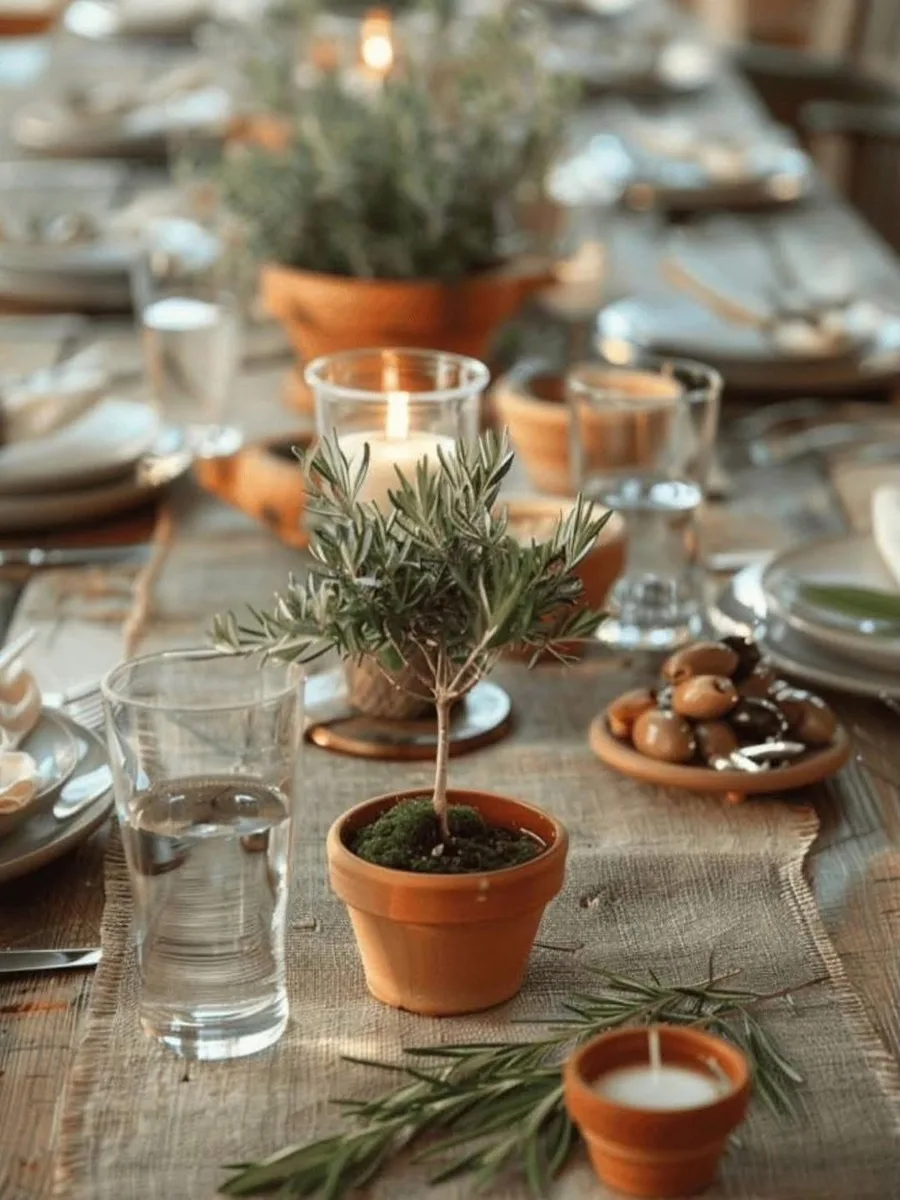
Want a centrepiece that looks like the holidays and earns its place in the kitchen? A small, well rooted rosemary topiary does both. Choose a pot that fits your table without blocking anyone’s view across it, terracotta or cream ceramic, with a shallow saucer underneath to catch watering drips and protect your tablecloth.
Rosemary is listed by the ASPCA as non-toxic to dogs, so it is one of the easiest safe swaps for a table plant. That does not mean your girl should graze on it all evening, so keep the pot where she can admire it from her bed rather than right at nose height if she is a determined nibbler. Snip a few sprigs for the roast potatoes and let the plant stay as decoration.
Where it earns its place
By the serving dishes, where guests can pinch a sprig for their plate.
Away from the edge, where a wagging tail cannot reach it.
2. Fresh Basil in a Mason Jar
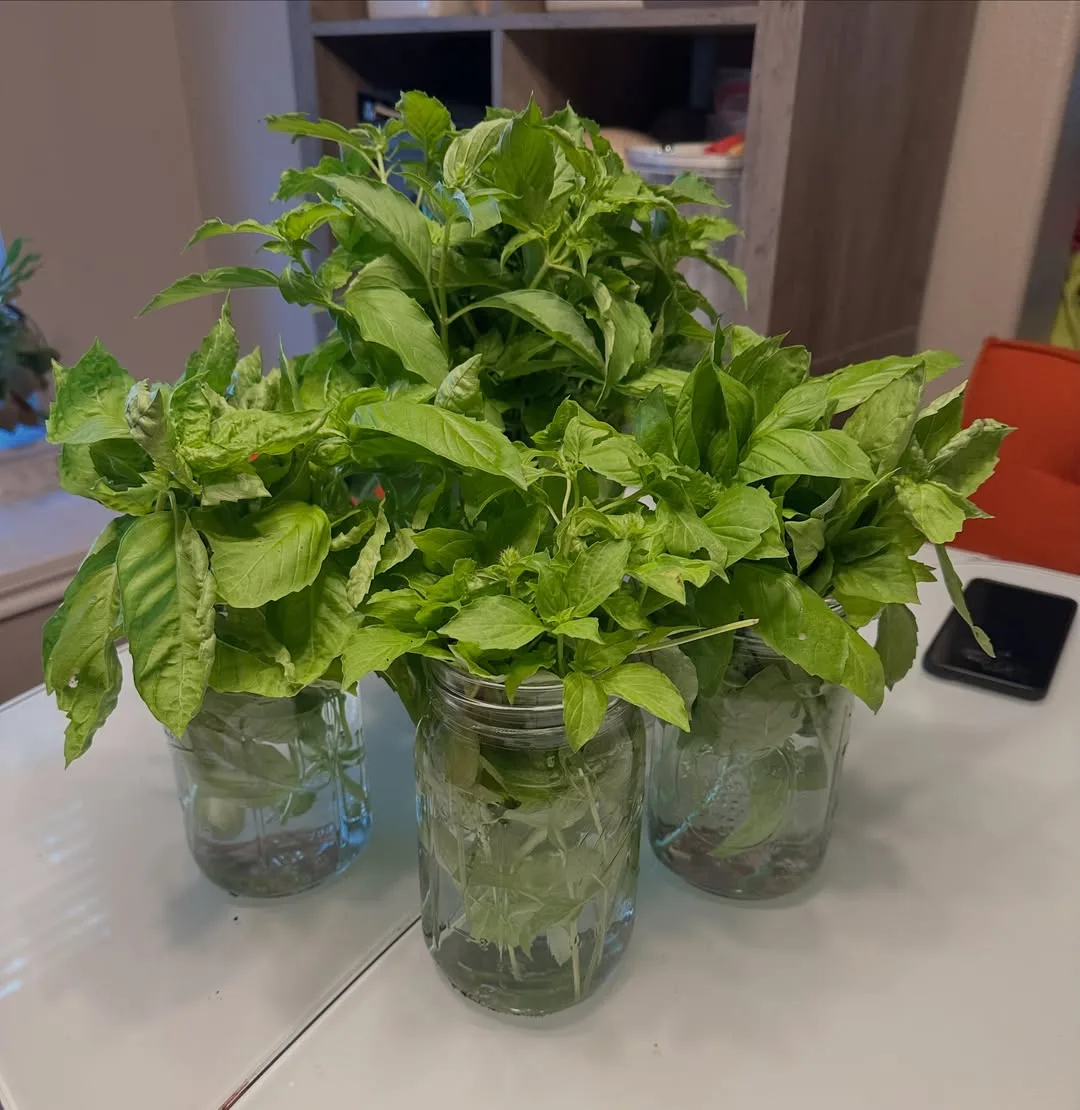
Fill a mason jar with basil, and you have the simplest centrepiece on this list.
- Trim the stems at an angle and stand the bunch upright, leaves dry above cool water.
- Remember basil is listed by the ASPCA as non-toxic to dogs, so a curious sniff is nothing to worry about.
- Change the water every day or two and keep the jar away from the table edge, or tuck it in a small basket if your girl investigates with her paws.
- Buy the basil the day before and keep it at room temperature, since the fridge can blacken the leaves.
A living herb beats a cut flower here, because it is safe, fragrant, and useful in the kitchen the next day.
3. Potted Thyme on the Table
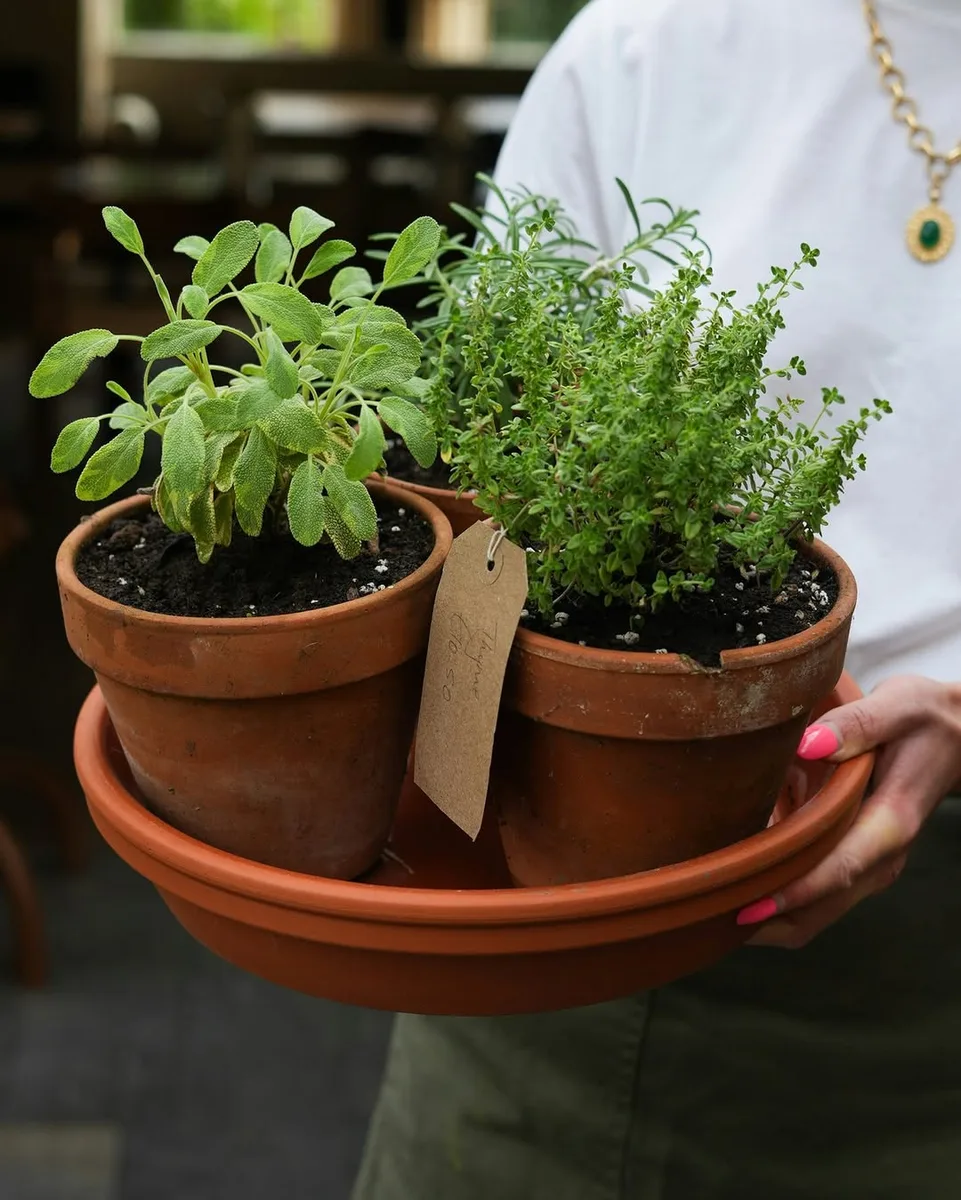
- Warning: common thyme is generally listed as non-toxic to dogs, but a nibbled leaf or two is very different from a plant eaten in bulk, so keep it out of your girl’s reach if she is a keen plant taster.
- Set one plant in a low terracotta pot beside the salt and pepper, where its leaves release scent when brushed, without crowding the dishes.
- Buy it a week early and keep it on a sunny windowsill, watering when the top of the soil feels dry, and never drowning it on the morning of the meal.
- After the meal, snip from the tips so the plant keeps growing, and never add thyme oil or essential oils to the arrangement, since the oil is not the same as the fresh plant.
Buy it a week early and harden it off on a sunny sill.
Water only when the top of the soil feels dry.
3
4. Spider Plant in a Harvest Basket
Do:
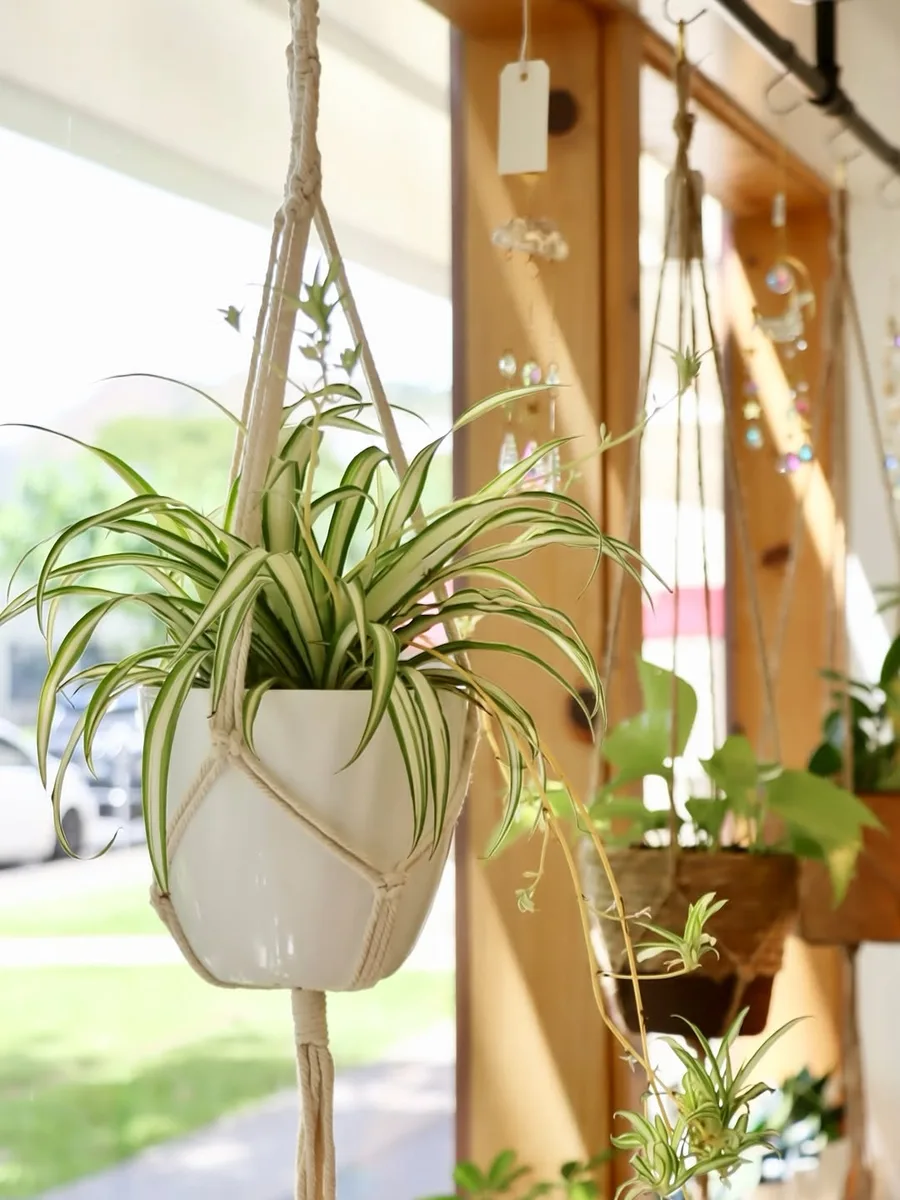
- Curious noses and paws love dangling leaves, so hang the basket from a hook above the sideboard or set it on a console where the plantlets can trail freely.
- Slip the nursery pot inside a woven seagrass basket with a linen liner, or a small wooden crate with pinecones tucked around the pot.
- Water only when the top soil feels dry, and trim any brown leaf tips with clean scissors for a tidy look.
Don’t:
- Do not set it at the table edge at tail height, where the trailing plantlets become toys for your girl.
- Do not let her chew the leaves freely: spider plants are ASPCA listed as non-toxic to dogs, but eating a lot can still upset her stomach, so gently redirect her.
Sideboard or console, where trailing leaves can hang freely.
Table edge at tail height, where plantlets become toys.
5. Boston Fern Table Runner
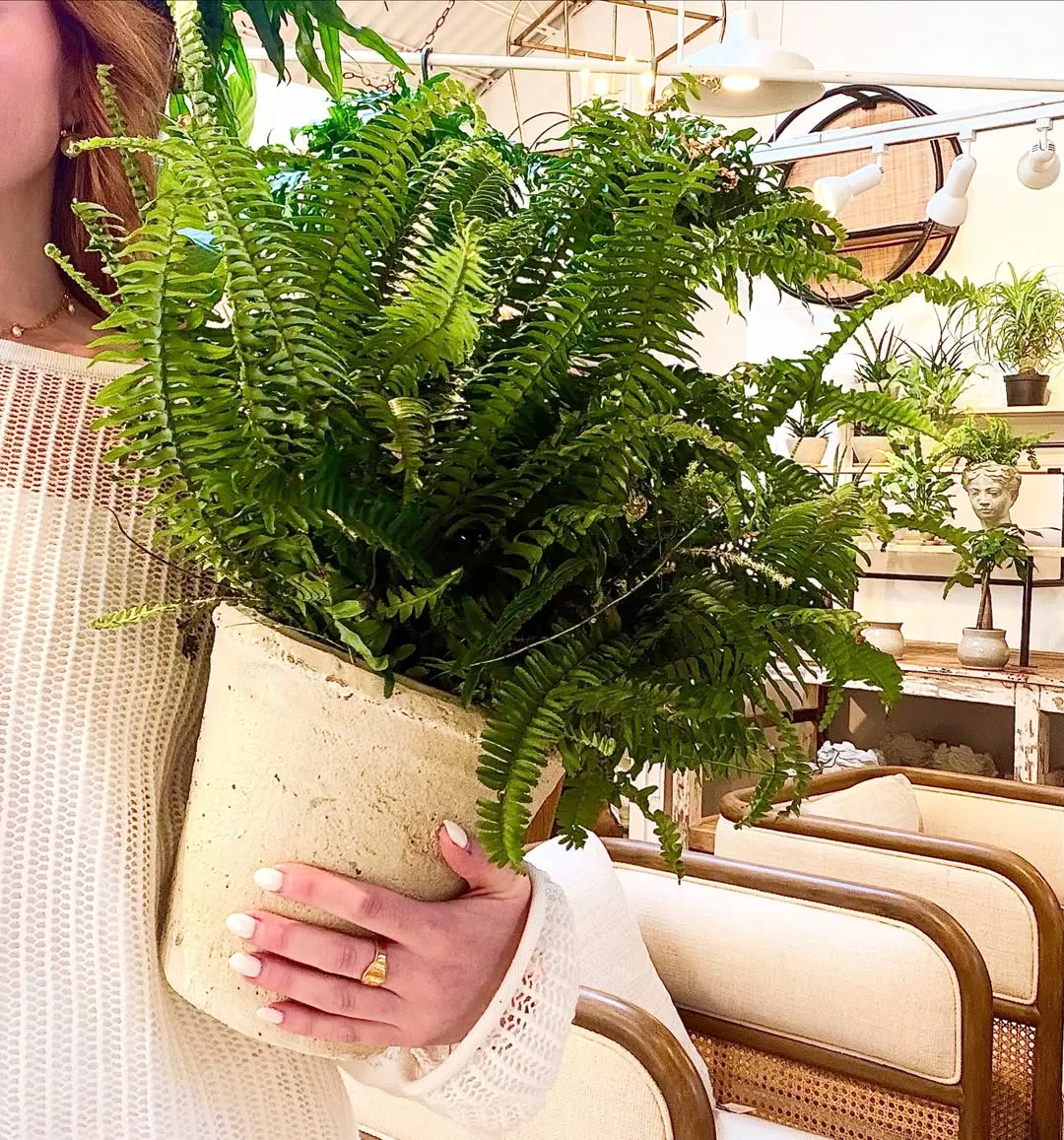
A fern runner softens a long table without any arranging skill at all. Line up small potted Boston ferns down the centre, tuck a few pinecones or mini pumpkins between them, and their soft fronds fill the gaps between serving dishes. Boston ferns are listed by the ASPCA as non-toxic to dogs, so a fallen frond is a sweeping job, not a poisoning worry. Shake them outside first, mist them on Thanksgiving morning, and keep them away from radiators and lit candles, which dry the tips. If your girl brushes past plants, keep them at the centre, not on a low bench she walks past.
Best for: long tables and busy hosts | Effort: one morning of misting | Keep it: at the centre, away from heat
6. Phalaenopsis Orchid in Autumn Tones
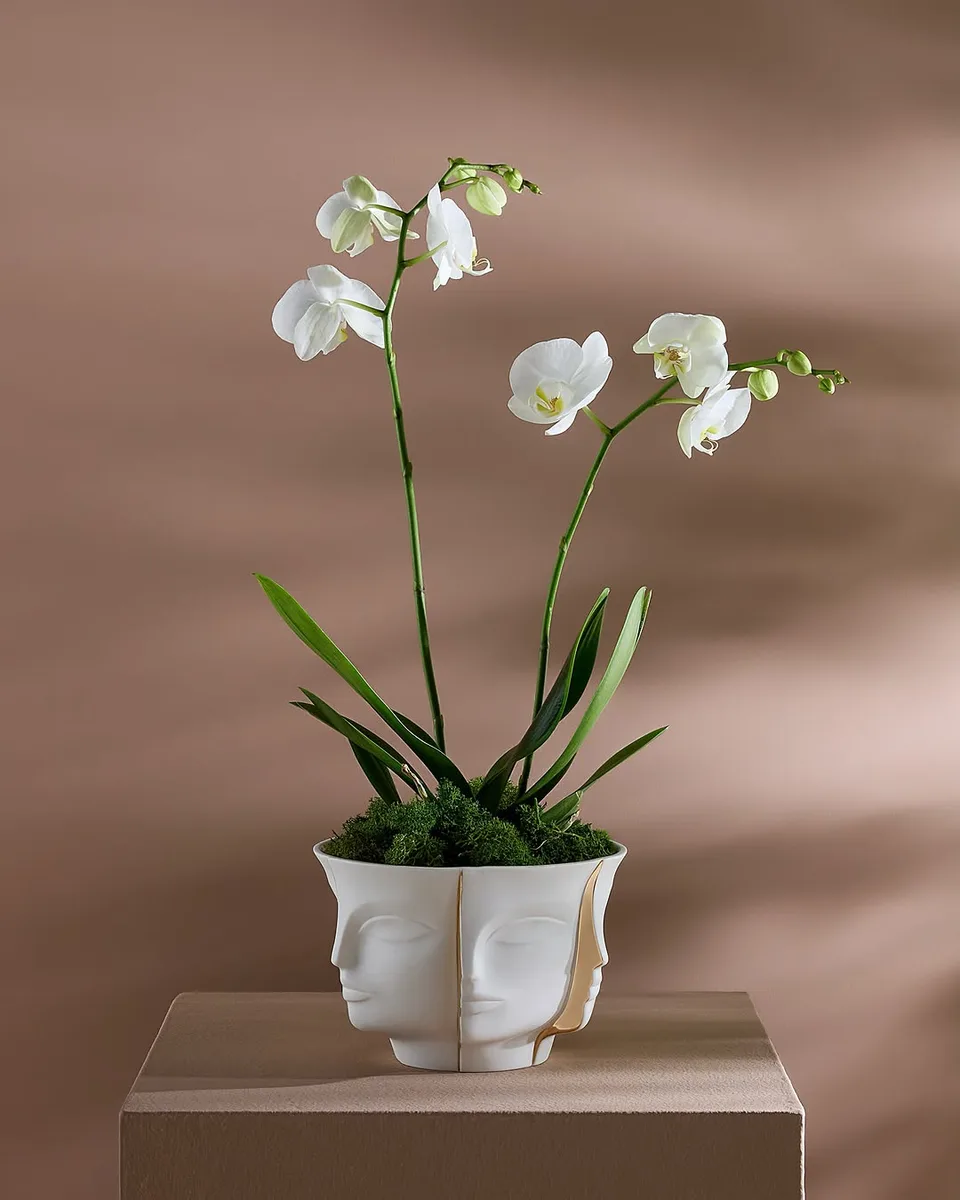
Q: Is an orchid safe around your girl?
A: Yes. Phalaenopsis orchids are listed by the ASPCA as non-toxic to dogs, so a curious nose near the blooms is nothing to worry about. Keep it stable, though: a top-heavy orchid in a light pot is easy for a wagging tail to knock over, so use a heavy outer pot and keep it away from the table edge.
Q: How do you style and care for it on the day?
A: Set a white or blush orchid in a cream or terracotta cachepot, with autumn leaves or small pumpkins around the base. One tall stem suits a small table, two suit a larger gathering. Give it bright, indirect light and a small drink, not a soaking.
Styling tip
Pair a white orchid with rust coloured napkins and a wooden board, and the whole table reads autumnal without a single artificial flower.
7. African Violets in Mini Pots
| Place | Why |
|---|---|
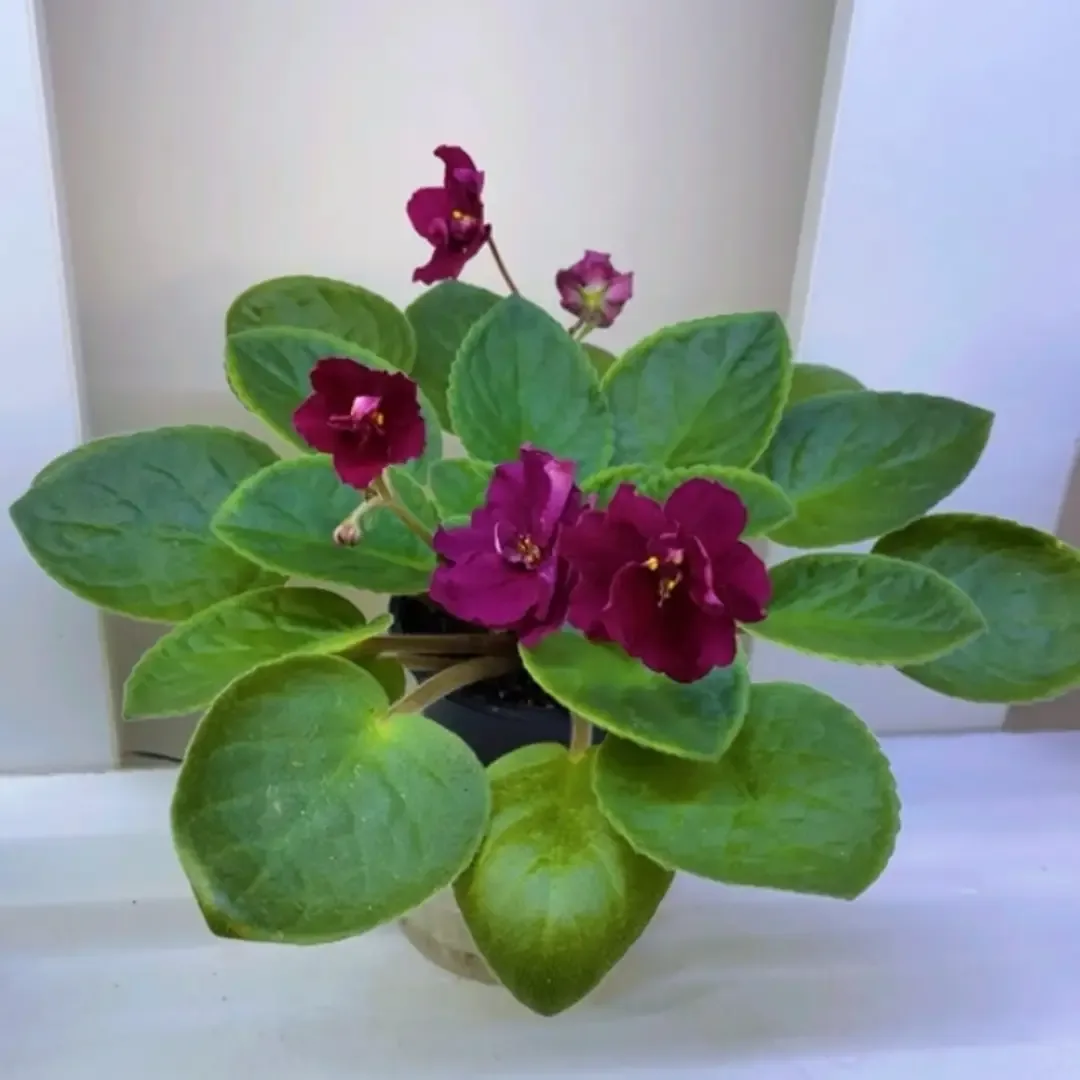
| Mini pots along the table | One small pot per guest works as a place marker and a take-home favour, with soft purple, pink or white blooms over fuzzy green leaves. |
| A bright, indirect spot | African violets are listed by the ASPCA as non-toxic to dogs, so a fallen petal is no cause for alarm, but keep them off the floor and away from food preparation. |
| A saucer of pebbles | Water from below and keep the soil slightly damp, since water on the fuzzy leaves can mark them, and a little humidity helps tired plants revive on a sunny windowsill. |
8. Prayer Plant as a Low Centrepiece
Low centrepiece wins
- Keep the centrepiece low: one prayer plant in a wide, shallow pot, so nobody’s view is blocked.
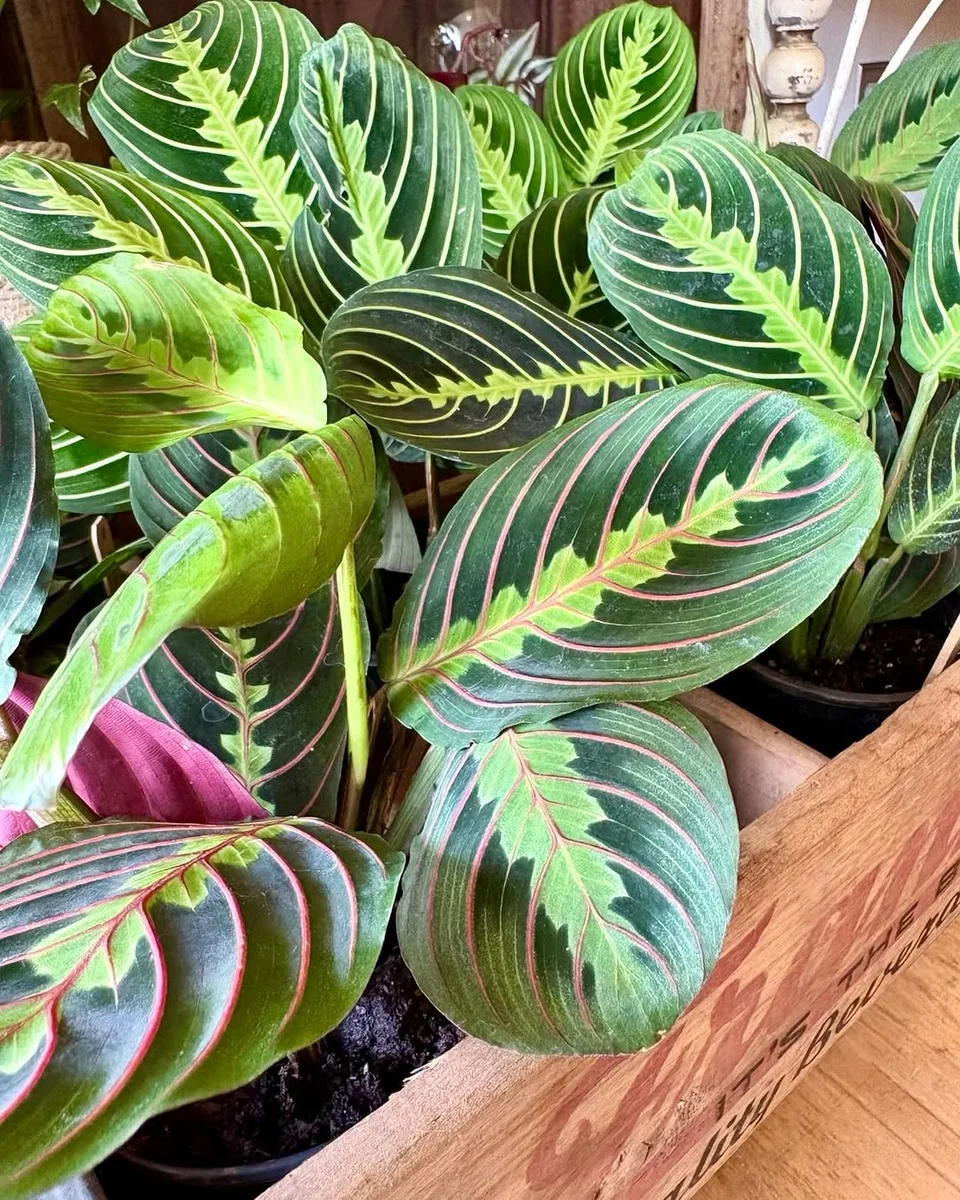
- Its patterned oval leaves fold up in the evening, like hands in prayer, a ready-made talking point over dessert.
- Maranta is listed by the ASPCA as non-toxic to dogs, reassuring for a plant at table height.
- It likes indirect light and soil that stays lightly damp, and a quick mist on Thanksgiving morning keeps the leaves glossy.
Watch out for
- The leaves are delicate, so keep your girl’s paws off them where you can.
- If she is a table surfer, put it on a sideboard instead of in the centre of the action.
- Keep it away from cold draughts and direct sun, which can curl or brown the leaves.
| Loves | Dislikes |
|---|---|
| Indirect light and light humidity | Cold draughts and direct sun |
| Lightly damp soil | Soggy roots and dry air |
9. Peperomia in a Terracotta Pot
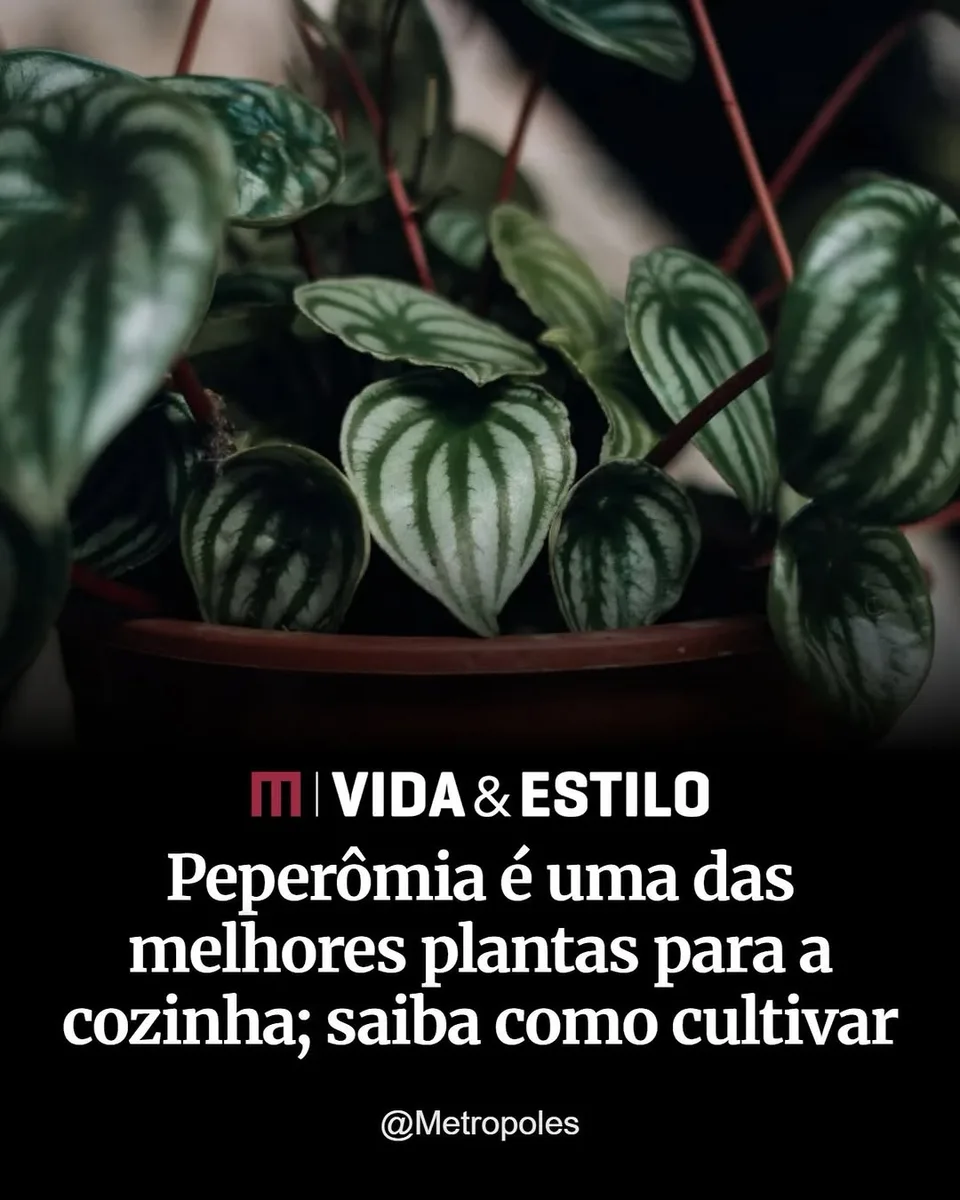
For a table that gets bumped, a peperomia in a terracotta pot is a calm, tidy choice. It stays compact, sits below eye level, and leaves room for the serving dishes, while its thick, glossy leaves come in greens, silvers, and variegated patterns to match your tableware. Peperomia varieties are generally listed by the ASPCA as non-toxic to dogs, and if your girl decides the table is her territory, the small pot lifts straight onto a windowsill.
Tip: pick a pot with drainage and a saucer, and water sparingly, since peperomia stores water in its leaves and dislikes wet feet.
Bare table centre, with serving dishes pushed to the edges.
One terracotta peperomia anchors the centre and the table looks finished.
10. Bromeliad as a Pop of Colour
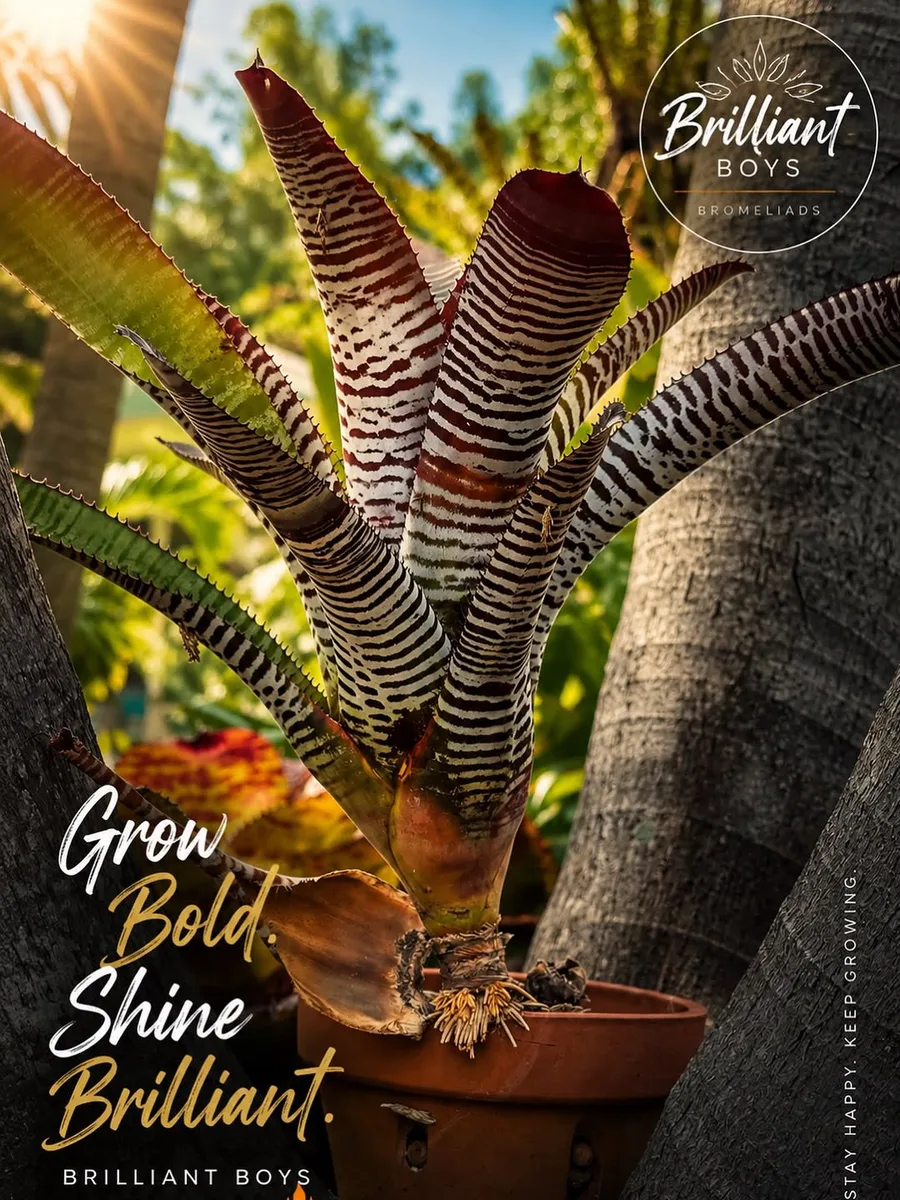
Check one thing first: the colour is safe, the pot is not the problem.
- One bold bromeliad steals the table: its central rosette comes in red, pink or orange, and one focal plant flanked by plain greenery beats a crowded mix of colours.
- Most common bromeliads are generally considered non-toxic to dogs, but varieties differ, so check the exact label before you buy and keep the tag.
- If you cannot verify the variety, put it on a high sideboard, not at nose height, and remember that safe to be near is not the same as safe to eat, so redirect any chewing.
- Give it bright indirect light, top up the water in its central cup, and refresh that water weekly, and your girl’s centrepiece will keep its colour for weeks.
- ▸Check the variety label and keep it until after the meal.
- ▸One bold bromeliad beats three competing colours.
- ▸Refresh the central cup water weekly.
11. Mini Pumpkins and Gourds
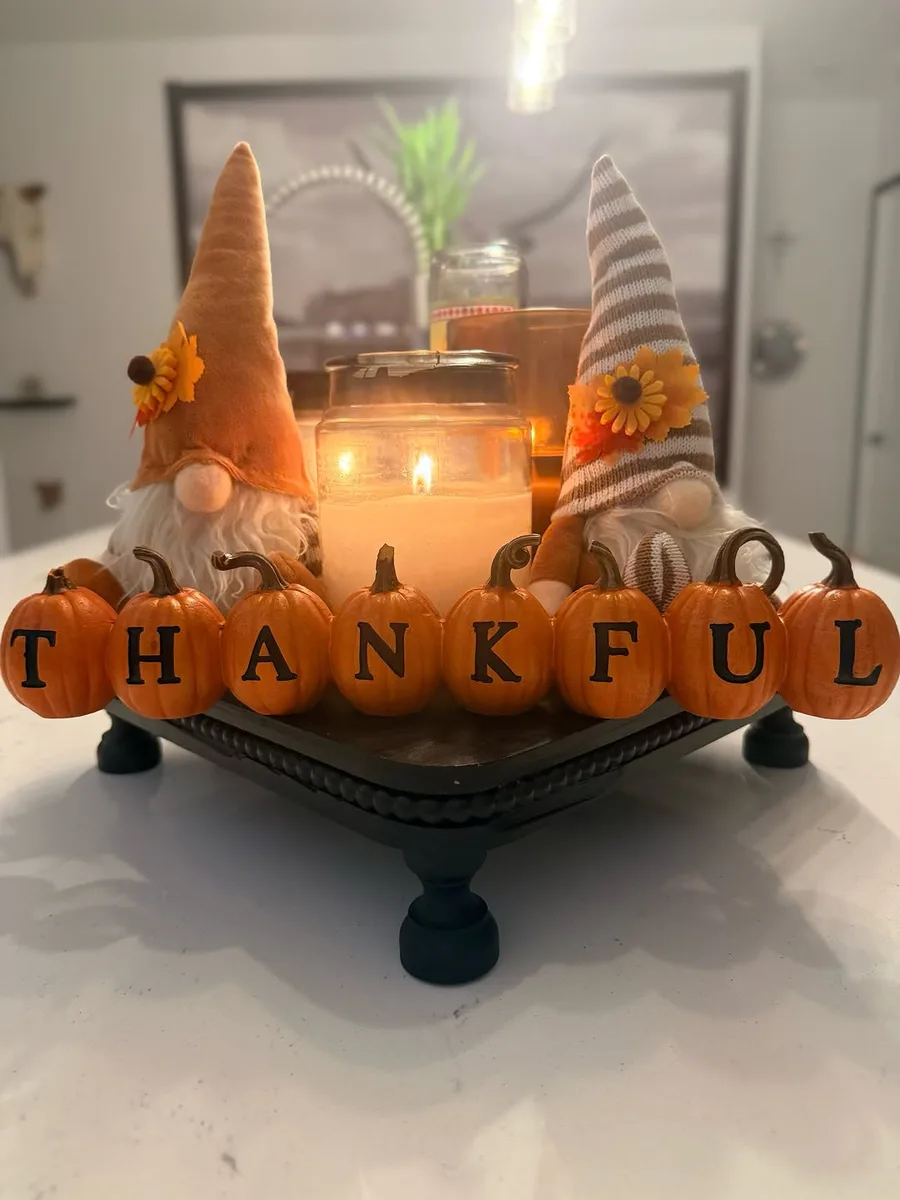
Mini pumpkins are decoration, not food, even though pumpkin flesh itself is listed by the ASPCA as non-toxic to dogs. Pile real, unpainted ones in a wooden bowl down the centre of the table, mixing orange, white and speckled varieties, and they need no watering or plant care at all.
- Keep decorative gourds out of reach: many are bitter and hard, and painted or lacquered ones add a coating you do not want your girl chewing.
- Choose firm pumpkins with intact stems and no soft spots, and anchor the bowl or tray so nothing rolls off the table and becomes a toy.
- If one gets nibbled, remove it, watch your girl for stomach upset, compost any that soften, and call your vet if she seems unwell.
Watch out
A pumpkin that rolls off the table becomes a toy fast. Anchor the display in a bowl or tray so nothing escapes onto the floor.
12. Dried Wheat Bundle
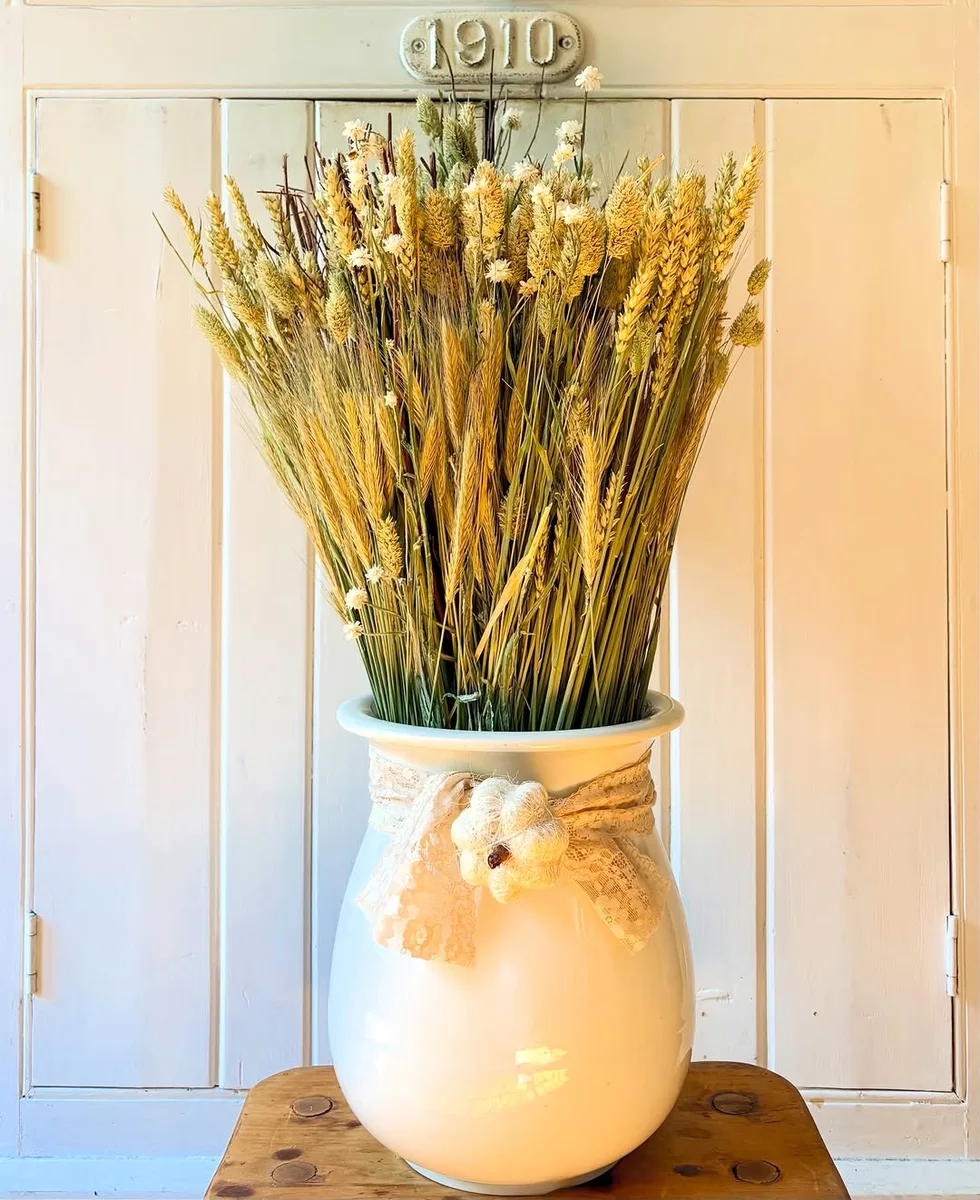
Before: Watching for loose grains or sharp stems, choose untreated wheat from a reputable florist, and skip any bunch with a strong chemical smell.
During: Tie it firmly with twine in a tall vase, and set it on a sideboard or entry console, well out of your girl’s reach and away from candles, since dry stalks catch fire easily.
After: Sweep up any fallen grains straight away, and if your girl is a chewer, keep the bundle on the sideboard rather than the table, dusting the heads gently with a soft brush if you reuse it next year.
Three places it works
1. Sideboard, tall vase, away from flames.
2. Entry console, greeting guests as they arrive.
3. Mantel, laid flat in a garland with greenery.
13. Cranberries in Water as a Vase Filler
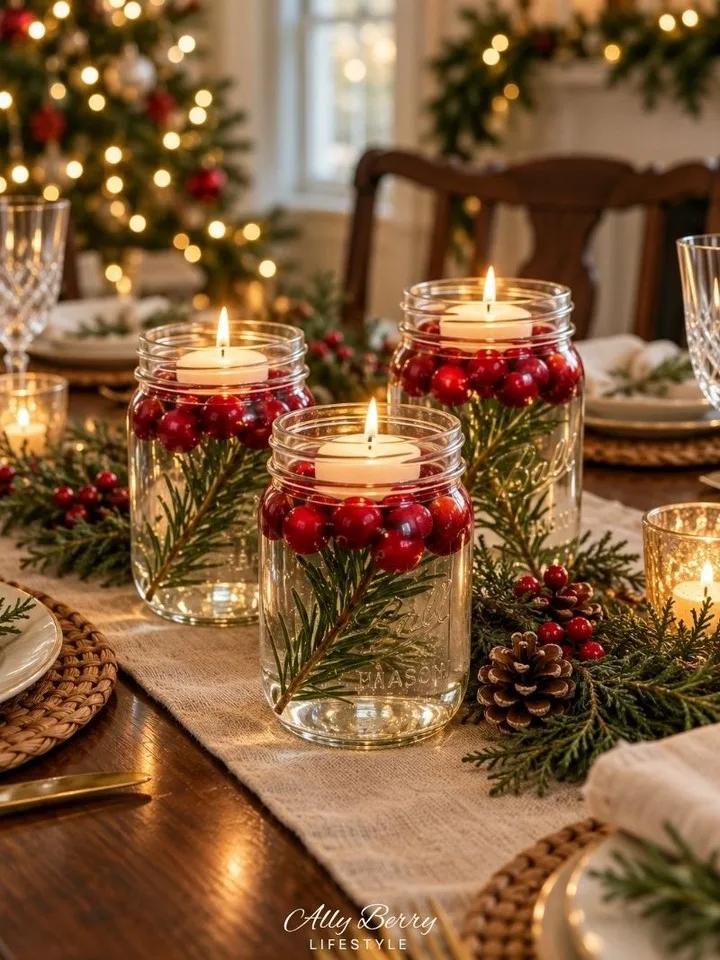
- Keep the water fresh and out of reach. Use a heavy, stable vase your girl cannot topple, change the water every couple of days, and lift out any berries that soften or split.
- Rinse fresh, firm cranberries, then fill a clear glass vase at least two thirds full of water and pour the berries in until the water looks jewelled.
- Float a battery candle on top if the vase sits near the table edge, and check the vase is stable before guests arrive. Fresh cranberries are listed by the ASPCA as non-toxic to dogs, and their tart taste means most dogs spit them out, but never use sugared or dried cranberries with added sweeteners.
Rinse the berries and fill the vase.
Add berries until the water looks jewelled.
Float a candle and check the vase is stable.
14. Polka Dot Plant in a Small Pot
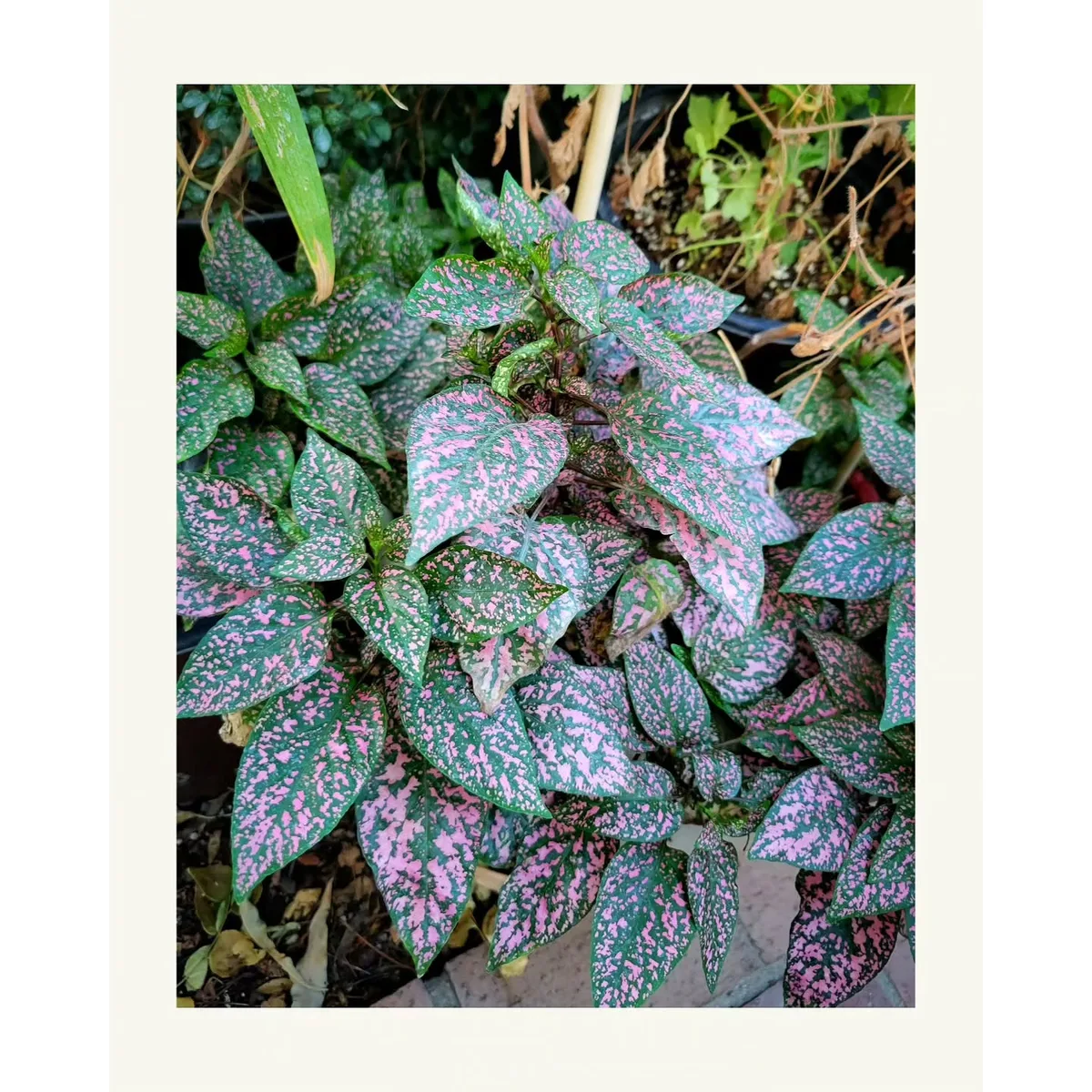
Some tables need one small spot of colour, and a polka dot plant gives it without crowding the food. Its green leaves are freckled with pink or white, and in a small cream or blush pot beside the dessert plates it looks cheerful rather than fragile. It suits a kids table too, where a playful plant beats a decoration that breaks.
Polka dot plants, or hypoestes, are listed by the ASPCA as non-toxic to dogs, but keep the pot out of easy chewing range all the same. Give it bright indirect light and lightly damp soil, pinch back leggy stems to keep it bushy, and water it on Thanksgiving morning if it wilts.
Small pot, bright indirect light, a drink on Thanksgiving morning, and it will steal the dessert table.
15. Toxic Classics to Leave Off the Table
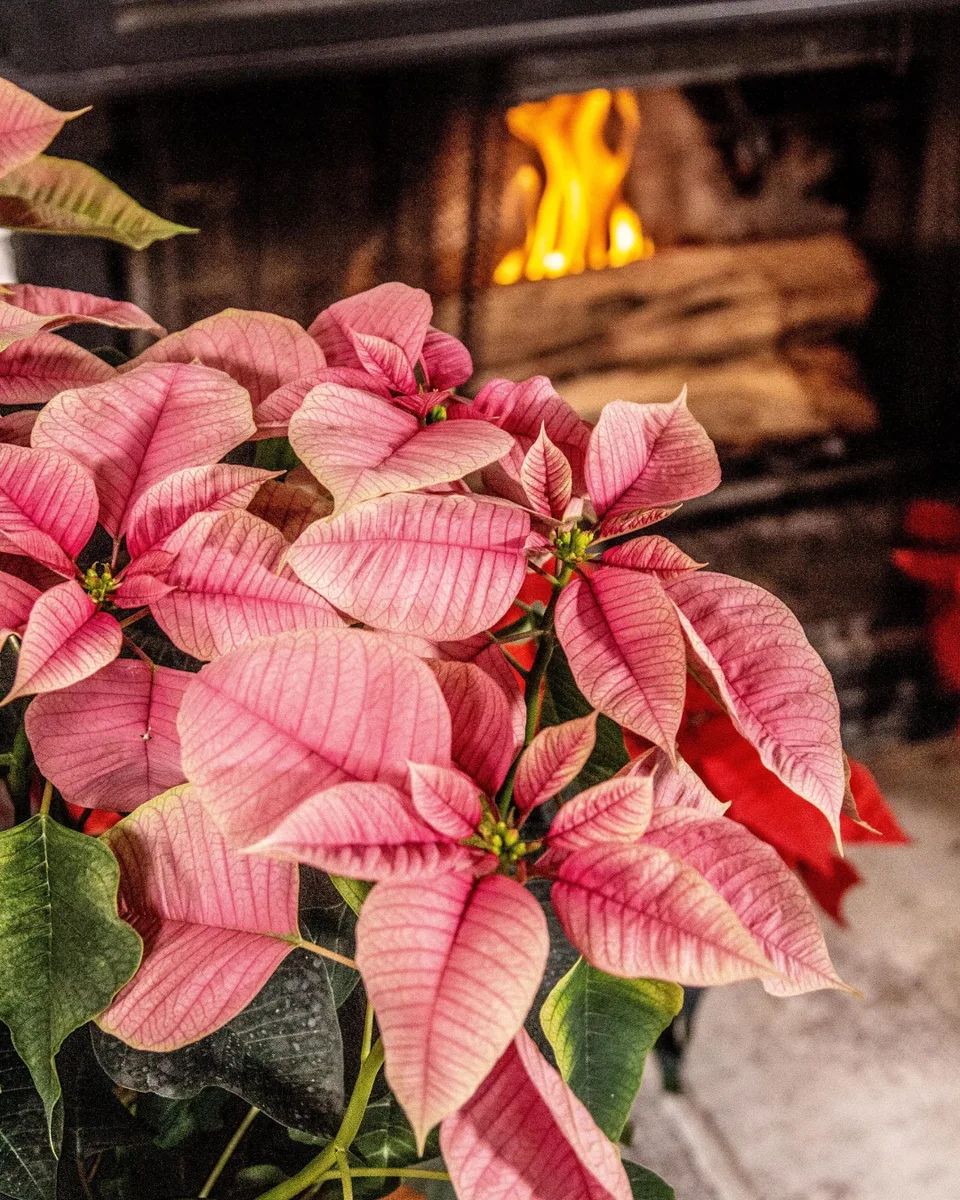
Choose the safe list before you buy anything. Poinsettias, lilies, mistletoe, holly, amaryllis, chrysanthemums and eucalyptus all look festive, but every one of them is a bad idea around your girl. Lilies can be seriously harmful, mistletoe and holly berries are toxic, and eucalyptus oils are toxic even in a table garland. Poinsettias are usually called mildly toxic, yet a chewed leaf can still mean drooling, vomiting and stomach upset, which is not how anyone wants to spend Thanksgiving evening.
Remember: if a guest brings one of these plants as a gift, thank them warmly and move it to a closed room your girl cannot enter, and check the ASPCA plant lists before you buy.
Thank the giver and move it to a closed room.
Sweep fallen leaves and berries straight away.
Hope she will leave it alone.
Put it high and assume height alone is safe.
Frequently Asked Questions
Quick answers to the most common questions.
+Which Thanksgiving table plants are safest for dogs?
Rosemary, basil, spider plants, Boston ferns, phalaenopsis orchids, African violets, prayer plants, peperomia and polka dot plants are all listed by the ASPCA as non-toxic to dogs. They are the safest starting points for a table centrepiece, though no plant should be eaten in large amounts.
+Can my dog eat the herbs on the Thanksgiving table?
A nibbled leaf of rosemary, basil or thyme is unlikely to cause harm, but herbs are decor first and food second. Keep plants out of easy chewing range, never use concentrated essential oils in an arrangement, and offer your girl her own safe treat instead of letting her graze on the centrepiece.
+What plants should I never put on a Thanksgiving table with a dog?
Leave lilies, mistletoe, holly, amaryllis, chrysanthemums, poinsettias and eucalyptus off the table. Lilies can be seriously harmful to pets, and the others can cause stomach upset or worse if chewed. If a guest brings one as a gift, move it to a closed room your dog cannot enter.
+Are mini pumpkins and cranberries safe around dogs?
Plain pumpkin flesh and fresh cranberries are listed as non-toxic to dogs, so a real mini pumpkin or a cranberry vase is a safe table choice. Avoid painted or lacquered gourds, which add coatings you do not want chewed, and keep sugared cranberries out of reach.
+Where should I put the centrepiece so my dog cannot reach it?
Put tall or trailing plants on a sideboard, and keep table centrepieces at the centre of the table, away from the edge and from chair height. A heavy pot, a stable vase and a spot away from a wagging tail will prevent most accidents before they happen.
+What should I do if my dog eats part of a table plant?
Remove the plant, check how much she ate, and watch for drooling, vomiting or unusual behaviour. Call your vet or a pet poison helpline straight away if she ate a plant from the toxic list, or if she seems unwell after eating any plant. Keep the plant label or a photo of it to show the vet.
You May Also Like

17 Thanksgiving Dog Treat Recipes for Puppies
Thanksgiving is your puppy’s first big family day, and she will want a taste of everything. She cannot have the family dinner, but she can have her own little feast: tiny, soft, plain treats made just for small mouths and young stomachs. Every recipe below is kept simple, with no seasoning, no added sugar, and
Continue reading

17 Dog Thanksgiving Feast Ideas for Senior Dogs
Thanksgiving dinner smells wonderful to all of us, and your senior girl will be watching every plate that passes. She can join the feast, but her version looks different from yours: plain food, soft textures, small portions, and her usual meal still at the centre of the bowl. The ideas below keep the celebration in
Continue reading

15 Dog-Friendly Thanksgiving Travel Tips for Senior Dogs
Thanksgiving travel with a senior dog is a different kind of trip. Your girl may have made this journey happily for years, but stiff joints, a slower bladder, poorer eyesight and a lower tolerance for noise all change what she needs from a car ride and a busy house. The good news is that none